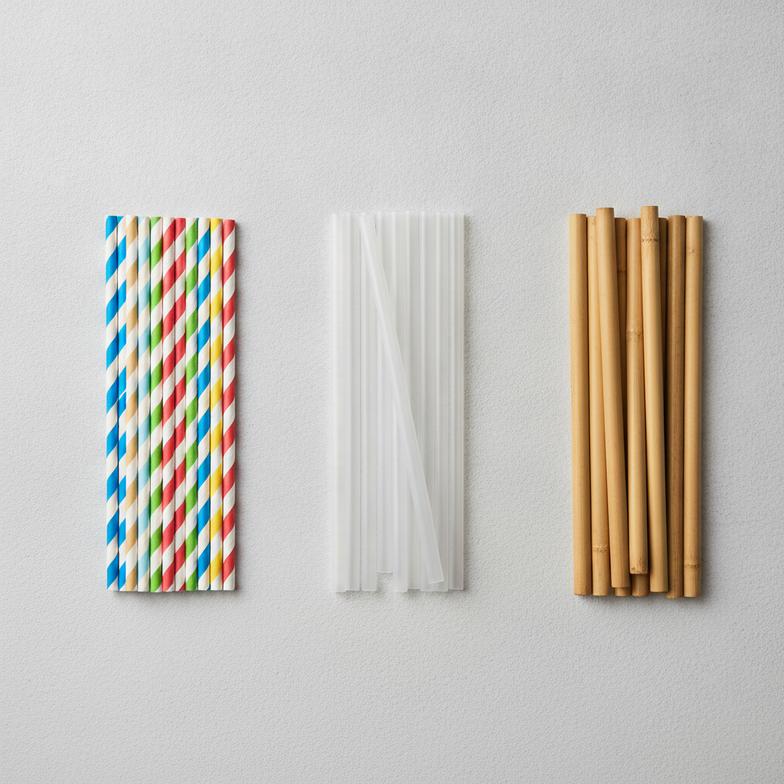
Choosing the right eco-friendly straw is a surprisingly high-stakes decision for any procurement manager. You’re under pressure to source sustainably, but you also have to manage costs and ensure a stable supply. The challenge is that a seemingly simple choice can lead to major supply chain headaches, hidden operational costs, and even brand reputation risks. Understanding the real procurement trade-offs in the paper straws vs PLA and bamboo straws debate is the key to making a smart, profitable decision for your business.
The best straw choice depends on your business’s specific operational risks, supply chain realities, and total cost of ownership—not just the per-unit price. While PLA and bamboo have their merits, modern paper straws often present a more stable, predictable, and lower-risk procurement option for large-scale operations due to their mature supply chain, reliable storage, and straightforward end-of-life story.
That might sound biased coming from a paper straw manufacturer, but my view comes from years of conversations with buyers who switched to paper after running into unexpected trouble with other materials. Let’s dig into the business realities that don’t always show up on a spec sheet.
Are you focused on getting the lowest possible price per straw? It’s a natural starting point for any procurement professional. But in our experience, this fixation can cause you to overlook hidden expenses from spoilage, quality control, and customer complaints that ultimately destroy your margins. The smarter approach is to evaluate the Total Cost of Ownership (TCO).
No, the unit price is often misleading. The Total Cost of Ownership (TCO) is a far more accurate metric. For many businesses, paper straws offer a lower TCO due to their storage stability, while PLA carries spoilage risks from heat, and bamboo requires significant investment in quality control to ensure consistency.
When we talk to buyers, a common blind spot is failing to budget for the "what ifs" that are inherent to each material. The per-unit cost you negotiate is just the beginning of the story.
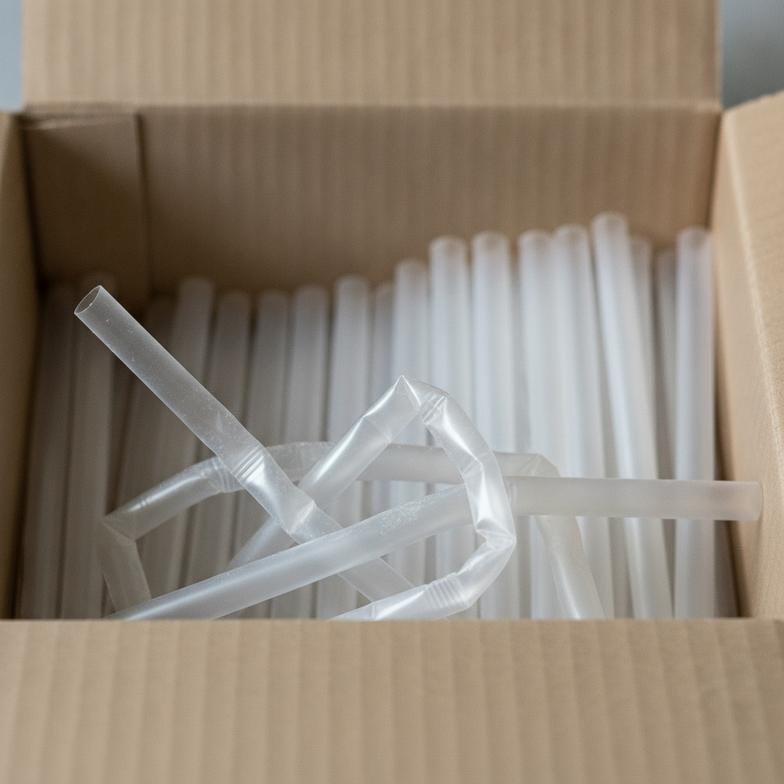
PLA (Polylactic Acid) is a bioplastic made from plant starches. It feels great and looks like plastic, which is a big plus. The problem is its low heat tolerance. PLA straws can start to soften and deform at temperatures as low as 110°F (about 43°C)[1].
Think about your supply chain. Can you guarantee that every shipping container, every warehouse, and every delivery truck will remain climate-controlled from our factory in China to your final distribution center? I’ve heard from buyers who lost entire shipments because a container sat on a sunny dock for too long[2]. That’s a 100% loss that isn’t factored into the per-unit price.
Consider these TCO factors for PLA:
Bamboo straws seem like the perfect natural solution. But "natural" also means "inconsistent." Unlike a manufactured product made to precise specifications, bamboo stalks vary in diameter, wall thickness, and straightness[3]. To get a consistent product suitable for a major brand, the bamboo must be heavily sorted and processed.
This creates what I call a "quality control tax."
This brings us to paper. The historical concern with paper straws was sogginess, which we’ll address later. But from a pure TCO perspective, paper is remarkably predictable.
When you look beyond the invoice, the financial case in the paper straws vs PLA and bamboo straws comparison starts to look very different.
You’ve found a product with a good TCO, but can you get it consistently? For any large-scale operation, supply chain stability is non-negotiable. An amazing straw is useless if your supplier can’t deliver it on time, every time. Volatility in raw material availability can lead to stockouts, price hikes, and frantic searches for new suppliers.
The supply chains are vastly different. Paper benefits from the massive, mature, and global pulp and paper industry. PLA’s supply chain is newer and more concentrated among a few large chemical companies. Bamboo is an agricultural product, making its supply chain subject to harvest cycles, weather, and crop quality.
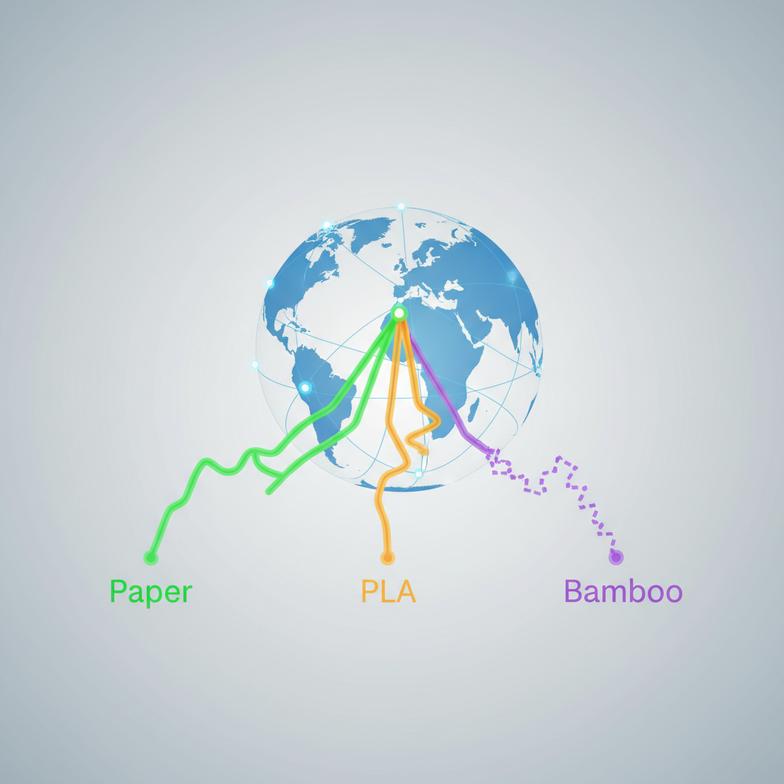
Based on our experience manufacturing millions of straws and sourcing raw materials on a global scale, we see three very distinct risk profiles.
The raw materials for paper straws are essentially food-grade kraft paper, adhesive, and ink. These materials are part of one of the world’s oldest and most robust supply chains.
As a one-stop solution provider, we manage this entire supply chain for our customers, whether they’re buying finished straws or setting up their own factory. This stability is a core part of our value proposition.
PLA is a fantastic material, but its supply chain is still in its infancy compared to paper. The raw material, PLA resin, is produced by a relatively small number of large chemical companies[4].
For a procurement manager, this translates to higher supply chain risk. You are more exposed to disruptions that are completely out of your control.
Sourcing bamboo means you are tied to an agricultural cycle.
Choosing bamboo means you are taking on agricultural risk, something most procurement managers for finished goods try to avoid. In the contest of paper straws vs PLA and bamboo straws, paper offers a level of supply chain security that is difficult for the others to match.
You want to make a strong, positive environmental claim on your packaging. It’s a key reason for moving away from plastic. But if the straw doesn’t break down the way your customers expect it to, you can face serious backlash and accusations of "greenwashing." The commercial and legal definition of "biodegradable" in your target market is a critical procurement factor.
Absolutely not. "Biodegradable" is a commercial term with serious brand implications. Paper straws are typically home-compostable and break down widely. PLA requires industrial composting facilities, which are unavailable to most consumers, creating a brand risk. Bamboo’s degradation depends heavily on whether it’s 100% natural or a composite.
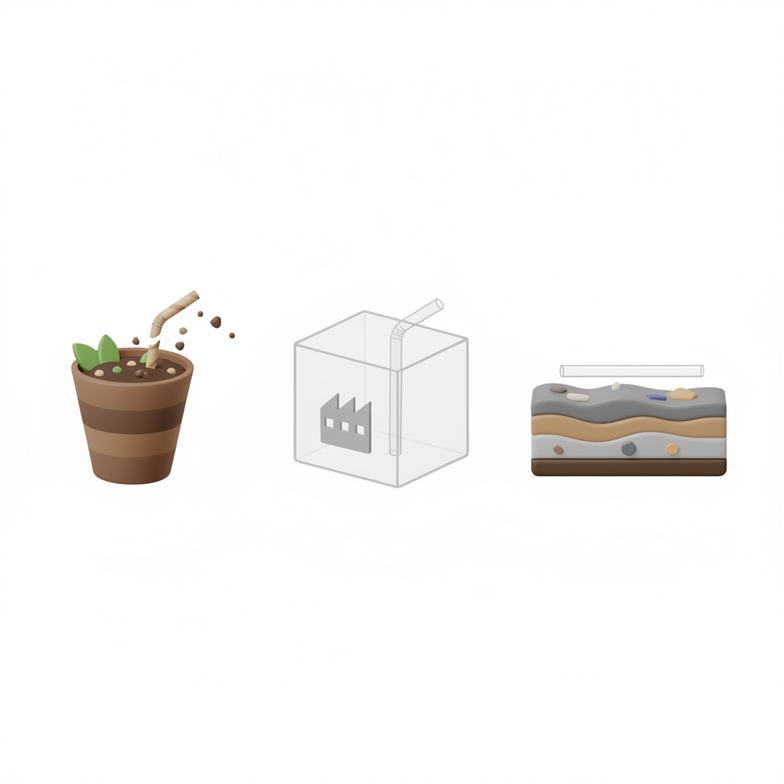
This is where technical details have huge business consequences. Misunderstanding these terms can turn a well-intentioned sustainability effort into a public relations nightmare.
This is the single biggest business risk of choosing PLA. PLA is certified "commercially compostable," which means it will biodegrade, but only in an industrial or commercial composting facility[6]. These facilities maintain high temperatures (over 140°F / 60°C) to break down the material.
Here’s the problem for your brand:
In our conversations with brand owners, this is a frequent point of concern. They worry that the "eco" promise of PLA can’t actually be fulfilled by their customers, making the claim feel misleading.
Paper, on the other hand, has a much simpler and more intuitive end-of-life story. Our paper straws, made from FSC-certified paper and food-safe adhesives, are designed to be compostable in both home and commercial settings.
Untreated, 100% natural bamboo will biodegrade. However, as discussed, these pure bamboo straws often suffer from inconsistency. To improve durability and smoothness, some "bamboo" products are actually composites made with bamboo fiber mixed with polymers like PLA or other binders[10]. If that’s the case, you inherit all the end-of-life problems of those binders. It’s critical for procurement managers to demand a Material Safety Data Sheet (MSDS) and full material composition disclosure.
Typically, entry-level paper or PLA straws can have the lowest per-unit cost. However, this ignores the Total Cost of Ownership (TCO). When you factor in risks like PLA spoilage from heat or the intensive quality control needed for bamboo, the initially "cheaper" option can become more expensive.
It’s complicated. PLA is made from renewable resources, which is good. But its reliance on industrial composting facilities—which are rare—means most PLA straws end up in landfills, where they don’t biodegrade. Paper from responsibly managed (e.g., FSC-certified) forests is also renewable and breaks down much more easily in natural environments.
Yes, custom printing and branding are widely available for paper and PLA straws. It’s also possible for bamboo, usually through laser engraving on the straw itself or on the packaging. Paper offers the most vibrant and versatile printing options for complex logos and patterns directly on the straw.
This is the classic concern, but it’s largely a solved problem. While early paper straws did get soggy quickly, modern manufacturing has changed the game. At PaperStrawTech, our straws are engineered with high-quality paper and adhesives to last for 3+ hours in a cold beverage under normal use without disintegrating or impacting the taste.
The debate over paper straws vs PLA and bamboo straws shouldn’t be about which material is universally "best." For a procurement professional, it’s about risk management. The right choice is the one that best aligns with your company’s operational capabilities, supply chain resilience, and brand strategy. While PLA offers a plastic-like feel and bamboo has natural appeal, they come with significant hidden costs and risks related to TCO, supply chain stability, and brand compliance.
Modern paper straws offer a compelling balance: a highly stable and mature supply chain, predictable costs with low spoilage risk, and a simple, defensible end-of-life story that protects your brand. By looking past unit price and evaluating the entire picture, you can make a procurement decision that is not only sustainable but also smart for your bottom line.
If you’re evaluating suppliers and need a partner who understands these trade-offs from a manufacturer’s perspective, reach out. We can help you navigate the complexities and build a stable, reliable, and profitable supply chain for your paper straw needs.