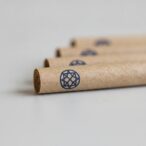
Are you developing a new line of rolling accessories and hitting a wall on the specifications? Many brands get stuck on one small detail: perforation. You see other products offering hemp filter tips with perforation and wonder if it’s a non-negotiable feature for a modern product. But adding it increases your costs, and you’re not sure if your customers will even care. The key is to stop seeing it as a simple upgrade and start seeing it as a strategic choice that defines who your product is for.
Buyers need hemp filter tips with perforation when their target audience prioritizes convenience and a guided rolling experience over the flexibility of a plain tip. It’s a strategic decision for brands aiming at the on-the-go or novice user, where the small added cost is justified by a user-friendly feature that enhances the product’s value proposition.
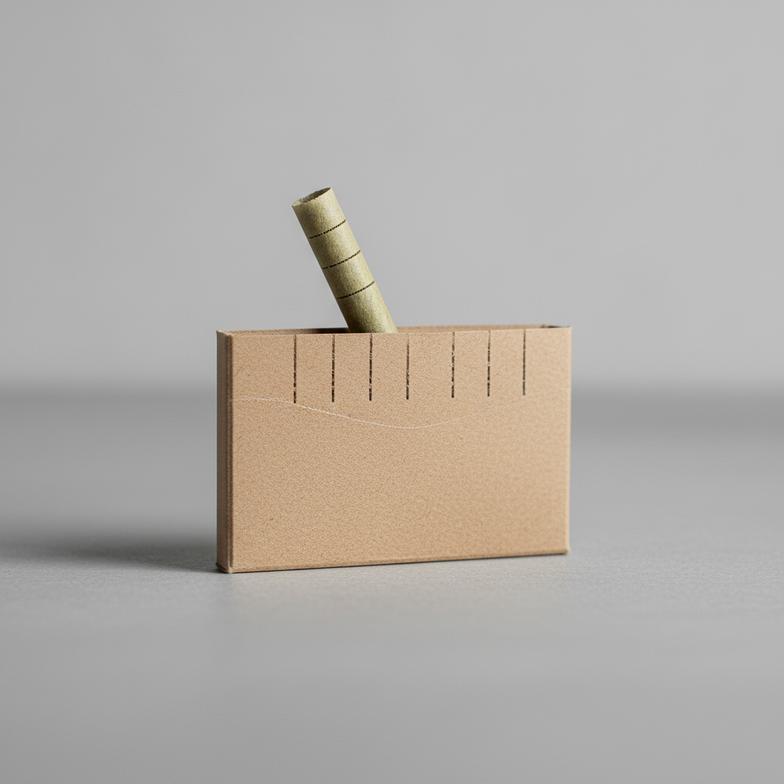
Now that you know the core reason to choose this feature, let’s explore how to make the right call for your brand. This isn’t just about adding lines to a piece of paper; it’s about understanding your user, your brand identity, and most importantly, how to tell a quality feature from a cheap gimmick.
You want to design a product that your customers will love and buy again. But you’re worried that adding a feature like perforation is over-engineering a simple product. You risk alienating purists or adding a feature that just gets ignored. The solution is to think less about the feature itself and more about the person who will be using it.
For many users, perforation offers a guided, easy-to-fold experience that creates a consistent crutch every time. It’s perfect for novice rollers or anyone who values speed. However, some experienced users might prefer a non-perforated tip that allows for more customized shapes and techniques.
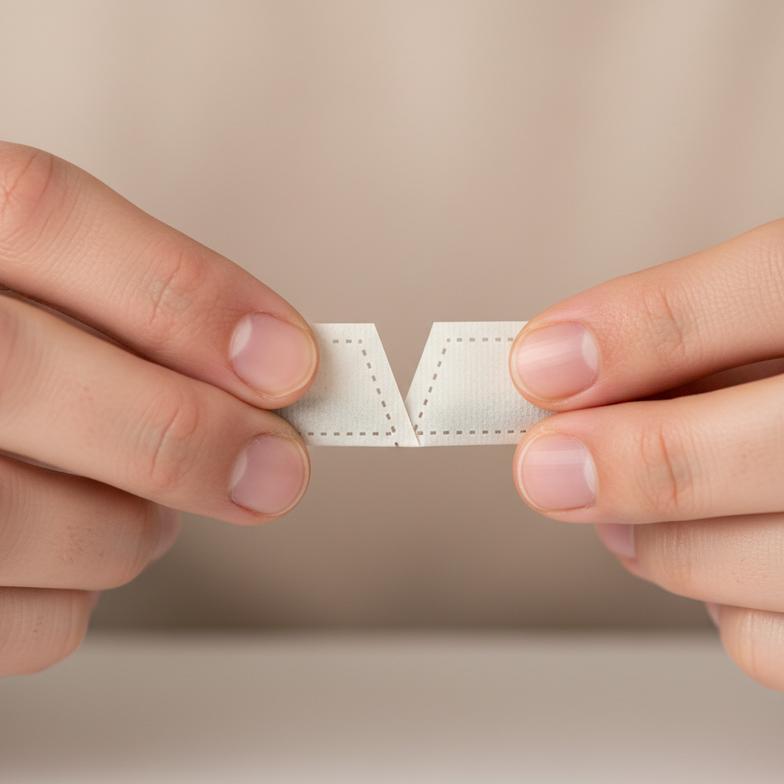
Let’s talk about a specific type of customer. This person might be new to rolling their own, or maybe they just value speed and consistency. They don’t want to guess where to fold or fiddle with creating the perfect "W" shape from scratch. For them, time and ease are everything.
This is where hemp filter tips with perforation shine. The lines act as a foolproof guide.
From our experience talking to brands that target festivals, dispensaries, and convenience stores, this user segment is large and growing. They aren’t looking for a craft, artisanal experience; they’re looking for a reliable, portable solution.
On the other side, you have the traditionalist. This is the user who has been rolling for years. They have their own unique method—some fold a tight spiral, others have a specific way of creating a multi-channel "M" shape. They have a feel for the paper and don’t need or want a guide.
For this user, perforation can be seen as:
If your brand identity is built around tradition, craft, or catering to the connoisseur, offering a classic, non-perforated tip might be the stronger choice. It shows you understand and respect the rituals of experienced users.
So, you’ve decided your target audience would appreciate the convenience. The next challenge is ensuring the perforation is a quality feature, not a flaw. A common question we get from buyers is, "How do I know if the perforation is good?" A poorly executed perforation can tear unevenly, make the tip flimsy, or just not fold correctly, frustrating your customers and damaging your brand’s reputation.
Quality in perforated rolling tips isn’t about simply having the lines; it’s about how they perform. A well-made perforated tip tears cleanly, folds crisply, and doesn’t compromise the paper’s overall strength. It should be a helpful guide, not a weak point.
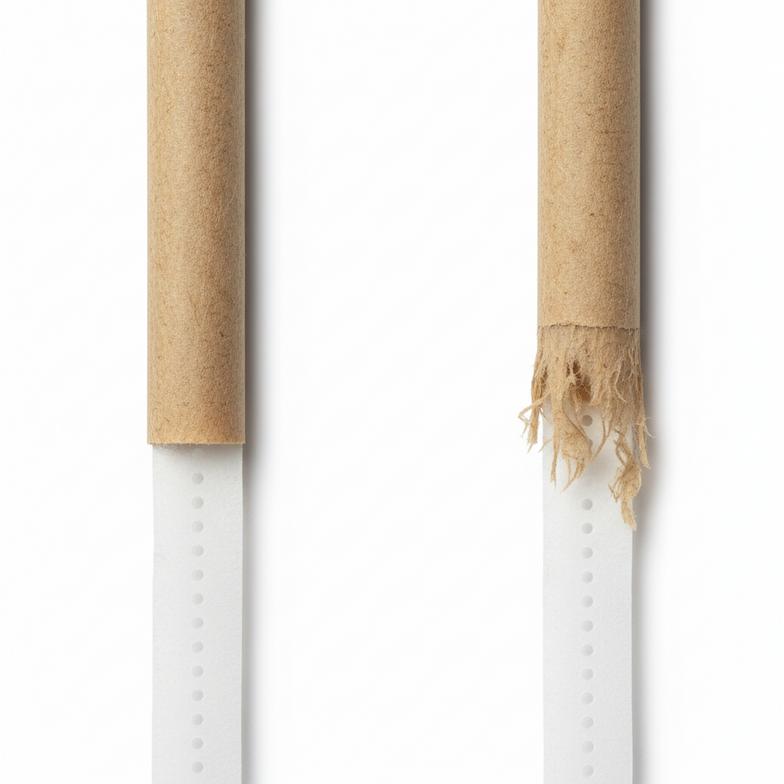
When we evaluate a production run of hemp filter tips with perforation, we look at three critical factors. I strongly recommend you do the same when you’re inspecting samples from a potential supplier.
1. Clean Tear and Fold: The perforation lines should be cut to the perfect depth. Too shallow, and they’re useless. Too deep, and the tip feels weak or falls apart before you even use it. The ideal perforation creates a crisp fold line that guides the paper without force. If your design includes tear-off sections, they should separate with a single, clean pull. 2. Structural Integrity: A filter tip, or crutch, has a job to do: provide structure and spacing. The perforation process should not make the paper flimsy or prone to collapsing under pressure. After folding, the crutch should still feel sturdy and hold its shape inside the roll. 3. Manufacturing Consistency: Quality means every single tip in every single booklet is the same. There should be no variation in the depth, placement, or performance of the perforations. This speaks directly to your supplier’s quality control. Inconsistent execution leads to a lottery-like user experience, where one tip works perfectly and the next one rips.
Never take a supplier’s word for it. "High quality" is a marketing term. You need to verify it yourself. Here’s a simple checklist for testing samples:
This simple, five-minute inspection will tell you more about a supplier’s capabilities than any sales brochure ever could.
| Perforation Style | Description | Best For | What to Watch For |
|---|---|---|---|
| Line Perforations | A series of dashed cuts. The industry standard. | Creating classic ‘W’ or ‘M’ shapes. | The depth and spacing of the cuts. |
| Micro-Perforations | Tiny, almost invisible holes forming a line. | A cleaner, more premium aesthetic. | Can sometimes tear less cleanly than line cuts if not done perfectly. |
| Score Lines (Creasing) | An indentation pressed into the paper, not a cut. | Maintaining maximum paper stiffness. | May be harder for absolute beginners to fold than a true perforation. |
As a brand owner or procurement manager, your job is to balance features, quality, and cost. Every decision has a budget implication. You have to ask yourself: will adding perforation provide a real return on investment, or will it just shrink my margins for no good reason?
Adding perforation is not free. It introduces a tangible cost per unit and requires an additional step in the manufacturing process. This cost must be justified by market demand, a higher retail price, or a clear strategic advantage that leads to increased sales.
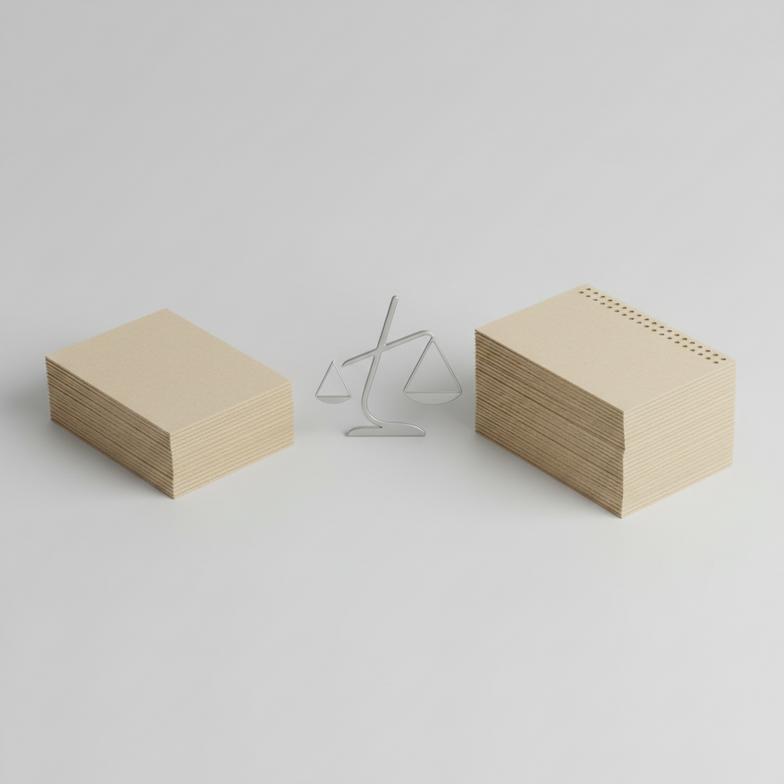
When you talk to a manufacturer, ask for a quote with and without perforation. The difference is the direct cost of the feature. While it might only be a fraction of a cent per booklet, this adds up quickly across an order of 100,000 or 1,000,000 units.
Beyond the monetary cost, consider the production implications:
You have to weigh these costs against the potential benefit. Will the feature allow you to capture a market segment you’d otherwise miss? Does it align with your brand’s "easy and accessible" message? If the answer is yes, the cost is an investment. If not, it’s an unnecessary expense.
One of the most effective strategies we’ve seen from successful brands is to not force a choice. Instead, they cater to both user types by offering two distinct SKUs: 1. The Standard Line: A classic, no-frills, non-perforated hemp tip. This is often sold in larger packs at a slightly lower price point per tip, targeting the bulk buyer and the experienced roller. 2. The Convenience Line: A premium-packaged, perforated tip. This is your retail-friendly option, perfect for display at a checkout counter and aimed at the user who values ease of use.
This approach allows you to capture the maximum possible market share. You’re not alienating the purists, and you’re not ignoring the beginners. It transforms the "either/or" dilemma into a "both/and" strategy, broadening your brand’s appeal. It’s a bit more work in terms of inventory management, but it shows a deep understanding of the diverse needs within your customer base.
Not necessarily better, just different. They serve different users. Perforated tips are excellent for convenience and a consistent result, making them ideal for beginners. Non-perforated tips offer more flexibility for experienced rollers who have their own custom folding techniques. The "better" choice depends entirely on your target customer.
It can if the manufacturing quality is poor. A well-designed perforation should only guide a fold or tear without compromising the structural integrity of the tip once it’s formed into a crutch. This is why it is absolutely critical to test physical samples from any potential supplier.
The cost increase is typically small on a per-unit basis but becomes a significant factor in large-volume orders. The exact cost depends on the supplier, the complexity of the perforation, and the order size. Always request a detailed quote that clearly separates the cost of this feature.
Yes, absolutely. Most capable manufacturers, including us, offer customization on the number and placement of perforation lines. This allows you to design a tip that creates the specific crutch shape you want, whether it’s for a standard three-fold "W" or something more unique to your brand.
Ultimately, deciding whether to include hemp filter tips with perforation in your product line is a strategic business decision, not just a technical one. It’s about deeply understanding your target user, your brand’s core message, and your budget. Remember that the quality of execution is far more important than the mere presence of the feature—a bad perforation is worse than no perforation at all. Don’t be afraid to offer both perforated and non-perforated options to serve different segments of your market. By shifting your focus from "Is it better?" to "Who is it for?", you can make a confident choice that strengthens your brand and delights your customers.
If you’re in the process of specifying your next line of smoking accessories and need a partner who understands these nuances, we’re here to help. We can provide detailed quotes, physical samples, and expert guidance to ensure your final product is a success. Contact us today to discuss your project requirements.