
Sourcing paper tubes for pyrotechnic manufacturers can feel deceptively simple. You need a cardboard cylinder of a certain size—how hard can it be? But this view overlooks a critical truth: in the pyrotechnics industry, a paper tube isn’t just packaging; it’s a functional, safety-critical component. Getting it wrong can lead to inconsistent performance, product recalls, or even catastrophic failures. Your business’s reputation and safety depend on getting this "simple" component right, every single time.
The most effective way to source paper tubes for pyrotechnics is to shift your focus from a static spec sheet to a dynamic conversation about process control. Success lies in verifying a supplier’s ability to consistently produce tubes that meet the specific performance, safety, and chemical compatibility requirements of your unique pyrotechnic application, not just matching a list of dimensions.

This guide is built from my first-hand experience working with clients in high-stakes industries. We’ll move past the superficial specs and get into the questions that truly matter. Let’s break down how to de-risk your supply chain and build a partnership with a supplier who understands what’s really at stake.
You’ve probably been in this situation. You have a detailed spec sheet—wall thickness, inner diameter, length—and you send it to two different suppliers. Both return samples that match the specs on paper, but in testing, one performs flawlessly while the other fails dangerously. What went wrong? The specs didn’t tell the whole story.
The "best" paper tube is defined by its specific job within your device, not by its generic physical dimensions. A launch tube, a mortar tube, and an effect casing have vastly different performance requirements regarding burst strength, burn characteristics, and structural integrity that a simple spec sheet cannot capture.
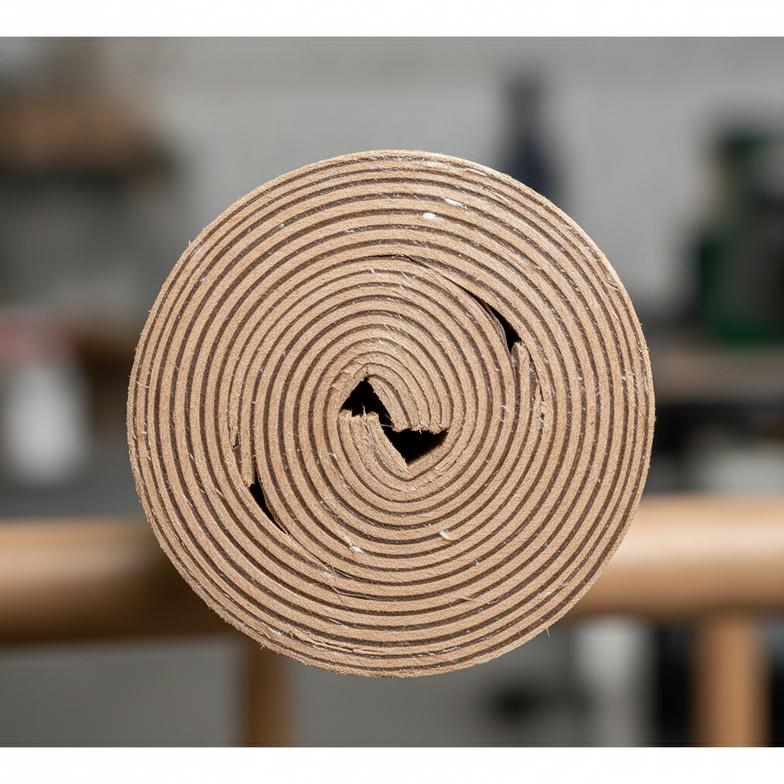
From my conversations with buyers, a common point of confusion is thinking all tubes are created equal. They aren’t. Let’s think about it from a manufacturing perspective. The final performance of a paper tube is a result of a complex interplay between materials and process.
Here are the key factors that have a greater impact than just wall thickness:
A reliable supplier should be able to discuss these trade-offs with you. Let’s look at a few examples.
A pyrotechnic device is a system of components working together. Here’s how the tube’s function dictates its required properties:
| Tube Application | Primary Requirement | Key Manufacturing Considerations |
|---|---|---|
| Mortar Tube | High burst strength, durability for reuse | Heavy-duty kraft paper, optimized winding angle for pressure containment, strong adhesive bond. |
| Launch Tube (Single Shot) | Dimensional stability, smooth interior | Precise inner diameter control, anti-static properties, consistent wall thickness for predictable flight. |
| Effect Casing (Shell) | Predictable burst pattern, containment | Controlled strength to contain the lift charge but break apart correctly at altitude. Glue and paper choice are critical. |
| Driver Tube / Spinner | Gas pressure direction, burn rate | Specific wall thickness and density to control how and when gases escape, influencing the firework’s motion. |
When you start your conversation with a potential supplier, framing your needs around the application—"I need a mortar tube that can withstand X pressure" instead of "I need a tube with a 5mm wall"—leads to a much more productive and safer outcome.
You’ve received a perfect batch of samples. They pass all your tests. The price is right. But the question that should keep you up at night is: can this supplier deliver 100,000 more tubes with the exact same performance? Batch-to-batch variation is the silent killer in manufacturing. A subtle shift in a supplier’s process can turn your reliable product into a liability without you knowing until it’s too late.
To truly verify a supplier, you must look past the product and scrutinize the process. Request and review their process control documentation, material traceability records, and quality assurance procedures. A trustworthy partner can prove how they achieve consistency, not just promise it.
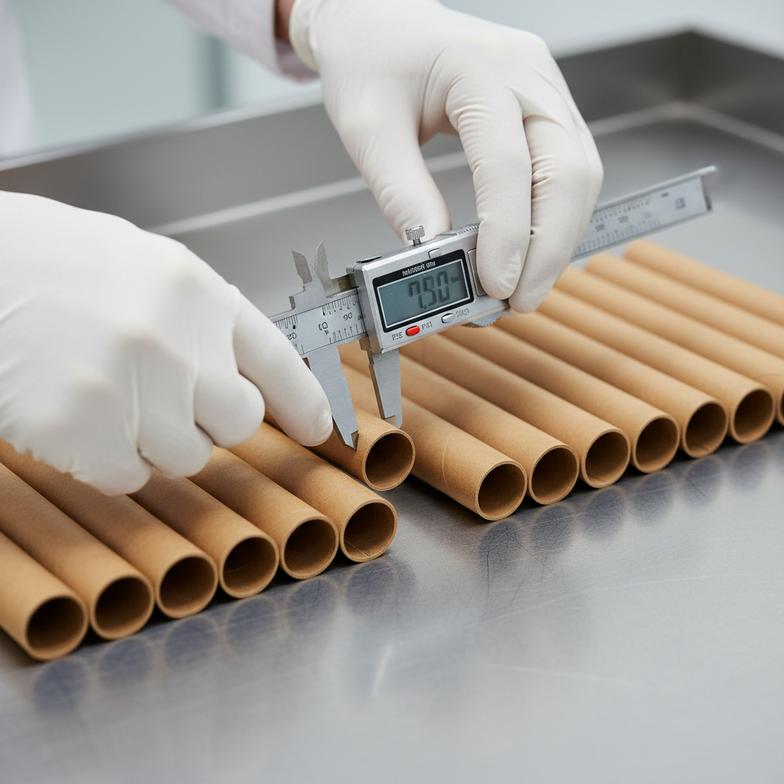
First-time buyers often focus on the "golden sample," but experienced procurement managers know the real value lies in a supplier’s system. In our own factory, producing millions of spiral-wound paper products, we live and die by our process control. A great product isn’t an accident; it’s the engineered result of a stable system.
So, how do you audit this from a distance? You need to ask questions that reveal their manufacturing discipline.
Instead of asking "Is your quality good?", which always gets a "Yes," try asking these questions:
A good supplier will describe things like:
The only acceptable answer is a confident "Yes." A robust system should be able to identify the exact paper roll, glue batch, and even the machine/operator involved in producing a specific set of tubes. This is non-negotiable for any safety-critical component. It’s essential for effective root cause analysis if an issue ever arises.
This isn’t about checking their numbers; it’s about seeing if they even have a formal process for recording and reporting quality data. A blank stare is a major red flag. A professional manufacturer will have this documentation ready because their internal processes depend on it.
A supplier who can confidently answer these questions and provide documentation is a supplier who takes quality and consistency seriously. They understand that you aren’t just buying paper tubes for pyrotechnic manufacturers; you are buying predictability and peace of mind.
Your tubes are strong, consistent, and dimensionally perfect. You’ve done your due diligence on the physical properties. But a hidden danger lurks: chemical reactions. The paper and glue in your tube can contain trace chemicals that, over time, can react with the sensitive pyrotechnic compositions inside. This can lead to duds, underperformance, or in the worst-case scenario, increased sensitivity and spontaneous ignition.
Chemical incompatibility is a critical but often overlooked risk. It occurs when impurities in the paper or glue—such as acids, chlorides, or sulfurs—react with pyrotechnic mixtures, compromising the safety and stability of the final product. Sourcing requires verifying the chemical purity of the tube’s components.

A common question we get from clients in sensitive industries is about material purity. This is where the supplier’s role shifts from just being a tube roller to being a true material science partner. As a manufacturer, our expertise isn’t in pyrotechnic chemistry, but in controlling the inputs that go into our products. We know that for you, purity is a safety feature.
The danger lies in common industrial materials. For example:
Your job as a buyer is to mitigate this risk. This isn’t about finding a supplier who is also a pyrotechnics expert. It’s about finding a supplier who is transparent about their materials and can provide the necessary documentation.
Here’s what to ask for:
1. Request a Material Safety Data Sheet (MSDS) or Technical Data Sheet (TDS) for the adhesive. This document should outline the chemical composition and properties of the glue. Look for pH neutrality. 2. Ask about the paper source. Is it virgin kraft or recycled? Can they provide a statement regarding the bleaching process (e.g., "Elemental Chlorine Free" – ECF). 3. Discuss your needs openly. You don’t have to reveal your proprietary formulas, but you can say, "Our composition is sensitive to acids and chlorides. Can you certify that your tubes are made with pH-neutral glue and low-chloride paper?"
A responsible supplier will welcome this conversation. They understand their role is to provide a stable, predictable, and chemically documented component that you can confidently design your product around. They should see it as a partnership in ensuring final product safety.
Not at all. This is a common misconception. Strength comes from a combination of factors: the quality of the paper, the type of glue used, and especially the winding angle. A thinner tube made with high-quality kraft paper and a tight spiral wind can be much stronger than a thick, loosely wound tube made from recycled paper.
Absolutely not. Standard mailing or packaging tubes are not engineered for the pressures, temperatures, and chemical environments of pyrotechnics. Pyrotechnic tubes are safety-critical components manufactured with specific burst strengths, burn rates, and material purity in mind. Using a generic tube is extremely dangerous.
Parallel wound tubes, like a paper towel roll, are made by rolling a single sheet of paper around a mandrel. They are weak along their seam and have very low crush strength. Spiral wound tubes are made from multiple strips of paper wound in a continuous spiral, creating a much stronger, more rigid composite structure ideal for pyrotechnic applications.
It’s critically important. Moisture can weaken the structural integrity of the paper tube, leading to catastrophic failure under pressure. It can also migrate into the pyrotechnic composition, degrading its performance and shelf life. A good pyrotechnic tube should be manufactured to have a certain level of moisture resistance, either through the use of specific adhesives or post-treatment processes.
Sourcing components for the pyrotechnics industry is fundamentally a process of risk management. When it comes to paper tubes, looking beyond a simple spec sheet is not optional—it’s essential for safety, performance, and business continuity. The key is to shift your mindset from buying a product to vetting a process. By focusing on application-specific performance, demanding proof of manufacturing consistency, and verifying chemical compatibility, you can de-risk your supply chain significantly. Finding the right supplier of paper tubes for pyrotechnic manufacturers is about building a partnership based on transparency, expertise, and a shared commitment to quality and safety.
At RainbowBear, our foundation is built on decades of experience in high-volume, precision spiral-wound paper manufacturing. We understand that consistency is not an accident; it is the result of rigorous process control. If you’re looking for a partner who can provide detailed material documentation and a manufacturing process you can trust, we invite you to contact us to discuss your specific requirements.