
Are you struggling to decide on the best paper straw for your business? The debate over straight vs bendable paper straws can feel overwhelming, leaving you worried that a wrong choice could lead to customer complaints, operational messes, or a mismatched brand image. You might be picturing customers getting frustrated with a clogged straw or a high-end drink looking clumsy with the wrong accessory. The solution isn’t to pick a single “winner,” but to build a smart product line that serves every customer and situation perfectly.
The best choice between straight and bendable paper straws depends entirely on your specific use case, not on which one is universally “better.” Straight straws are a cost-effective and versatile choice for the majority of beverages, suiting everything from sodas to cocktails. Bendable straws, on the other hand, provide enhanced convenience and accessibility, making them ideal for children, healthcare settings, and takeout orders where ease of use is a priority. A strategic product line often incorporates both to meet diverse customer needs and optimize the brand experience.
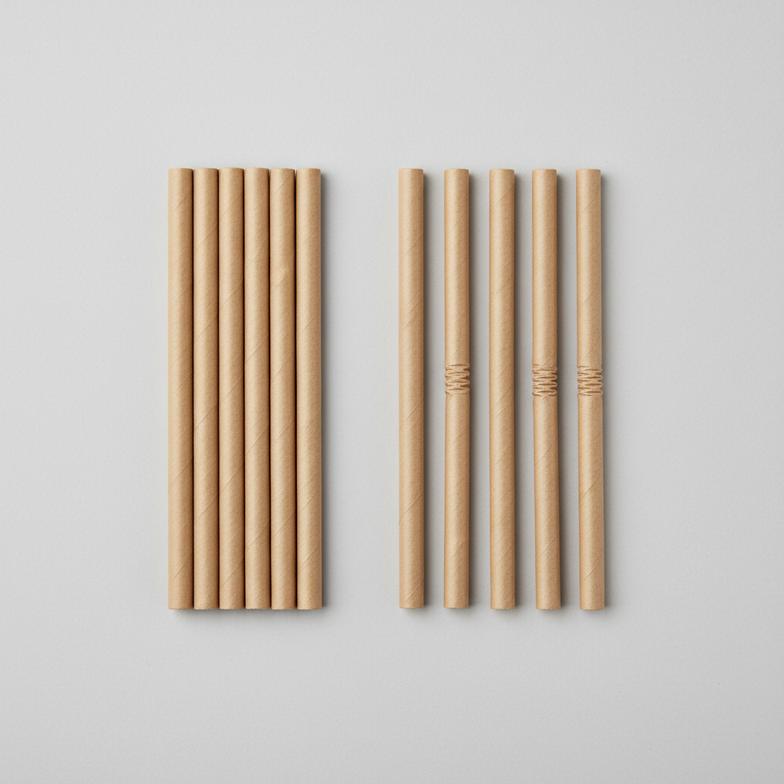
Seeing it this way changes the game. It’s not about “either/or” anymore; it’s about creating a smart portfolio. But how do you decide which straw to use for which drink? Over my years helping hundreds of businesses—from small cafes to large distributors—I’ve developed a simple framework. It all comes down to asking four straightforward questions. Let’s walk through them together.
Have you ever gotten a complaint that a straw was too short, too narrow, or too flimsy to pierce a sealed lid? This kind of operational friction is more than a minor annoyance; it’s a flaw in the customer experience that reflects directly on your business. Getting the operational fit right isn’t just a detail; it’s the foundation of a good product choice.
Operational fit simply means making sure the straw’s physical characteristics—its length, diameter, and strength—are perfectly matched to your cups, lids, and the drinks you serve. This alignment is critical for preventing customer frustration and ensuring a smooth, seamless experience from the first sip to the last.

When I consult with a new client, this is always where we start. It’s the most practical and crucial piece of the puzzle. You can have the most beautiful, eco-friendly straw in the world, but if it doesn’t work with your product, it’s useless.
The single most common mistake I see is a mismatch between straw diameter and drink viscosity. It sounds technical, but it’s simple: a thin straw can’t handle a thick drink.
I remember working with a regional cafe chain that was getting consistent negative feedback about their new smoothie line. The drinks were great, but customers found them “impossible to drink.” We quickly identified the problem: they were using their standard 8mm straws. After we switched them to a 10mm smoothie straw, the complaints stopped overnight.
A straw that sinks into the cup is a classic service blunder. The rule is simple: the straw should be significantly taller than the cup to allow for comfortable drinking. Most standard cups work well with a 197mm (7.75″) or 210mm (8.25″) straw.[3] For extra-tall cups, you may need longer options.
Beyond length, consider the tip. If you use cups with a peel-off or punch-through film lid—common in bubble tea shops and grab-and-go concepts—you need a straw that can handle it. Straight straws can be made with a pointed or “sharpened” tip designed specifically to pierce these seals cleanly without shredding the straw or requiring excessive force.
No matter the shape, a paper straw has to be durable. Customers expect it to last for the duration of their drink without becoming soggy or collapsing. At our factory, we use a multi-layer construction with high-quality, FSC-certified kraft paper and a minimal amount of food-safe glue. This process ensures that both our straight and bendable paper straws hold their integrity for 3+ hours in a cold beverage under normal use[4]. While a straight straw has a simpler, inherently rigid structure, a well-made bendable straw is just as robust. The quality of the raw materials is what truly makes the difference.
You’ve invested time and money into crafting your brand identity, from the logo on your cups to the music playing in your store. But have you stopped to think that the straw is one of the most intimate touchpoints a customer has with your brand? They hold it, put it in their mouth, and interact with it for the entire drink. The wrong straw can send a mixed message and undermine the experience you’re trying to create.
The format of your paper straw should actively reinforce your brand’s promise and personality. A sleek, minimalist straight straw might perfectly complement a modern, adult-focused brand. In contrast, a flexible bendable straw can communicate a message of convenience, accessibility, and family-friendly care.

Thinking about the straw as part of your brand strategy, rather than just a commodity, is what separates good businesses from great ones. It shows a deep level of care for the customer’s entire experience.
The straight paper straw is the epitome of clean, modern design. It’s direct, functional, and gets the job done without any fuss. This makes it a natural fit for brands that value:
For example, a high-end cocktail bar I supply uses only unwrapped, solid black straight straws. The choice is deliberate. It matches their dark, moody decor and signals that they cater to a discerning adult clientele.
The bendable paper straw, with its flexible neck, sends a completely different message. It says, “We’ve thought about your comfort.” This makes it the superior choice for brands and environments focused on:
Remember, you don’t have to stick with plain kraft or white. Both straight and bendable paper straws can be powerful marketing tools. We can custom print them with your logo, brand colors, or a unique pattern. An individually wrapped, custom-branded straw reinforces your brand identity from the moment it’s handed to the customer until the very last sip.
Are you worried that offering more convenient options like bendable straws will squeeze your margins? It’s a valid concern for any procurement manager or business owner. However, looking only at the per-unit cost is a classic mistake that can end up costing you more in customer satisfaction and brand perception down the line.
Straight paper straws generally have a lower per-unit cost because the manufacturing process is simpler and faster. Bendable straws cost a bit more due to the additional mechanical step required to create the flexible section.[6] A proper cost-benefit analysis weighs this small price difference against the significant value of an enhanced customer experience in specific, high-impact scenarios.

I always advise my clients to think about cost in terms of value, not just price. Sometimes, spending a fraction of a cent more on the right straw can prevent a negative review or win you a loyal family of customers.
Let me give you an inside look from the factory floor. A straight paper straw is made by spirally winding three or more layers of paper and glue around a metal rod, which is then cut to length.[7] It’s a fast, highly optimized process.
To make a bendable straw, we take a finished straight straw and run it through a second machine. This machine uses a set of interlocking gears or dies to precisely press and crease a small section of the straw, creating the corrugated, flexible neck.[8] This additional step requires specialized equipment, a bit more time, and careful calibration, which is why it adds a small premium to the final cost.
This is where the real savings and value come from. You don’t need to choose one or the other for your entire operation. A blended, or portfolio, strategy is the most cost-effective approach.
Think of it like the 80/20 rule.[9] For 80% of your drinks—the sodas, iced teas, and standard coffees—a cost-effective straight straw is the perfect choice. You reserve the slightly more expensive bendable straws for the 20% of situations where they deliver outsized value. This could be for all drinks on your kids’ menu or as an optional upgrade for takeout orders. By using the premium option strategically, you delight customers where it counts most without inflating your overall operational costs.
Here’s a simple table to help you visualize the trade-offs in the straight vs bendable paper straws decision:
| Feature | Straight Paper Straws | Bendable Paper Straws |
|---|---|---|
| Manufacturing | Simpler, faster, single-step process | Adds a secondary creasing/bending step |
| Per-Unit Cost | Lower | Slightly higher |
| Best Use Cases | High-volume, dine-in, adult beverages, minimalist brands | Children’s drinks, healthcare, takeout, convenience-focused brands |
| Brand Perception | Efficient, modern, sleek, minimalist | Convenient, accessible, caring, family-friendly |
| Operational Note | Extremely robust and straightforward | Flexible neck adds convenience for specific users |
Okay, so you’re sold on the idea of a product mix. But the thought of managing more SKUs, training your staff, and potentially confusing your ordering process might feel a bit daunting. How do you actually implement this strategy in your daily operations without creating a logistical nightmare?
Creating a smart product mix is all about segmenting your menu and customer scenarios, not overcomplicating things. The process involves assigning a default “workhorse” straw (usually straight) for the majority of your drinks and then clearly identifying the specific situations that require a specialized straw (like a bendable or wider-diameter version).
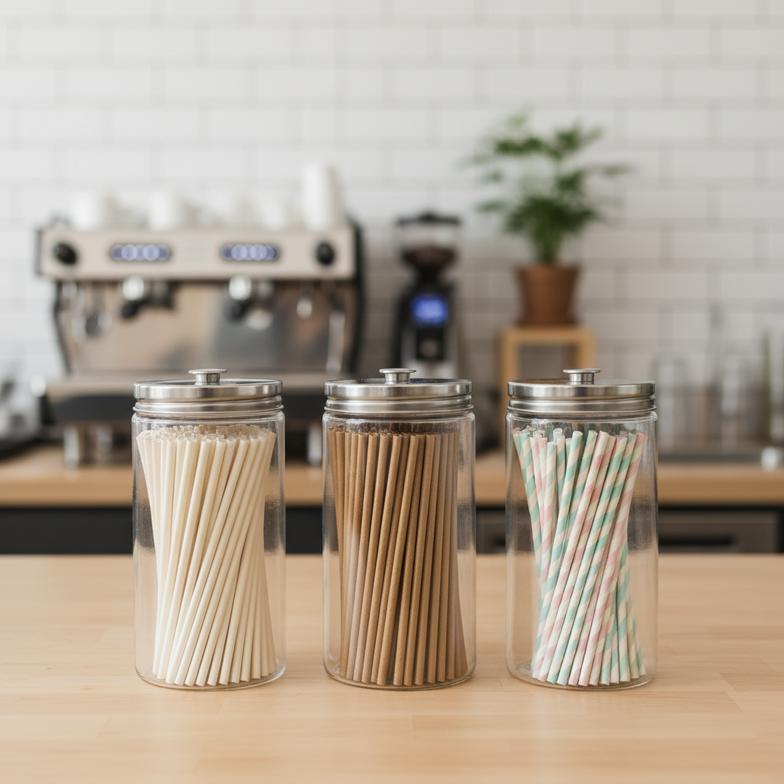
The key to success here is simplicity and clarity. A well-designed system should feel intuitive to your staff and seamless to your customers. Let’s break it down into a few easy steps.
Start by making a simple list of every beverage you sell. Next to each one, note two things: 1. Viscosity: Is it thin (soda), thick (milkshake), or chunky (bubble tea)? 2. Serveware: What specific cup and lid combination does it come in?
This quick audit gives you a clear “needs analysis.” You’ll immediately see where a standard straw works and where you have a potential mismatch that needs a specialist solution.
Now, using your audit, you can build your straw portfolio. For most businesses, it looks something like this:
This three-straw system covers almost every possible scenario for a typical cafe or restaurant.
Your staff is on the front lines, so the system has to be dead simple for them. A complex system will fail. I’ve seen clients succeed with a few simple tricks:
The best part? By sourcing all these varieties from a one-stop solution provider like us at PaperStrawTech, you simplify your procurement process. You get consistent quality, color matching, and branding across your entire portfolio with a single order and a single point of contact.
Yes, when they are manufactured correctly. A quality bendable straw has a flexible neck created by creasing the paper, not by weakening it. When made from robust, multi-ply kraft paper like ours, they are just as resistant to sogginess and will last just as long in a drink as their straight counterparts.
They do cost slightly more per unit due to the extra manufacturing step involved. However, when you use them strategically for specific high-value situations (like kids’ meals or for customers with accessibility needs), the small added cost is easily justified by the major improvement in customer experience.
Absolutely. Both formats are fully customizable. You can have your brand’s logo, colors, or a custom pattern printed on either the straw itself or its individual wrapper. This is an excellent way to maintain a strong and consistent brand identity across your entire product line.
From an environmental standpoint, both straight and bendable paper straws are excellent choices because they are biodegradable and made from a renewable resource[10]. They are vastly superior to plastic. The choice between the two formats has no meaningful environmental impact. The most important factor is ensuring your supplier uses certified, sustainably sourced paper, like FSC-certified materials[11].
Ultimately, the debate over straight vs bendable paper straws isn’t about finding a single winner. The smartest, most effective approach is to stop thinking in terms of “either/or” and start building a strategic product mix. By carefully analyzing your operational needs, considering your brand experience, and mapping the right straw to the right scenario, you create a system that truly works. A cost-effective straight straw can be your daily workhorse, while a wider or bendable straw can be your specialist tool to delight customers in the moments that matter most. This thoughtful approach reduces customer complaints, streamlines operations, and reinforces the quality of your brand.
If you’re ready to build a smarter, more effective paper straw portfolio for your business, my team at PaperStrawTech is here to help. With our own factory and years of hands-on experience, we provide more than just products—we provide complete solutions. Contact us today to get expert advice on building the perfect product line for your needs.