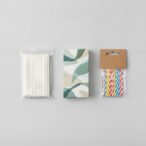
Struggling to get your branded paper straws just right? You’ve perfected the straw itself, but now the packaging—the wrapper—is causing headaches. You want it to look great, but you’re hearing horror stories of seals failing and wrappers falling apart before they even reach the customer. The solution to reliable and beautiful custom printed straw wrappers lies in understanding a critical, often-overlooked technical detail: the battle between ink and glue.
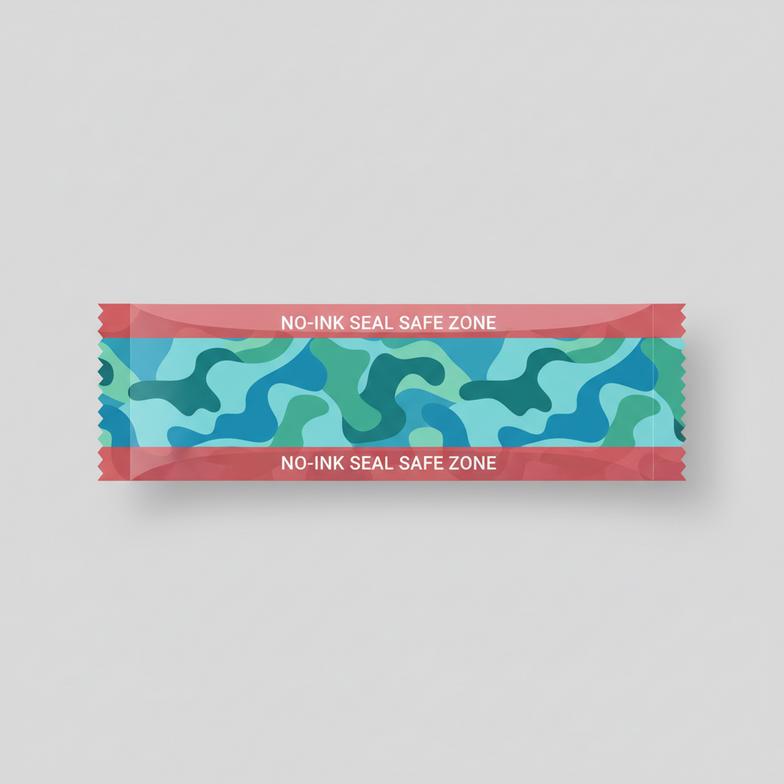
The most important factor for successful custom printed straw wrappers is balancing your brand’s design with the technical needs of production. Excessive ink coverage, especially near the edges where the wrapper is sealed, creates a barrier that prevents heat-seal glue from properly bonding to the paper[1]. This leads to weak seals, high failure rates, unhygienic products, and costly supply chain disruptions. A successful design always prioritizes a clear, ink-free “seal safe zone.”
Now you know the core problem. But this isn’t just a minor technical issue; it’s a major business risk. Let’s dive into why this happens and, more importantly, how you can work with your supplier to create a wrapper that is both eye-catching and operationally bulletproof.
Your marketing team has a vision: a bold, full-bleed design that covers the entire wrapper to make your brand pop. It looks amazing on a computer screen. But what happens when that beautiful design causes thousands of straws to show up at your distribution center with their wrappers falling off, jamming your automatic packing machines? It’s because ink and heat-seal glue simply do not work well together.
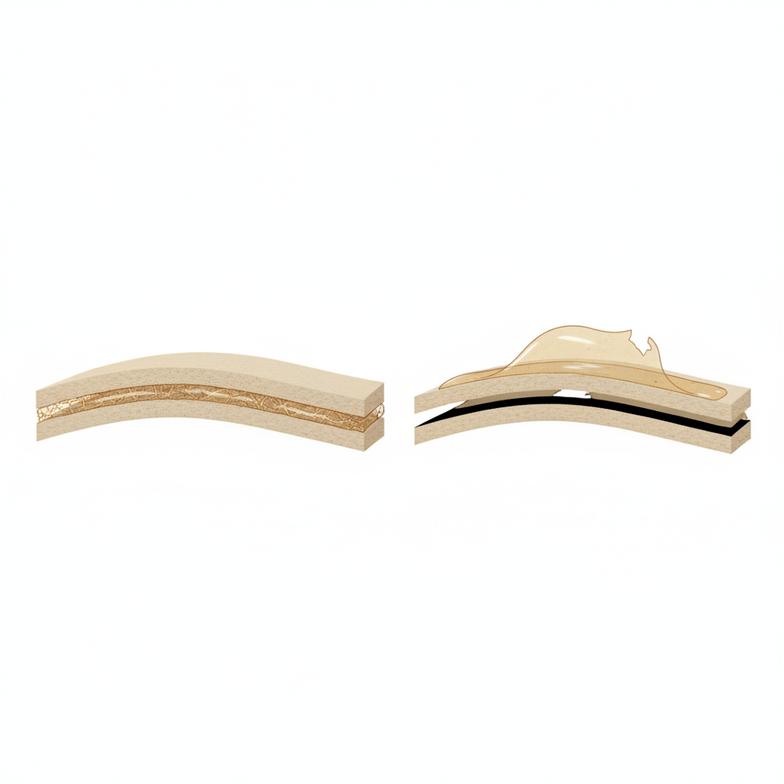
Too much ink on custom printed straw wrappers essentially puts a layer of paint on the paper surface. A proper heat seal works by melting a special glue that soaks into the paper fibers on both sides of the seam[2]. As it cools, it creates a powerful, permanent bond. When ink is in the way, the glue can only stick to the surface of the ink, not the paper itself, creating a weak seal that’s doomed to fail.
I’ll never forget a call I got from a large coffee chain a few years ago. They were a new client, and their design agency had created a gorgeous wrapper for their new line of eco-friendly paper straws. The design was a deep, rich brown that covered the entire wrapper, edge to edge. It was designed to match their coffee cups perfectly.
We advised them against it. We explained the risk of seal failure and showed them diagrams, just like the ones I’m describing here. But they were committed to the aesthetic and found another supplier who told them, “No problem, we can print that for you.”
Six weeks later, I got another call. It was a panic. Their first major shipment had arrived, and nearly 20% of the wrappers had failed in transit[3]. Open, unhygienic straws were mixed in with sealed ones. Worse, the loose wrappers were getting caught in the automatic dispensers at their cafes, causing them to jam during the morning rush. Baristas were wasting precious time trying to fix the machines, service slowed to a crawl, and managers were furious.
The true cost[4] wasn’t the few cents they paid for each wrapper. The true cost was:
This experience taught me that for custom printed straw wrappers, a good design isn’t just about how it looks. It’s about how it performs in the real world. A small change in the artwork can be the difference between a smooth operation and a logistical nightmare.
Here’s a simplified way to think about the risk based on ink coverage in the seal area:
| Ink Coverage in Seal Area | Seal Strength | Estimated Failure Rate Risk |
|---|---|---|
| 0% (No Ink) | Excellent | < 0.1% |
| 10-30% (Light Pattern) | Good | ~1-2% |
| 50-70% (Heavy Color) | Poor | ~5-10% |
| 90-100% (Full Bleed) | Very Poor | > 15%[5] |
As you can see, the risk climbs dramatically once ink starts interfering with that critical seal zone.
So, you can’t just leave your wrapper blank; branding is essential. The good news is you don’t have to choose between a strong brand presence and a reliable product. You can absolutely have both. The secret isn’t to sacrifice your design, but to design smarter. This is where a collaborative partnership with your supplier becomes so important.
The best way to balance branding with reliability for custom printed straw wrappers is by starting with a design template that has clearly marked “seal safe zones.” These are designated areas, usually just a few millimeters wide along the edges, that must be kept completely free of ink. This guarantees the heat-seal glue can form a powerful, direct bond with the paper, ensuring a hygienic and durable seal.
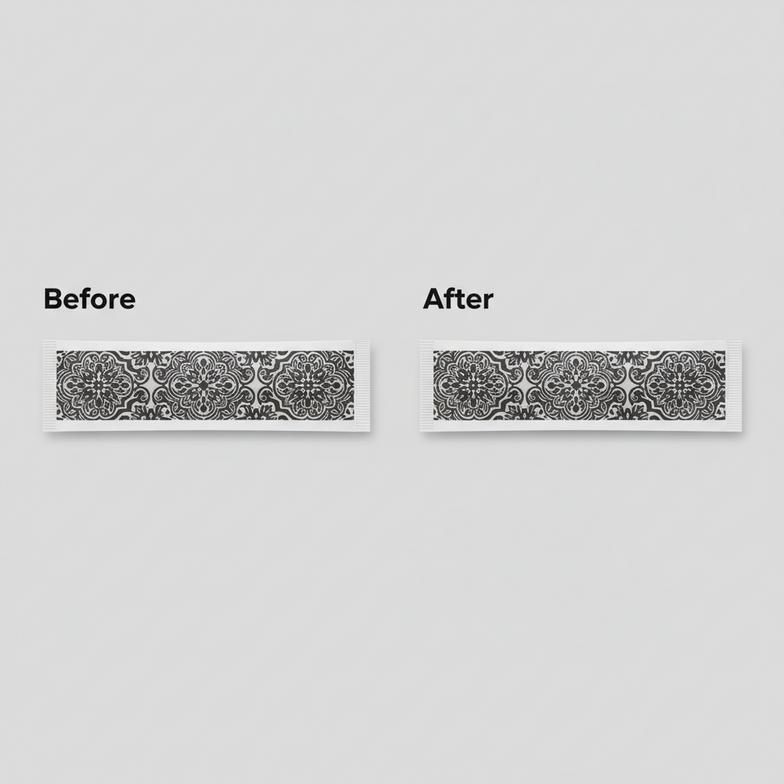
Thinking inside the box—or in this case, inside the “safe zones”—can actually spark creativity. When we work with clients on their custom printed straw wrappers, we don’t just point out problems; we help them find solutions.
A great supplier won’t just ask for your finished artwork file. They will provide you with a detailed design template before you even start. This template is your blueprint for success. It will show:
This template empowers your design team to be creative while respecting the technical boundaries of production. It removes the guesswork and drastically reduces the risk of costly errors.
Here are a few strategies we recommend to clients to create wrappers that are both beautiful and reliable:
The conversation with your supplier should shift from “Can you print this?” to “What is the operational risk of this design?” A true partner will be happy to answer this question and help you find the perfect balance.
When you’re sourcing disposables, it can be tempting to go with the supplier who says “yes” to everything. Many factories will promise to print any design you send them because they want to close the deal quickly. But this is a major red flag. A supplier who blindly accepts a flawed design is simply passing all the risk and future costs of failure directly onto you[8].
When choosing a supplier for custom printed straw wrappers, look for a partner who acts as a technical consultant. A great supplier will proactively review your artwork for manufacturing risks, provide clear design templates, and take the time to explain why certain adjustments are necessary for ensuring seal quality, hygienic packaging, and your long-term operational stability.

The difference between a supplier and a partner comes down to their approach. An order-taker says, “Sure, we can print that.” A partner says, “This design looks great. I do see a potential risk with the ink coverage on the seal edge. Let’s look at a couple of minor tweaks we can make to ensure you get a 99.9%+ success rate.”
At PaperStrawTech, this is a conversation I have almost every day. My job isn’t just to sell straws; it’s to ensure our clients have a reliable, uninterrupted supply chain. Our reputation is built on our clients’ success. We run our own factory with 10 production lines, so we’ve seen firsthand what works and what doesn’t. We bring that practical experience to every client project.
To find out if you’re talking to a true partner, ask them these questions:
Finally, remember that reliability is a form of sustainability[10]. Every wrapper that fails, and every straw that has to be thrown away as a result, is a waste of paper, ink, energy, and shipping fuel. A strong, reliable seal is a green seal.
While there isn’t one exact number, any ink at all within the 3-5mm heat-seal area is a risk. Designs that cover 100% of the wrapper with ink, often called “full-bleed,” have the highest probability of seal failure. For maximum reliability, the seal zones should be kept completely free of ink.
Yes, specific Pantone (PMS) brand colors can be printed with high accuracy. The key is not the color itself, but where it is placed on the wrapper. We can perfectly match your brand colors in the safe, central area of the wrapper, while keeping the critical seal zones ink-free.
Absolutely. The paper’s properties, like its weight (measured in gsm) and porosity[11], are crucial. We use specific grades of paper engineered for high-speed heat-sealing. The paper must be strong enough not to tear during wrapping but porous enough to allow the adhesive to soak in and create a permanent bond.
A failed batch can be a major problem for a business. It can lead to product recalls, costly downtime at your packing facilities, stockouts in your stores, and damage to your brand’s reputation for quality. The financial impact of these operational disruptions often far outweighs the original cost of the wrappers.
Getting your custom printed straw wrappers right means shifting your thinking. It’s not just about artwork; it’s about managing operational risk. The most beautiful design in the world is useless if it causes seals to fail and your supply chain to grind to a halt. By prioritizing a “seal safe zone” and avoiding heavy ink coverage on the wrapper edges, you can prevent the vast majority of potential problems. The best way to do this is to work with a supplier who acts as a true technical partner, guiding you toward a design that is both attractive and flawlessly reliable. A small tweak in your artwork today can save you from a massive operational headache tomorrow.
If you’re looking to develop custom branded wrappers that are both eye-catching and built for reliability, our team is here to help. Contact us today for a design consultation and let’s make sure your project is a success from the very first step.