
Struggling to choose the right paper for your hemp filter tips can lead to flimsy products that customers discard, or production jams that cost you time and money. This constant uncertainty makes sourcing materials a stressful guessing game, putting your brand reputation and budget at risk over a single number. The solution isn’t finding a magic GSM, but understanding how to choose the right paper GSM for hemp filter tips by balancing cost, quality, and performance.
There is no single "best" paper GSM for hemp filter tips. The ideal choice is a trade-off, typically falling within the 60 GSM to 100 GSM range[1]. The optimal paper depends on your desired product stiffness, how the tips will be manufactured (machine vs. hand-rolled), and your target cost-per-unit.
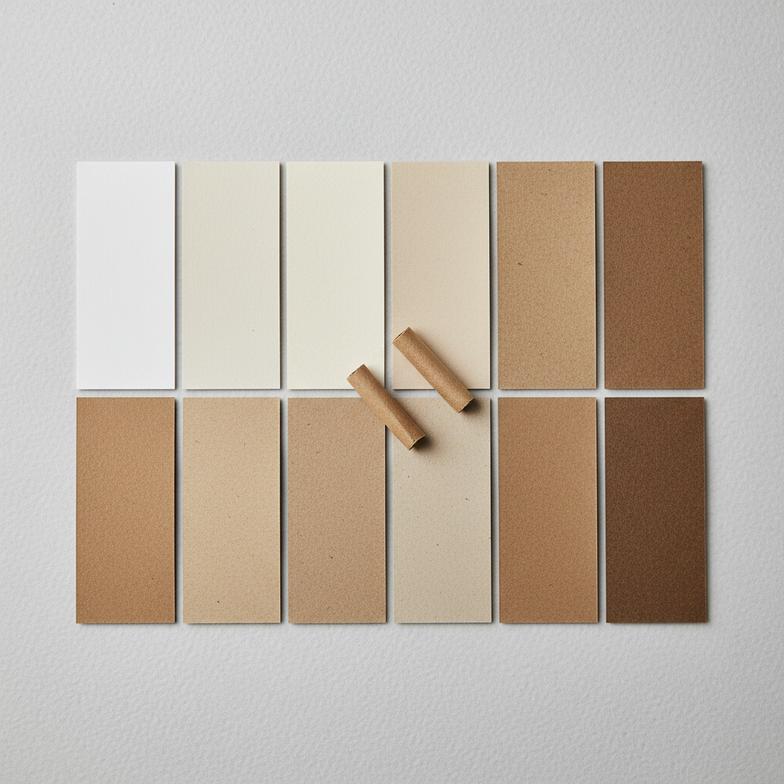
Now that we’ve established it’s a range and not a single number, you’re probably wondering what factors push you towards 60 GSM or 100 GSM. It all comes down to a strategic decision balancing user experience, production efficiency, and material cost. Let’s break down how to make that decision confidently.
Are you feeling frustrated by the endless search for a definitive answer on the best GSM? It seems like a straightforward question, but the lack of a clear number can stall your entire project. The truth is, focusing only on GSM means you’re looking at just one piece of a much larger puzzle.
The reason a single "best" paper GSM for hemp filter tips doesn’t exist is because GSM (grams per square meter) only measures the paper’s weight[2]. It tells you nothing about other critical properties like stiffness, texture, porosity, or how the paper was manufactured—all of which drastically affect the final product.

We often get asked by customers for a "thick" paper, and they usually equate thickness with a high GSM. However, stiffness is far more important for a filter tip, and it doesn’t always correlate with GSM[3].
Think of it like this: a 1mm thick sheet of steel is infinitely stiffer than a 5mm thick piece of foam, even though the foam is "thicker." The same principle applies to paper. A lower GSM paper made from dense, highly-compacted pulp fibers can feel much stiffer[4] and more premium than a higher GSM paper that is soft and porous. We have seen 80 GSM papers that outperform 100 GSM papers on stiffness simply because of their composition and manufacturing process.
For a hemp filter tip, stiffness is what prevents it from feeling flimsy, collapsing during use, or losing its shape. This is what your end-user will notice and judge your product on.
The raw materials and manufacturing process play a huge role in the paper’s final characteristics.
Because of these variables, two papers with the exact same 90 GSM rating can feel and perform completely differently. That’s why relying on the GSM number alone is a common but costly mistake.
Choosing a paper GSM might feel like a minor technical detail, but it has major consequences for your budget, brand, and operations. Picking the wrong weight can either inflate your material costs unnecessarily or lead to a flood of negative customer reviews that damage your sales.
A lower GSM paper directly reduces your material cost per tip[7], but it brings the risk of creating a flimsy product that feels cheap to the end-user. Conversely, a higher GSM paper often feels more premium and sturdy, but it increases your costs and may not be compatible with all production machinery.

The choice of GSM is a balancing act with direct business implications. We can break down the decision into a simple comparison table based on what we see with our clients.
| Feature | Lower GSM (e.g., 60-70 GSM) | Higher GSM (e.g., 90-100 GSM) |
|---|---|---|
| Material Cost | Lower cost per ton, more tips per roll. | Higher cost per ton, fewer tips per roll. |
| User Perception | Can feel flimsy, weak, or "cheap." | Feels sturdy, premium, and substantial. |
| Brand Risk | High risk of negative reviews for poor quality. | Risk of being priced out of the market. |
| Production Efficiency | May run faster on some machines. | May require slower speeds or cause machine jams if too stiff. |
| Shipping & Storage | Lower weight, potentially lower freight costs. | Higher weight, potentially higher freight costs. |
As you can see, the "best" choice is not obvious. A startup brand focused on affordability might lean towards a lower GSM to keep costs down. In contrast, a premium brand whose identity is built on quality would likely opt for a higher, stiffer GSM to deliver a superior user experience, even at a higher cost.
We once consulted with a company that switched from an 80 GSM paper to a 60 GSM paper to save about 15% on material costs. The savings looked great on paper. However, within a few months, their online product reviews were flooded with complaints about the tips being "too soft" and "falling apart."[8]
Their sales dropped, and they ended up spending more on marketing to repair their brand image than they ever saved on materials. This is a classic trap for procurement managers focused purely on cost per ton. The right paper GSM for hemp filter tips is one that protects your brand first and optimizes for cost second.
If asking for the "best GSM" is the wrong approach, you might feel a bit lost. How are you supposed to communicate your needs to a supplier without using the industry’s most common metric? The solution is simple: describe your desired outcome, not your presumed solution.
Instead of asking for a specific paper GSM, you should ask your supplier for a material that achieves specific performance characteristics. Shift your focus to describing the required stiffness, how it needs to perform on your machines, and your target price point. Give your supplier a problem to solve.

When you approach a supplier, you will get a much better result by framing your request around your business and product goals. This is the kind of information that allows us, as a solution provider, to recommend the perfect material.
Instead of asking, "Do you have 80 GSM paper?", try these more effective questions:
This approach turns your supplier into a partner. They can use their expertise to match a material to your specific problem, rather than just selling you whatever GSM you asked for.
You’ve described your needs, and your supplier has sent a few options. Now you’re staring at three different paper samples, but how do you make a final, confident decision? Just looking at them and their data sheets isn’t enough. You need a structured, hands-on testing process.
The most reliable way to select the right paper GSM for hemp filter tips is to request a range of samples (e.g., 60, 80, and 100 GSM, or different types of 80 GSM) and conduct blind tests that evaluate both user feel and production compatibility.

What we advise our customers to do is to remove bias and test for real-world performance. A simple, structured process will save you from making a multi-thousand-dollar mistake.
1. Request a Curated Range: Ask your supplier for 3-4 targeted samples based on the needs you described. For example, an 80 GSM standard, an 80 GSM high-stiffness version, and a 90 GSM option. 2. Label Samples Blindly: Don’t get influenced by the numbers on a spec sheet. Label your samples as A, B, and C. Create a separate key so you know which is which, but keep it hidden during testing. 3. Perform a ‘Hand Feel’ Test: Give the samples to several people on your team. Ask them to roll a tip with each one. Have them rate each sample on a scale of 1-5 for stiffness, smoothness, and perceived quality. Which one feels the most premium? 4. Run a Production Test: This is the most critical step. Run each sample on your actual production machinery. Does it feed correctly? Does it roll without jamming or creasing? Do you have to slow the machine down for a specific sample? A paper that feels great in the hand is useless if it can’t be manufactured efficiently. 5. Simulate Real-World Use: Roll a few tips from each sample and let them sit. Does one lose its shape or uncurl after an hour? This simple test can reveal issues with paper memory and long-term rigidity. 6. Document and Decide: Collate all the feedback. Cross-reference the blind test results with your hidden key and the cost of each option. Now you can make a data-driven decision, balancing user preference, production performance, and cost.
This process transforms a guess into an informed business decision, ensuring the paper you choose is the right one for your brand and your bottom line.
No. Stiffness is more important than thickness. A thinner, denser paper can feel more premium and perform better than a thicker, softer paper. Always evaluate samples based on feel and rigidity, not just the thickness or GSM number.
Absolutely not. The paper must be certified as food-contact safe[9], as it will be in direct contact with the user’s mouth. It should also be uncoated and free from harmful chemicals, bleaches, or dyes. Work with suppliers who can provide safety documentation.
Machine-rolled tips often require a more consistent and moderately stiff paper (e.g., 70-90 GSM) to prevent jamming[10]. Hand-rolling is more forgiving, so users can work with a wider range, from softer 60 GSM paper to very rigid 100+ GSM paper, depending on personal preference.
Color itself doesn’t directly impact GSM, but the dyeing process can sometimes alter the paper’s stiffness and texture[11]. A brown kraft paper and a white paper of the exact same 80 GSM might feel different. If you are considering colored papers, it is essential to get samples and test them.
Ultimately, the quest for the "best" paper GSM for hemp filter tips is misleading. The focus should not be on finding a single magic number but on understanding the strategic trade-offs between material cost, brand perception, and production efficiency. The ideal GSM is not a fixed point but a range that depends entirely on your specific goals. By shifting the conversation with your supplier from "what GSM do you have?" to "here is the product I need to create," you empower them to be a true partner. Always validate their recommendations by testing samples in a real-world setting. This methodical approach ensures you select a paper that strengthens your brand and supports a healthy bottom line.
If you’re ready to move beyond guessing games and find the perfect paper solution for your filter tips, contact our team at RainbowBear / PaperStrawTech. We provide not just the materials, but the manufacturing expertise to help your business thrive.