Buying paper straws seems easy. But the term ‘biodegradable’ causes confusion[1], and choosing the wrong product can risk your investment and reputation. How do you make a safe choice?
For bulk buyers, ‘biodegradable’ means the straw’s components—paper, glue, and ink—can break down under specific, certified conditions. You must verify these third-party certifications (like BPI or TUV)[2] to ensure the product is compliant and marketable in your region.

We talk to buyers every day. A frequent mistake we see is buyers accepting the "biodegradable" label at face value. This can lead to major problems with customs, regulators, or customers down the line. The term itself is not a guarantee of quality or compliance. Your job as a buyer is to look past the label and understand what it truly represents for your business. Let’s break down what you actually need to check to protect your purchase and ensure you’re getting what you paid for.
Your customer sees a paper straw, but it’s made of multiple parts. Claiming it’s biodegradable without proof for every part is a big risk for your business.
A truly biodegradable paper straw has certifications proving that its paper, glue, and ink will break down under specific environmental conditions. Without proof for all three components, the claim is incomplete and potentially misleading.
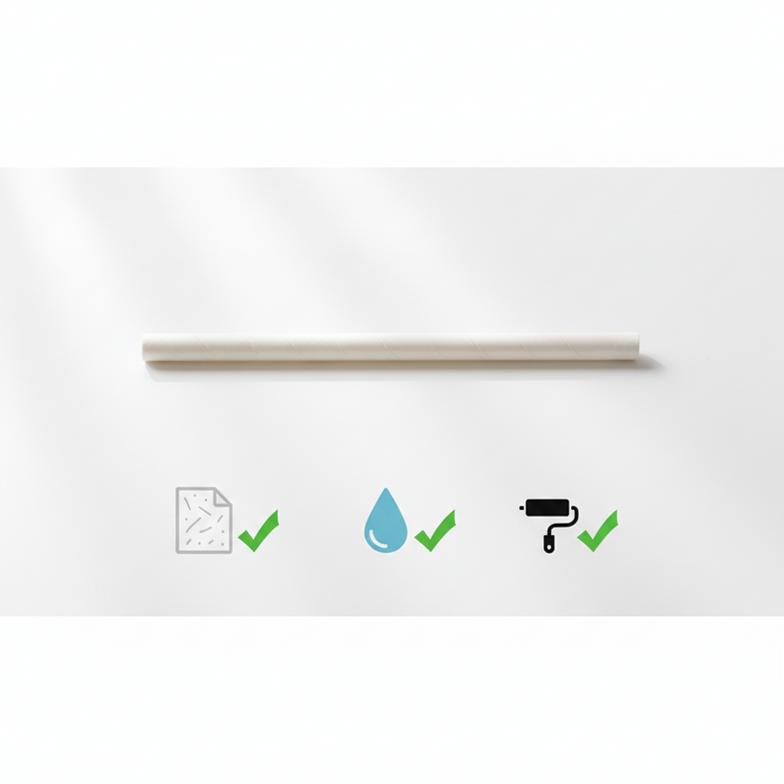
When we started manufacturing, we learned that a straw is only as eco-friendly as its weakest link. A common question we get from new buyers is, "Is your straw biodegradable?" My answer is always another question: "Which parts are you asking about, and under what conditions?" The word "biodegradable" is meaningless without context. It doesn’t tell you how long it takes to break down or where it needs to end up (e.g., an industrial composting facility, your backyard compost bin, or the ocean). A reliable product’s claim is backed by testing for its individual components.
You need to verify each material separately. A supplier should be able to provide documentation for each one.
The table below shows what to look for with each component.
| Component | What to Ask For | Why It Matters |
|---|---|---|
| Paper | FSC Certification | Ensures the wood pulp is sourced from responsibly managed forests, a key part of sustainability. |
| Glue | Biodegradability Test Report & MSDS | The glue must not leave behind microplastics or harmful residues. It must break down with the paper. |
| Ink | Food-Grade Compliance & MSDS | Inks must be free of heavy metals and toxins to be safe for consumers and the environment. |
You found a supplier with certified straws. But their certificate might be useless in your market, leading to rejected shipments or fines. How do you avoid this costly mistake?
The right certification depends entirely on your target market’s regulations and available waste disposal systems. You must match the certification (e.g., BPI for North America, TUV OK compost for Europe) to your specific sales region.

A frequent mistake we see is buyers asking for every certificate available, or worse, not asking for any. Sourcing isn’t about collecting logos; it’s about meeting specific legal and commercial requirements. For example, a certificate for marine biodegradability is impressive, but it might be irrelevant[6] and costly if your market only has access to industrial composting facilities. Your goal is to secure a product that is compliant and marketable where you do business. A good supplier should help you figure this out, not just sell you their most expensive certified option. They should ask where you plan to sell the straws.
Different regions trust different third-party verifiers. Selling a product with a European certificate in North America might not work, and vice-versa. You need to align your product with local expectations.
Here is a simple guide to some of the major certifications and their primary markets.
| Certification | Standard Type | Primary Market Focus | What It Means for You |
|---|---|---|---|
| BPI | Industrial Compostable | North America (USA & Canada) | Essential for making compostable claims in the US market[8]. BPI is widely recognized. |
| TUV OK compost INDUSTRIAL | Industrial Compostable | Europe | The European standard for products intended for industrial composting facilities.[9] |
| TUV OK compost HOME | Home Compostable | Global, especially Europe | A higher standard that allows you to market straws to consumers with home compost piles. |
| DIN CERTCO[10] | Industrial/Home Compostable | Germany / Europe | Another well-respected German-based certification body, similar in scope to TUV. |
You’ve discussed certifications. But talk is cheap. A supplier’s promise means nothing without official documents to back it up. How do you get the proof you need?
Always demand current, valid third-party test reports and certificates for the specific product you are buying. The absence of these documents, along with material data sheets, is a major red flag.

We’ve seen buyers receive a "compliance package" that contains expired reports or documents for a completely different product. This is a common tactic used by suppliers who don’t have the right qualifications. A trustworthy partner will provide a complete and transparent set of documents for the exact straws you are ordering. This isn’t just about trust; it’s about risk management. These papers are your proof if a regulator, customer, or customs agent ever questions your product’s claims. If a supplier hesitates or makes excuses when you ask for these files, you should be very cautious about moving forward.
Think of these documents as the passport for your product. Without them, it’s not going anywhere. Each document serves a specific purpose in verifying the quality, safety, and compliance of your paper straws.