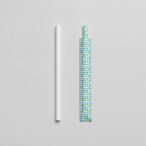
Are you tired of hearing supplier claims about paper straws lasting for hours, only to get customer complaints that they turn to mush in minutes? You’re not alone. The biggest headache in sourcing paper straws is the gap between promised performance and real-world results. This disconnect damages your brand’s reputation. Understanding the true factors of paper straw stability is crucial to finding a product that won’t let your customers down.
The stability of a paper straw is determined less by simple soaking time and more by a combination of temperature, physical stress from ice and stirring, and the type of beverage. A straw that survives hours in still water can fail quickly in a real-world scenario like an iced soda, where friction and cold make it brittle and accelerate wear.
Now that you know the secret isn’t just “time,” let’s dig into the three factors that actually predict whether a paper straw will hold up. This simple framework will change how you evaluate suppliers forever and help you de-risk your procurement decisions.
Relying on a single number, like a “4-hour soak time,” is a trap. It feels safe and measurable, but it’s a recipe for failure. When that “4-hour” straw disintegrates in a customer’s iced tea in 15 minutes, you’re the one who has to manage the negative reviews. Let’s be real, you need a better way to judge a straw’s quality.
The ‘Stability Triangle’ is a simple mental model we use at PaperStrawTech to evaluate paper straw stability under real-world conditions. It’s based on three interconnected factors: Temperature, Physical Stress, and Beverage Type. Thinking this way helps you predict performance in your specific drinks, not in a lab.
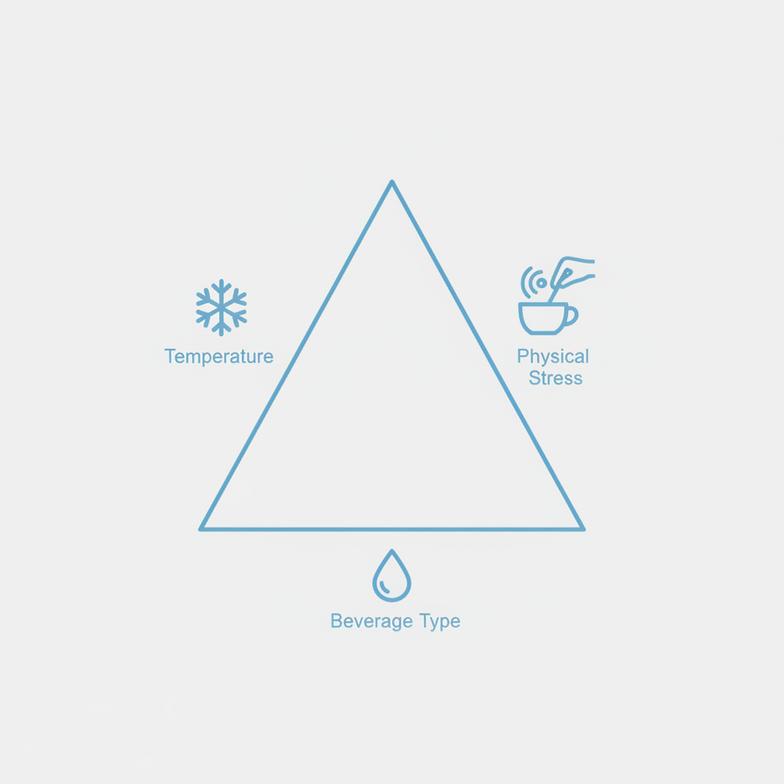
As a Solution Consultant, I’ve analyzed countless failed straw samples from businesses that fell for the soak-time myth. The evidence is clear: failure almost never happens in a static environment. It’s the dynamic interplay of these three factors that makes or breaks a straw.
You might think heat is the biggest threat, but for paper straws, cold is often more destructive[1]. Here’s why:
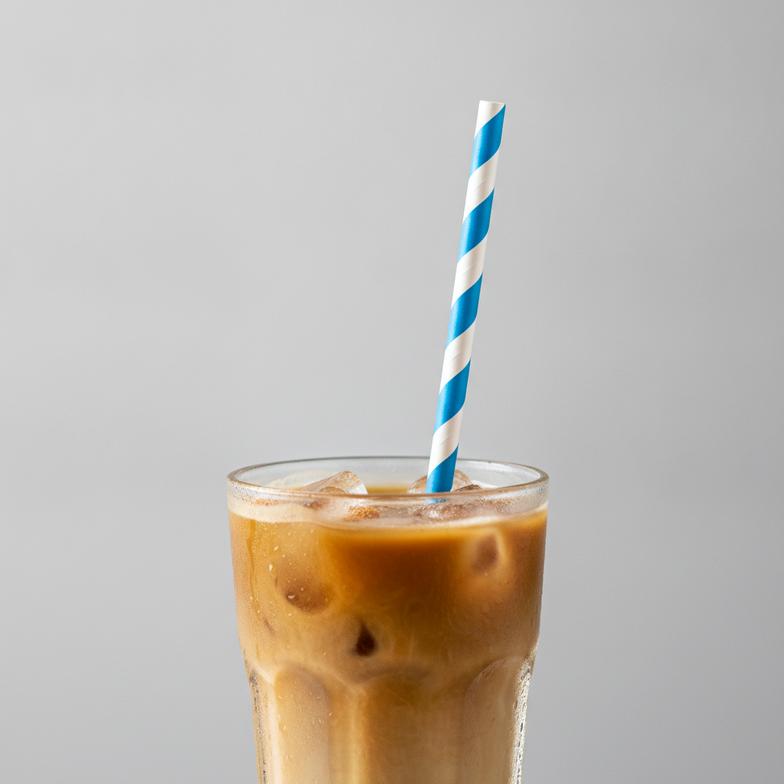
When we test for durability, we always use iced drinks because it’s the most common and challenging environment for a paper straw.
This is the number one reason straws fail. A straw doesn’t just sit in a drink; it’s used. Customers stir, sip, and sometimes even chew. This physical stress is the primary accelerator of sogginess[3].
My experience on the factory floor has taught me that a straw built to resist physical stress—with tight winding and superior glue adhesion—is the only kind that can truly claim to be stable.
Finally, what’s in the cup matters.
By considering these three factors together, you can move past simplistic marketing claims and start asking suppliers the right questions about performance in your specific menu items.
Have you ever been sent a video from a potential supplier showing their paper straw sitting perfectly intact in a glass of water for hours? It looks impressive, but it’s a classic sales gimmick. This “proof” is practically useless because it ignores how people actually use straws.
A static soak test is a poor indicator of paper straw stability because it removes the most important variable: physical stress. Real-world usage involves constant friction from ice, the force of stirring, and the pressure of sipping. These actions degrade a straw far more rapidly than letting it sit motionless in still water.
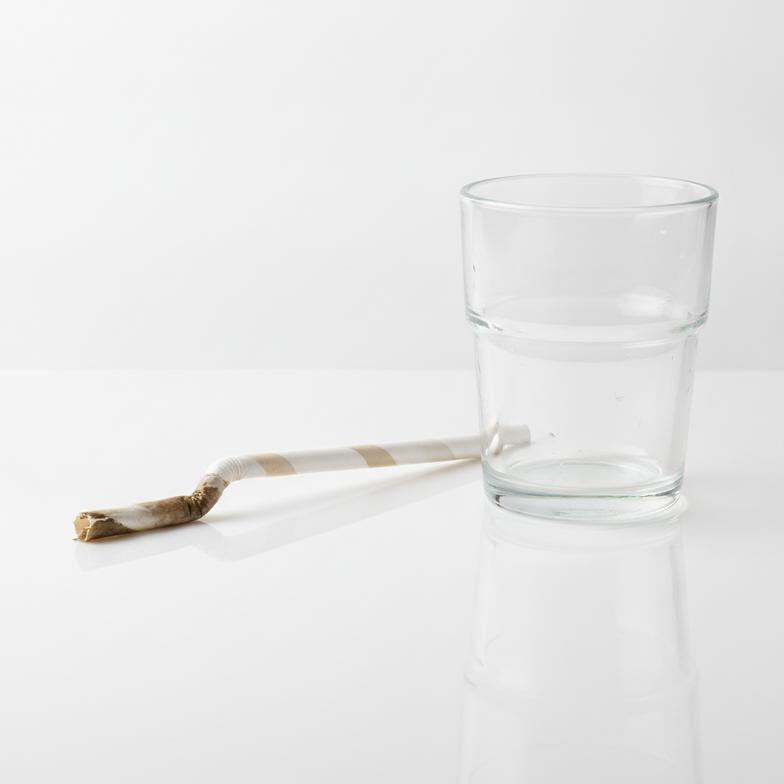
The difference between a controlled test and a real-world environment is night and day. When a supplier relies on a static soak test, they are deliberately creating an unrealistic, best-case scenario that has no bearing on your customer’s experience.
Here’s a breakdown of why it’s so misleading:
| Feature | Static Soak Test (The Myth) | Real-World Use (The Reality) |
|---|---|---|
| Movement | None. The straw is perfectly still. | Constant motion from stirring and sipping. |
| Physical Stress | Zero. No friction or pressure. | High stress from ice abrasion and stirring. |
| Temperature | Usually room temperature. No thermal shock. | Often iced, making the straw brittle. |
| Beverage | Typically plain, neutral pH water. | Varies: can be acidic, carbonated, or thick. |
| Relevance | Extremely Low. | Extremely High. |
When my team at PaperStrawTech helps a new client, like a coffee chain, diagnose their straw issues, the story is always the same. They show me samples from their previous supplier that were “guaranteed” to last for hours. I take one, put it in an iced latte, stir it ten times, and hand it back to them 15 minutes later. The tip is already mushy, and the seam is starting to lift.
The “soak test” only proves one thing: that paper gets wet in water. It tells you nothing about the quality of the construction. Good paper straw stability isn’t about being waterproof; it’s about being strong enough to resist delamination (unwinding) and abrasion under stress[6]. It’s a measure of structural integrity, which is a result of three things: 1. Durable Paper: Using the right grammage of kraft paper. 2. Quality Glue: Applying a strong, food-safe adhesive that won’t soften easily. 3. Tight Winding: Ensuring there are no gaps in the spiral construction where liquid can easily penetrate.
Don’t let a soak test video fool you. Demand samples and test them in a way that reflects your actual business.
So, how can you confidently vet a supplier’s claims without an expensive testing lab? You need a simple, repeatable process that mimics real customer behavior. Relying on a supplier’s word or their staged videos is a risk you can’t afford to take. The solution is to create your own practical, in-house benchmark test.
To effectively test for real-world paper straw stability, you should use your most popular (and challenging) iced beverage. Insert the sample straw, stir the drink vigorously 10-15 times to simulate customer use, and let it sit for 15 minutes. After 15 minutes, check the straw’s tip and body for any signs of sogginess, unwinding, or structural weakness.
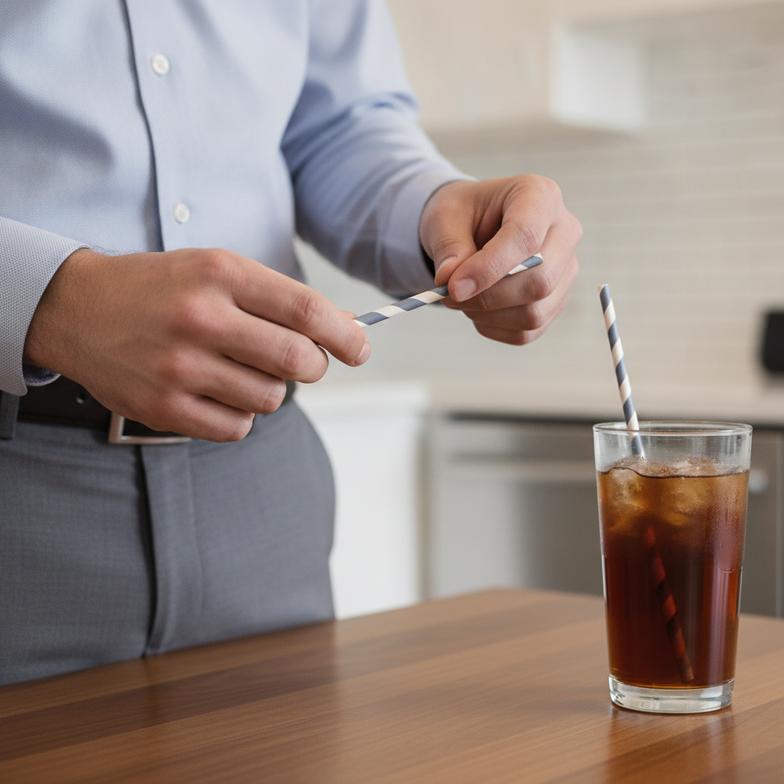
Over the years, helping countless restaurants and distributors, I’ve refined this simple process into a go-to protocol. It’s fast, easy, and gives you a surprisingly accurate picture of a straw’s quality. I tell all our prospective clients to try this with our samples side-by-side with their current supplier’s.
Here is the step-by-step protocol:
1. Select Your Test Drink. Don’t use water. Grab one of your most common menu items, ideally one served with ice. An iced coffee, a fountain soda, or a smoothie are perfect candidates. 2. Conduct the “Stir Test.” Once you place the straw in the drink, immediately stir it vigorously for about 10 seconds. Make sure you can hear the straw scraping against the ice cubes. This action simulates a customer mixing their drink and is the most critical stress test. 3. Wait for 15 Minutes. Let the straw sit undisturbed in the drink. This 15-minute window is when most poorly made straws begin to fail. For a customer, this is the time they spend chatting, waiting for food, or just slowly sipping. 4. Perform the First Check. After 15 minutes, pull the straw out and inspect it.
5. The Extended Test (Optional but Recommended). If the straw passes the 15-minute check, put it back in the drink. Check it again at the 30-minute and 60-minute marks. A truly high-quality paper straw, like the ones we manufacture, will maintain its structural integrity and usability for over 3 hours, even with occasional stirring.
This simple test empowers you. It shifts the power dynamic from the seller to you, the buyer. You are no longer relying on their claims; you are validating performance based on criteria that matter to your business and your customers. Any supplier who is confident in their product should be eager for you to run this test.
The paper is the foundation. We find that using high-quality, FSC-certified kraft paper with a specific grammage (thickness and density) provides the best balance of rigidity and moisture resistance[7]. However, paper alone isn’t enough; its performance depends entirely on being combined with excellent glue and tight winding construction.
Not always. While a thicker wall can add rigidity, the quality of the glue and the tightness of the winding are far more critical for durability[8]. I’ve seen thick straws fall apart quickly because they were poorly glued. A well-made, moderately thick straw will easily outperform a thick one with weak seams that delaminate under stress.
While paper is biodegradable and will eventually break down in liquid, a high-quality paper straw is engineered to last for hours—far longer than the time it takes to finish any drink. Our straws are designed to remain firm and functional for 3+ hours in cold beverages[9], ensuring a positive customer experience from the first sip to the last.
For sourcing, ask suppliers for documentation proving their materials are food-contact safe, such as reports related to FDA or LFGB standards[10], depending on your market. For sustainability, look for FSC (Forest Stewardship Council) certification[11], which ensures the paper comes from responsibly managed forests. Always request and verify these documents yourself.
Let’s stop talking about “soak times” and start focusing on what really matters: real-world performance. The true measure of paper straw stability comes from its ability to withstand the Stability Triangle: temperature, physical stress, and beverage type. A straw sitting in a glass of water tells you nothing. A straw that survives being stirred in your signature iced latte for 15 minutes tells you everything you need to know.
By using the simple 15-minute test protocol, you can cut through the marketing fluff and make an informed, low-risk procurement decision. Choosing a supplier who understands and engineers for this level of real-world paper straw stability is the key to protecting your brand, delighting your customers, and eliminating operational headaches. It transforms the straw from a potential liability into a reliable part of your quality service.
If you’re ready to partner with a manufacturer who gets it, contact us at PaperStrawTech. We provide durable, wholesale paper straws designed to pass your toughest real-world tests. For those looking for ultimate control, we also offer complete factory solutions to help you produce your own high-quality straws.