A "30-day production time" quote can be one of the most misleading numbers in procurement. That 30-day clock often doesn’t start until after your artwork is approved and you’ve signed off on a pre-production sample-a process that can add weeks to your real timeline and put your project schedule at risk.
When a buyer asks how long paper straw production takes, the first question from an experienced supplier shouldn’t be "How many?" but "Is this a standard straw or a custom-printed one?" The answer completely changes the schedule, and not in the way most buyers expect.
A typical paper straw production run takes 15-45 days, but this number is misleading. The total time from order to shipment depends more on your order’s specifications, customization complexity, and how quickly you approve pre-production items like artwork proofs and physical samples. A standard, non-printed straw will have a much shorter and more predictable timeline than a fully custom one.
This article breaks down the actual production process. Understanding it will help you build a reliable procurement calendar, compare supplier timelines accurately, and avoid paying for last-minute air freight because of an unexpected delay.
Buyers often use "production time" and "lead time" interchangeably, but for a supplier, they mean very different things. This misunderstanding is the source of most scheduling problems.
A buyer comparing a "20-day production time" from one supplier with a "35-day lead time" from another isn’t comparing the same thing. The 20-day quote likely excludes key pre-production steps that the 35-day quote has already factored in. A trustworthy schedule is based on the total lead time.
The biggest variables in a production timeline are not machine speed or order volume. They are the pre-production approval steps that are controlled by you, the buyer. The supplier’s production clock is effectively paused until these are complete.
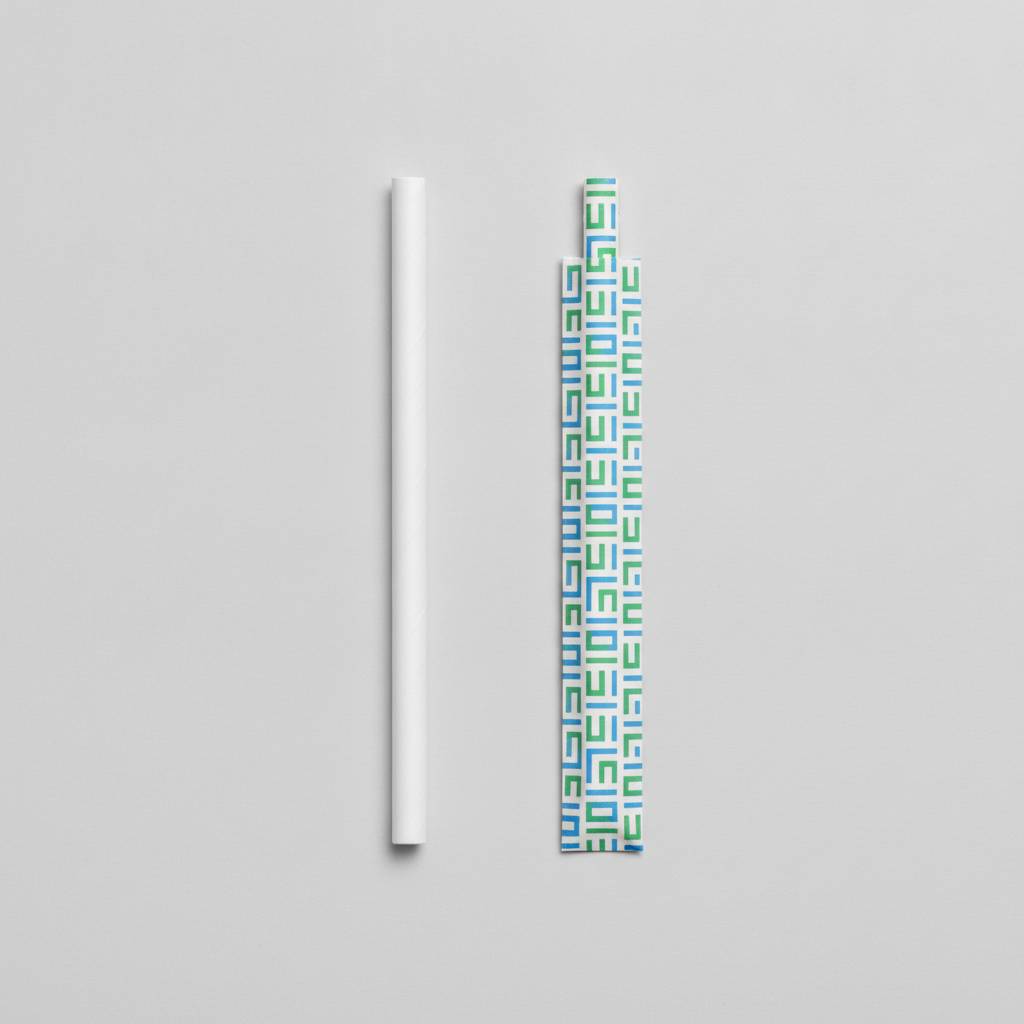
1. Artwork Finalization and Proof Approval: A request for "custom printing" tells a supplier that customization is needed, but not whether the artwork is print-ready. Time spent fixing low-resolution logos, adjusting colors, or waiting for your team to approve a digital printing proof is a common, un-budgeted delay before production can even be scheduled. 2. Pre-Production Sample Approval: For any new custom order, a supplier should produce a physical sample for your approval. This sample must be shipped to you, tested in your actual drinks (e.g., iced coffee, smoothies, boba), and approved. The entire bulk production schedule is on hold until you give the final sign-off. If your team takes a week to test and approve the sample, the ready-to-ship date will likely be pushed back by a week.
For custom-printed straws, the question is not only whether the supplier can meet a 30-day production run. The harder part is getting from a logo file to an approved pre-production sample, because delays in your feedback can push the start date back by weeks.
A request for the timeline for "one million straws" gives the quantity, but not the product complexity. A small, highly custom order can easily take longer to deliver than a large, standard, non-printed order.
A reliable timeline is not a single number; it’s a milestone-based schedule. It shows you the entire process and clarifies what is needed from you to keep the project on track. Before comparing quotes, check if your supplier can provide a schedule that looks something like this.
Production Timeline: Key Stages and Common Delays
| Timeline Stage | Key Activities | Who Controls This Stage? | What Can Cause Delays? |
|---|---|---|---|
| 1. Specification | Confirming straw size, material, color, layers, and packing method. | Buyer & Supplier | Buyer is unsure of drink/cup fit; multiple revisions. |
| 2. Pre-Production | Artwork file submission, printing proof approval, pre-production sample approval. | Primarily Buyer | Low-resolution artwork, slow feedback on proofs, delays in sample testing. |
| 3. Material Staging | Sourcing required paper stock, ink, and packaging materials. | Supplier | Order requires non-standard paper (e.g., custom color) that is not in stock. |
| 4. Production Run | Machine setup, straw forming, cutting, printing, and drying. | Supplier | Machine scheduling conflicts; technical setup for complex or new straw types. |
| 5. Packing & QC | Individual wrapping, boxing, final quality checks, carton marking. | Supplier | Complex retail packing requirements; waiting for final shipping marks from buyer. |
When you compare timelines, the choice is not just between a "fast" supplier and a "slow" one. The real trade-off is between a vague, optimistic estimate that ignores approvals and a more realistic, milestone-based schedule that accounts for the time you need for your own internal reviews.
Instead of asking "How long does production take?", you will get a much more reliable answer by providing clear details and asking better questions. A timeline without clear milestones for artwork and sample approval isn’t a real schedule; it’s an estimate that puts all the risk of delay on you.
If a supplier’s quoted timeline seems too good to be true, ask for a version with milestones. Key questions to ask include:
To get a production timeline that you can actually use for planning, prepare the following details for your inquiry:
With these details, a supplier can provide a realistic schedule that accounts for the full scope of your project. This allows you to plan your inventory and marketing with confidence, turning a simple question about time into a collaborative and predictable project plan.