
Struggling to choose the right filter tip for your pre-roll brand? The sheer number of options can feel overwhelming, and you know a poor choice could damage your brand’s reputation, create production headaches, and disappoint your customers. By understanding a few key trade-offs, you can confidently select the ideal custom printed hemp filter tips that enhance your product and delight your users.
Custom printed hemp filter tips are small, branded paper cylinders made from hemp that serve as the mouthpiece for pre-rolls. The best choice is not a one-size-fits-all solution; it’s a strategic decision that balances your brand’s visual identity, the desired smoking experience for your customers, and the technical requirements of your production line. Making the right decision enhances brand recall and perceived quality.
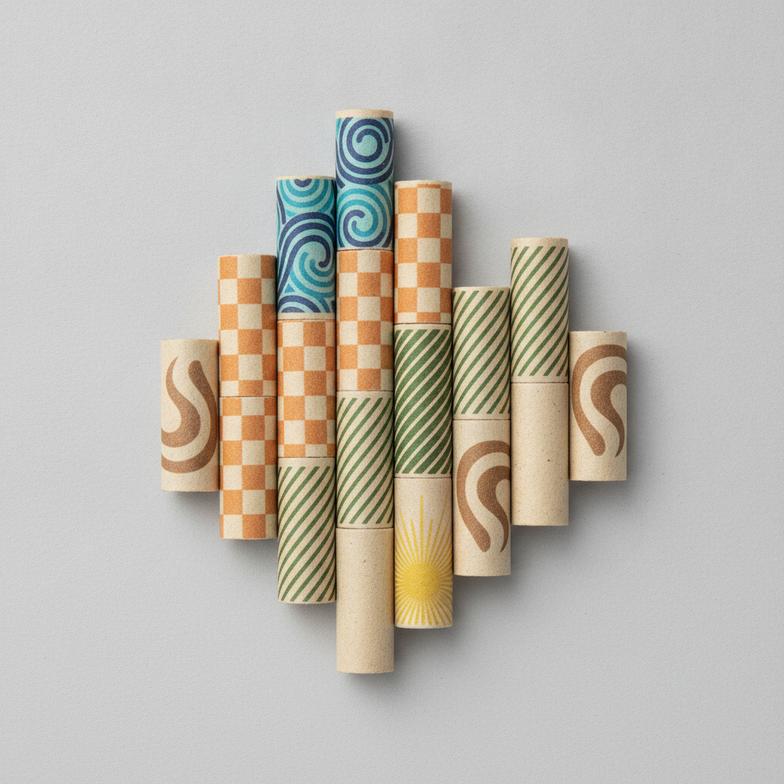
Now that you understand the core function, let’s move beyond the basics. Selecting the right tip is a critical business decision that impacts everything from your assembly line to your customer’s loyalty. We’ll break down the three most important factors you need to consider.
You’ve designed a stunning logo and want it proudly displayed on your pre-roll, but you also need the tip to function perfectly for the smoker and run smoothly on your machines. Focusing too much on aesthetics can lead to a harsh draw or, even worse, constant jams on your production line, costing you time and money. The solution is to think like a product manager and use a decision matrix to prioritize what matters most.
The key is to first define your primary objective—is it maximum brand visibility, a premium smoking experience, or flawless production efficiency? Once you know your priority, you can make informed trade-offs on the other two aspects to find the perfect balance for your custom printed hemp filter tips.
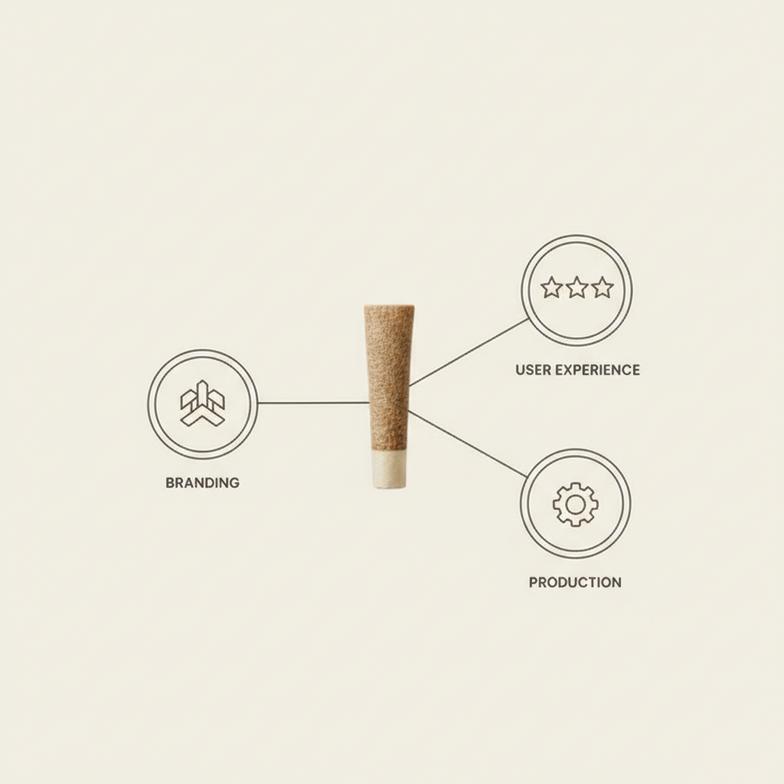
Choosing a filter tip isn’t a simple choice; it’s a balancing act. A common question we get from new brands is, "What’s the best tip?" The answer is always, "It depends on your goals." Let’s break down the three core pillars you must weigh against each other.
If your primary goal is to make your brand stand out in a crowded dispensary display, your focus will be on the visual design. This means exploring options like:
However, these choices come with trade-offs. More complex printing is more expensive and often requires higher minimum order quantities (MOQs). It can also increase lead times, which impacts your inventory planning. Furthermore, heavy ink coverage could potentially alter the rigidity or porosity of the tip, which you must test to ensure it doesn’t negatively affect the draw.
For many premium brands, how the pre-roll smokes is everything. Here, the physical characteristics of the tip are more important than the logo printed on it. Key factors include:
Optimizing for user experience might mean sticking with a simpler, one-color logo on a perfectly engineered tip.
What brands often overlook, especially when starting out, is how the tip performs in automated machinery. If you are using equipment like a Futurola or King Kone to produce thousands of pre-rolls a day, tip consistency is non-negotiable.
Focusing on production compatibility means working with a supplier who can guarantee tight tolerances and exceptional batch-to-batch consistency. The cheapest tip is worthless if it shuts down your entire operation.
| Priority | Focus On | Potential Trade-Offs |
|---|---|---|
| Branding | Complex logos, full wraps, custom colors | Higher cost, higher MOQs, potential impact on draw |
| User Experience | Draw resistance, tip structure, material feel | Simpler branding, potentially higher material cost |
| Production | Tight dimensional tolerances, rigidity, consistency | May limit creative shapes, requires a high-quality supplier |
You’ve got a fantastic design ready for your tip, but you’re rightfully concerned about how it will actually look on hemp paper and, more importantly, whether the inks are safe for customers. A blurry logo can make your brand appear unprofessional, while using non-compliant inks is a massive health and legal liability[4] you cannot afford. To avoid these pitfalls, you must understand the key elements of the printing process.
True quality in printing custom printed hemp filter tips is defined by three factors: the safety and compliance of the ink (i.e., food-grade), the precision of the printing method used, and how the ink interacts with the natural texture and color of the hemp paper.
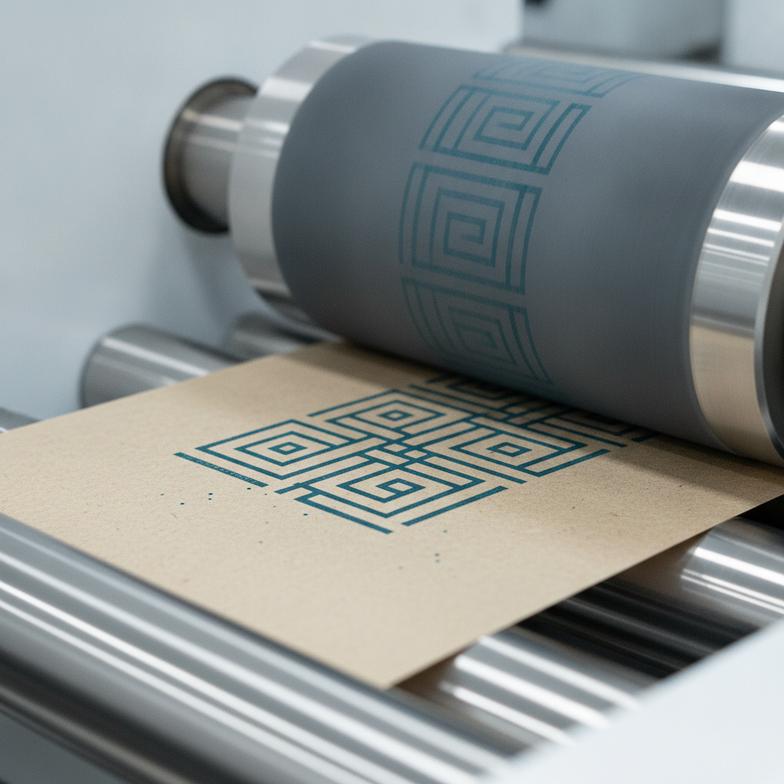
As a manufacturer of precision paper tubes, we field questions about printing and material safety every day. The concerns are valid—the tip is part of the user’s consumption experience, and its quality reflects directly on your brand. Let’s explore what you need to scrutinize.
This is the most critical aspect of the printing process. Since the filter tip comes into contact with the user’s mouth and is heated during use, the inks must be verifiably safe.
The technology used to apply your logo affects the cost, speed, and visual outcome. While you don’t need to be a printing expert, understanding the basics helps you have a more intelligent conversation with suppliers.
Your choice depends on your order volume and design complexity. For a startup’s first run, the higher quality of offset might be worth it. For a large brand producing millions of pre-rolls, the efficiency of flexo is likely the better choice.
Unlike bright white office paper, hemp paper has a natural, often off-white or light tan color and a subtle texture. This is part of its appeal, but it affects the final print.
Because of these factors, you must always request a physical, pre-production sample of your exact design on the exact paper stock. This is the only way to approve the final look and feel before committing to a full production run.
You’ve found a supplier online whose price per tip seems too good to be true. The temptation to cut costs is strong. But what happens when your first big order arrives and half the tips are crushed, the diameters are inconsistent, and your automated rolling machine jams every 100 units? The hidden costs of downtime and wasted product can quickly erase any initial savings.
To secure a reliable supply chain, you must shift your focus from finding the lowest unit price to vetting a supplier’s reliability. This is done by asking pointed questions about their quality control (QC) process, demanding proof of batch consistency, clarifying lead times, and prioritizing partners with real manufacturing experience.
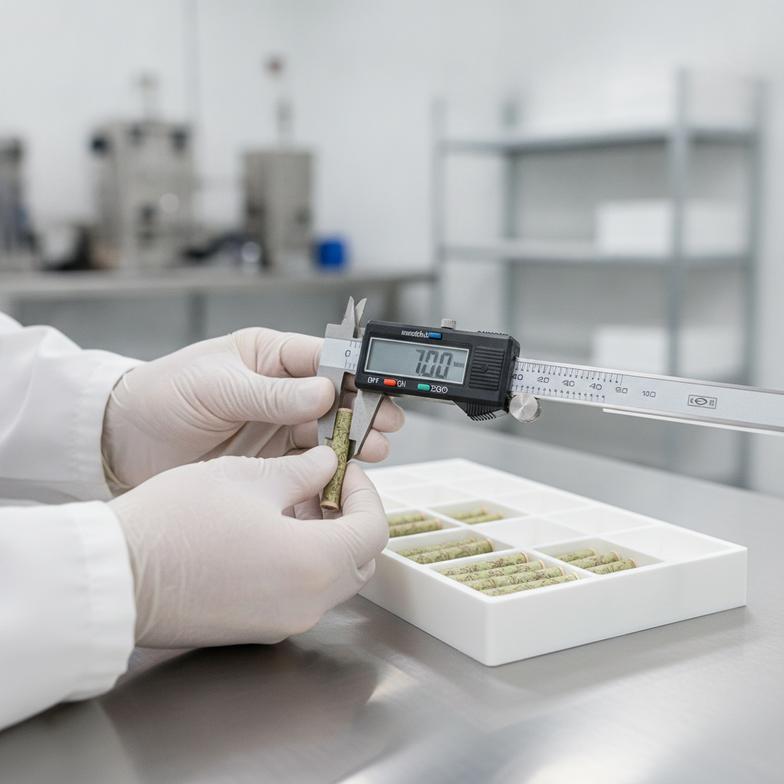
What brands often overlook is the total cost of ownership. A cheap tip that fails is far more expensive than a quality tip that works every time. As a solution provider with over a decade of experience in manufacturing small-diameter paper tubes, we’ve seen firsthand how production consistency separates reliable partners from risky ones. Here is how you can de-risk your supply chain.
Go into conversations prepared. Your goal is to uncover their true manufacturing and quality assurance capabilities. Don’t be afraid to get technical.
This is especially crucial for any brand using automated or semi-automated pre-roll machines. These machines are calibrated to precise specifications. A tip that is just a fraction of a millimeter too wide or too narrow, or not perfectly round, can cause a jam. A single jam can halt production for several minutes, and frequent jams can lead to hours of lost output per day. When you’re producing tens of thousands of units, that downtime translates into thousands of dollars in lost revenue. A reliable supplier invests in laser measurement systems[10] and other technologies to ensure every single tip that leaves their factory is within a very tight tolerance.
Look for a partner, not just a vendor. A true partner has deep experience in the underlying manufacturing process. For example, our expertise comes from years of making high-quality paper straws—another small, rolled paper tube where rigidity, safety, and dimensional accuracy are paramount. This experience is directly transferable to making superior custom printed hemp filter tips.
An experienced manufacturing partner can:
The most common diameters are 7mm and 8mm, as they work with most standard rolling machines and provide a good balance of airflow and structure. However, sizes can range from a slim 5mm to a thick 10mm or more. The best size depends on your pre-roll’s overall diameter and desired smoking experience.
It’s a trade-off. Hemp tips are ideal for single-use pre-rolls, offering excellent branding opportunities and biodegradability[12] at a low cost. Glass and wood tips offer a reusable, super-premium feel but are significantly more expensive and less practical for large-scale production and branding.
Minimum order quantities (MOQs) vary widely by supplier. For simple, one-color logos, you might find MOQs as low as 10,000 units. For complex, multi-color, or full-wrap designs, MOQs can easily be 50,000 to 100,000 units or more, due to the higher setup costs of the printing process.
The internal structure manages airflow and filtration. A simple spiral-wound tube offers a very open and easy draw. A tip with an internal crimp (like a "W" or "V" shape) creates a more restrictive path, which can cool the smoke and is more effective at blocking small particles of flower from being inhaled.
Ultimately, selecting the right custom printed hemp filter tips is a strategic decision that goes far beyond aesthetics. It’s about finding the optimal balance between your branding goals, the user experience you want to provide, and the harsh realities of scaled production. By framing your choice as a series of trade-offs, thoroughly understanding the printing process and its safety implications, and vetting your suppliers for reliability over rock-bottom prices, you can build a stronger, more resilient brand. This thoughtful approach ensures your pre-rolls not only look great but also perform flawlessly from the factory to the final customer.
If you’re looking for a reliable partner with deep experience in manufacturing high-quality paper tubes for demanding applications, our team is here to help. Contact us to discuss your pre-roll project and let us guide you through the process of creating the perfect custom tip for your brand.