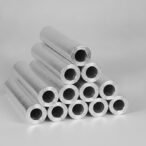
A customer complains that their paper straw turned to mush before they could finish their iced coffee. You check the stockroom, and the straws in the box look perfectly fine—so what went wrong?
This is a common and frustrating experience for many business owners. You’ve made the switch to an eco-friendlier option, but now you’re dealing with product failures and unhappy customers. The problem isn’t necessarily that you bought "bad" straws. The more likely issue is that you bought straws that weren’t engineered for your specific drinks.
The focus on a straw’s length and diameter often hides the real factors that prevent sogginess. The better question isn’t about size, but about construction.
Some paper straws get soggy quickly because their construction is not matched to the drink. Performance is mainly affected by the number of paper layers, the paper’s weight (GSM), and the quality of the bonding glue, not just the straw’s size. A straw designed for water will likely soften much faster in an acidic juice or a thick milkshake.
This isn’t a random flaw. It’s a predictable engineering issue you can solve by understanding what to look for beyond the unit price.
Many buyers compare quotes for straws of the same dimension, for example, 8mm x 210mm, and choose the cheapest option. This is like comparing two cars based only on their color and ignoring the engine. The real performance comes from the "invisible" specifications.
Here are the three factors that actually determine a straw’s durability:
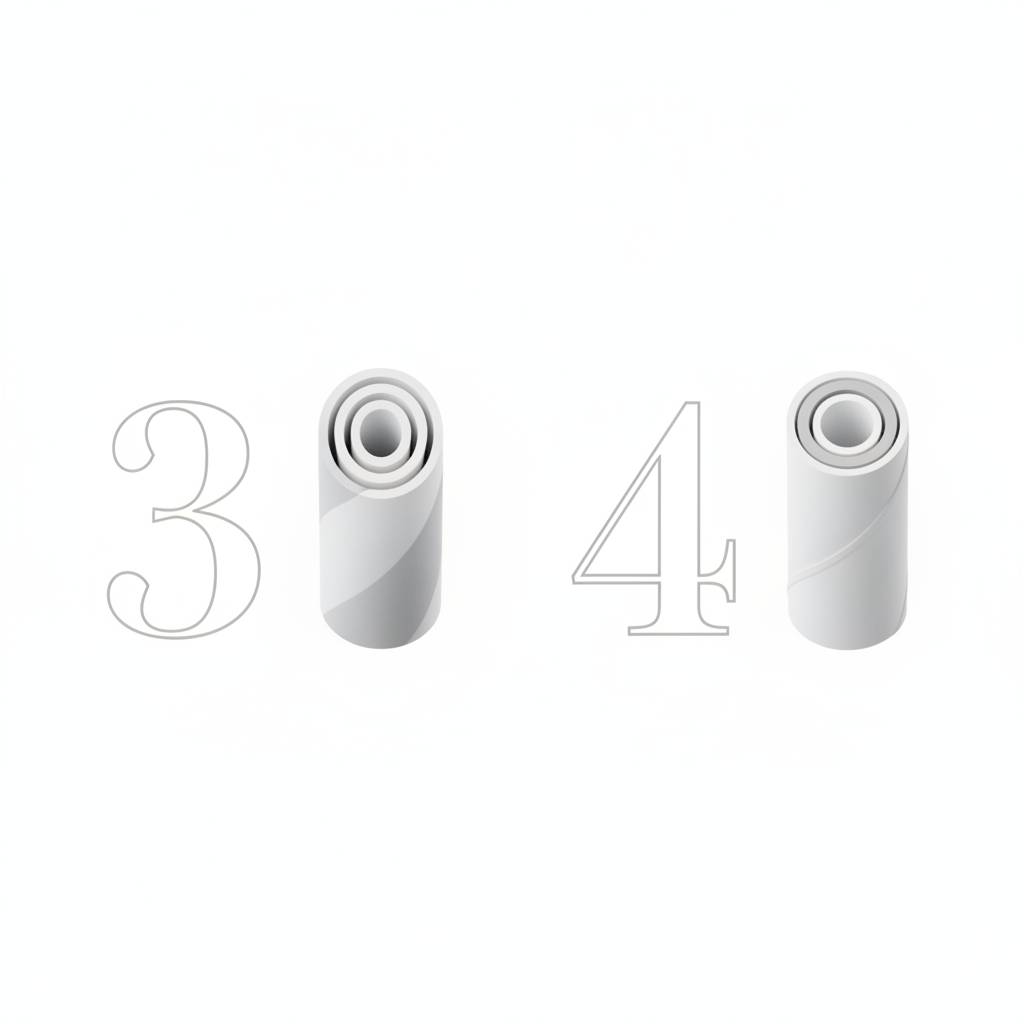
1. Paper Layers (Ply): Most straws are made of 3 or 4 layers of paper wound together. A 3-ply straw might be perfectly fine for water or soda. But for a thick, heavy milkshake or a drink with a lot of ice, the extra rigidity of a 4-ply construction can make a significant difference in preventing the straw from collapsing. 2. Paper Weight (GSM): GSM (Grams per Square Meter) is a measure of the paper’s density and thickness. A straw made from 135 GSM paper will be noticeably more robust and resistant to liquid saturation than one made from 120 GSM paper, even if they have the same number of layers. A lower price often means a lower GSM. 3. Bonding Adhesive Quality: The quality of the adhesive holding the paper layers together is a key factor. A lower-cost adhesive may not hold up as well against acidity or prolonged moisture, leading to the straw unraveling at the seam.
When a supplier’s quote is significantly cheaper for the "same size" straw, it’s often because they have made a compromise on one or more of these three factors.

The first question we ask when a buyer reports soggy straws is, "What drink was it in, and for how long?" The answer usually reveals an application mismatch.
Different beverages place different demands on a paper straw:
The cheapest straw isn’t automatically the wrong choice. The problem is when a basic, low-cost straw designed for water is sold for a demanding application like a smoothie without clarifying its limitations. A cheap straw for water can be a smart buy; a cheap straw for a milkshake is a future complaint.
A dry sample on your desk only proves what the straw looks like. It tells you nothing about how it will perform. One of the most effective ways to avoid a bulk order of soggy straws is to perform a simple soak test with your samples.
Here’s how to do it:
1. Gather Your Drinks: Get samples of your most challenging beverages. This could be your thickest smoothie, your most acidic juice, or your most popular iced coffee. 2. Place the Straws: Put one sample straw in each drink, just as a customer would. 3. Wait and Observe: Set a timer. Check the straw’s condition at 15 minutes, 30 minutes, and 60 minutes. 4. Check for Integrity: After the time is up, pull the straw out. Is it still firm? Does it bend or feel mushy? Is the seam unraveling?
This simple, practical test cuts through marketing claims and gives you real-world data on whether a straw is right for your menu. If a supplier is confident in their product, they should encourage you to perform this test.
If you’re currently facing issues or want to vet a new supplier, use this checklist to diagnose the likely cause and determine what to check next.
| Issue / Symptom | What It Likely Means | Buyer Action to Check |
|---|---|---|
| Straw feels flimsy or collapses easily. | The paper construction is too light (too few layers or low paper weight/GSM). | Ask the supplier for the paper layer count (ply) and GSM. Request samples of different constructions to compare. |
| Straw unravels from the seam. | The bonding adhesive is failing, likely due to acidity, alcohol, or extreme cold. | Ask for a recommendation for your specific drink menu. Perform a soak test in your most demanding beverage for at least 30-45 minutes. |
| Quality is inconsistent within the same batch. | There may be a lack of quality control in manufacturing (e.g., inconsistent glue application, improper drying). | When testing samples, check for any softness even when dry. Discuss production consistency checks with your supplier. |
| A new batch is soggier than the last order. | The supplier may have changed material specifications (e.g., used lighter paper) without notice. | Before reordering, re-confirm the key specifications: paper layers and GSM. Do not assume they are the same as the last order. |
Moving from a simple price request to a more detailed inquiry is the key to sourcing reliable paper straws. A good supplier should be able to use this information to provide a useful recommendation, not just a price.
Before you request a quotation, preparing a few key details will help you get a straw that actually works for your business. Be ready to share:
1. Your Drink Menu: Especially your most challenging drinks (e.g., thick smoothies, acidic juices, iced coffees). 2. Your Cup Sizes and Types: The height and lid style help determine the right length. 3. Your Performance Needs: How long do you need the straw to last in a drink? (e.g., 30-45 minutes). 4. Your Request for Specs: Ask suppliers to include the paper layers (ply) and paper weight (GSM) in their quotation so you can make a true comparison.
Sending this information helps a supplier recommend the right product and makes it easier to get a quotation for a straw that won’t disappoint your customers.