You’ve requested quotes for wholesale paper straws from several suppliers. The offers arrive, and on the surface, they look similar: same size, same color, same quantity—but different prices. The immediate temptation is to choose the lowest offer, but this common decision carries a serious risk. A low price can hide crucial differences in material, bonding, and packaging that lead to customer complaints, damaged goods, and higher real costs.
The right paper straw material is the one that matches your drink application, customer expectations, and total landed cost—not simply the one with the lowest unit price.
This guide explains the practical material details that separate a successful paper straw purchase from a costly one. We’ll cover what to check, what to test, and what to ask your supplier before you confirm a wholesale or custom order.
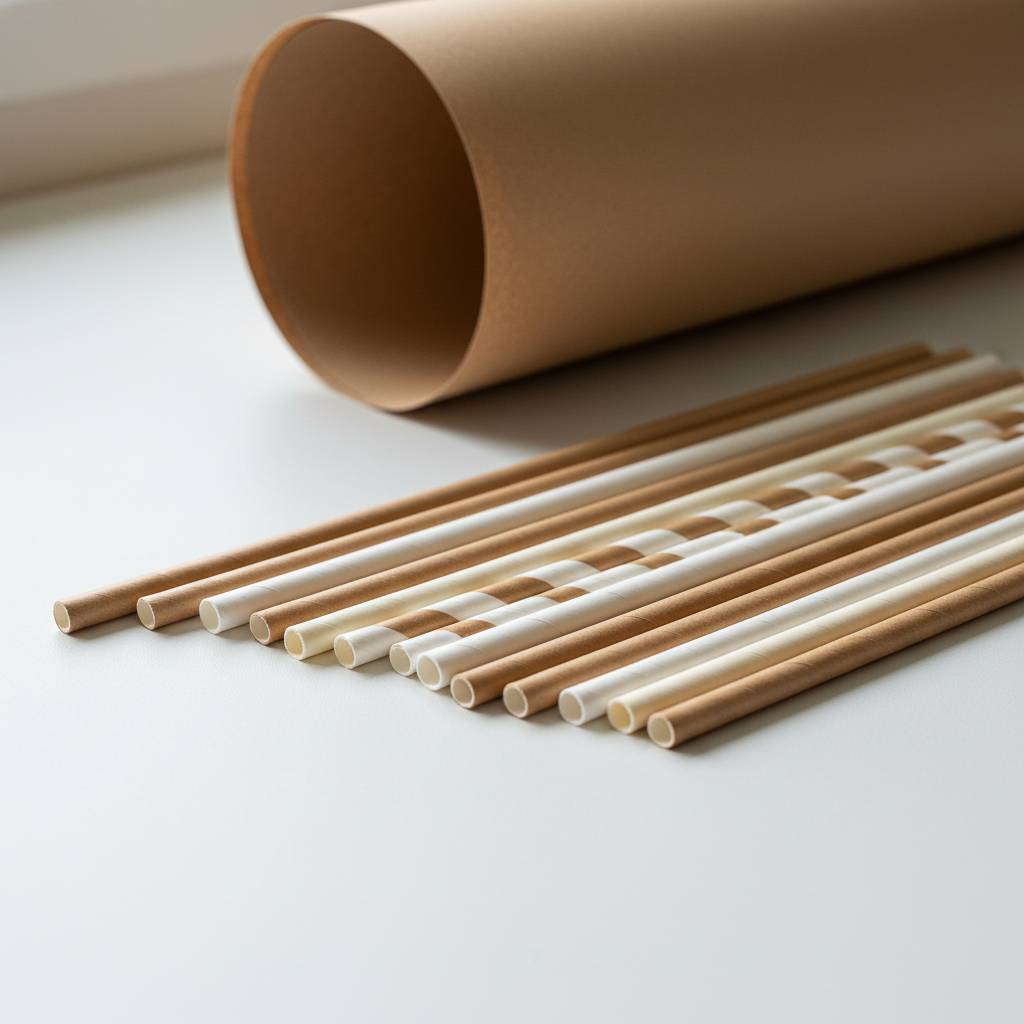
A paper straw’s material is a system of paper layers, bonding agents, and production controls, not just a single sheet of paper. This system determines the straw’s real-world performance, from stiffness and mouthfeel to how long it lasts in a drink.
Many buyers compare quotes based on diameter, length, and unit price, but they often don’t ask what material structure is behind that price. From a supplier’s perspective, this is a critical oversight. The paper grade, number of layers, and quality of the bonding agent are the main drivers of both performance and cost. A straw made from thin, low-grade paper with weak bonding will feel and perform very differently from one with a higher-quality, multi-ply construction, even if their dimensions are identical.
The material specification directly affects:
Before comparing prices, ask your supplier to describe the material specification they are quoting. This simple question helps you understand if you are comparing equivalent products or two completely different levels of quality. Your decision isn’t just about the lowest unit cost; it’s about choosing between that and a reliable drinking experience for your end customers.
A paper straw’s true quality is revealed in liquid, not by its dry appearance in a photo or sample box. Two straws that look identical can perform very differently once they are used in a cold beverage, a thick smoothie, or a takeaway cup.
Problems like rapid softening, seam peeling, or an unpleasant paper taste only become apparent after several minutes of use. I often remind buyers that a straw can look strong when dry but behave poorly after just five minutes in an iced coffee. This is why hands-on testing is non-negotiable.
The drink application is a key factor. A straw that works perfectly for water or soda may be unsuitable for:
Approving a sample based only on its dry appearance is a major risk. You should always test samples in the actual drinks, cups, and lids your business or your customers use. Observe how the straw performs over a realistic time frame (e.g., 15-30 minutes). If you skip this step, you may only discover performance issues after the bulk order is in the hands of end-users, leading to widespread complaints.
| Buyer Use Scenario | Material / Performance Requirement | What to Test in Samples | Common Risk If Ignored | Supplier Question to Ask |
|---|---|---|---|---|
| Standard Cold Drinks | Stable firmness for normal drinking use. | Softening, bending, mouthfeel after 15 mins. | Customer complaints about weak or "soggy" straws. | "Is this material suitable for standard cold beverages?" |
| Juice or Milk Tea | Better strength and bonding stability. | Peeling, seam stability, and use time in the drink. | Straw softens or collapses before the drink is finished. | "Do you recommend a stronger material option for this drink type?" |
| Takeaway Drinks | Longer use performance and secure cup lid fit. | Firmness after 30+ minutes; fit with your specific lids. | Poor user experience after delivery or during transit. | "What size and material do you suggest for takeaway use?" |
| Custom Printed Straws | Printable surface and stable appearance. | Print clarity, color consistency, and logo position. | Poor brand presentation and inconsistent branding. | "Does your printing process affect the MOQ, price, or lead time?" |
| Wholesale Resale | Stable quality and export-suitable packaging. | Carton condition, inner packing, and sample-to-bulk match. | Returns, damaged cartons, and slow-moving stock. | "Can you confirm the material, packing, carton size, and CBM for resale?" |

A low unit price is misleading if it hides a less durable material, inefficient packaging, or unfavorable trade terms. The real cost of your paper straws is the total landed cost—the price per sellable unit after it arrives at your warehouse.
Material quality is a primary price driver. A cheaper quote often implies thinner paper, fewer layers, or a more basic bonding process. While this reduces the unit price, it increases the risk of quality issues and customer complaints.
Beyond the material itself, packaging and shipping volume play a huge role in the final cost. Paper straws are lightweight but bulky. From the supplier side, how we pack the straws—the pieces per carton and the carton dimensions—directly impacts the total cubic meters (CBM) of a shipment. A supplier using oversized cartons may offer a low unit price, but you will pay more for freight.
When comparing wholesale quotations, create a matrix to evaluate the complete offer. If you only focus on the price per straw, you might choose a supplier whose offer results in a higher landed cost due to expensive freight or receive products in weak packaging that gets damaged in transit.
| Comparison Item | Supplier A | Supplier B | Why It Matters | Buyer Action |
|---|---|---|---|---|
| Unit Price | To be confirmed | To be confirmed | Price alone doesn’t show the full specification. | Compare only after material and packing are clear. |
| Material Specification | To be confirmed | To be confirmed | Affects strength, bonding, taste, and cost. | Ask for written material details. |
| Sample Matches Quotation? | Yes / No | Yes / No | Prevents a mismatch between sample and bulk order. | Confirm before making a payment. |
| Inner Packing | To be confirmed | To be confirmed | Affects hygiene perception and resale presentation. | Ask for packing photos or details. |
| Carton Dimensions / CBM | To be confirmed | To be confirmed | Directly affects freight cost and final landed cost. | Request a packing list estimate for the order. |
| Trade Term (e.g., FOB, CIF) | To be confirmed | To be confirmed | Defines responsibility for shipping costs and risk. | Calculate your total landed cost. |
| Lead Time Basis | To be confirmed | To be confirmed | Prevents misunderstandings about delivery dates. | Clarify when the production time officially starts. |
A good sample is not a guarantee of a good bulk order; it is a reference point that must be tied to a clear, written specification. Many disputes in international trade arise when mass-produced goods do not match the buyer’s memory of the approved sample.
Once you approve a sample that performs well in your tests, you must ensure the supplier commits to using the same material, bonding process, and quality controls for the bulk order. Without this confirmation, you risk a "sample-bulk mismatch," where the final shipment is a lower grade than what you approved.
Before confirming your order, create a specification sheet that documents all key details: material type, exact dimensions, color, printing details, and packaging requirements. Ask your supplier to confirm these details in writing. For a large or critical order, requesting pre-shipment photos, videos, or even a third-party inspection can prevent major problems before the goods leave the factory. At a minimum, keep an approved sample at your office to compare against the goods when they arrive.

Customizing paper straws requires more communication and planning than ordering a standard product. Details like printing, individual wrapping, or retail boxes can affect material choice, Minimum Order Quantity (MOQ), cost, and lead time.
Custom printing is more than just adding a logo. The quality of the print depends on the paper’s surface, the ink used, and the machinery’s precision. It is always safer to confirm the visual standard with a printed sample or digital proof before bulk production than to solve printing disputes after shipment.
Furthermore, custom requirements often change the MOQ. A supplier might have a low MOQ for standard white straws but require a much higher quantity for a custom color or printed design due to machine setup times and material preparation.
Treat any customization as a core part of the product specification. Confirm artwork files, color expectations, print position, packing methods, and the final MOQ before you commit to the order. If you treat customization as an afterthought, you may face unexpected costs, higher MOQs, or production delays that disrupt your inventory planning.
A reliable supplier can answer detailed questions about material, production, and shipping, not just provide a price. The quality of a supplier’s communication is often an indicator of their production discipline. A partner who asks clarifying questions about your application is more likely to deliver a product that meets your needs.
Short quotations that list only a size and a price are a red flag. They often lack the detail needed for proper production control. To protect your order, you need to be the one asking the right questions. Use the checklist below to guide your conversation with potential suppliers. A supplier who can answer these questions clearly is more likely to be a dependable partner.
Your final choice should be based not only on price but also on their ability to provide transparent information about their material, production, packaging, and shipping processes.
| Check Area | What Buyer Should Confirm | Why It Matters | Confirmed? |
|---|---|---|---|
| Application | Drink type, cup size, lid style, expected use time. | Ensures the material is a good fit for real-world use. | □ |
| Material | The specific paper straw material and its performance level. | Avoids making a choice based only on appearance. | □ |
| Sample | The sample has been tested in real drink conditions. | Reduces the risk of customer complaints about performance. | □ |
| Bulk Consistency | Same material and specs are confirmed for mass production. | Prevents a mismatch between the sample and the final order. | □ |
| Printing | Artwork, color, print position, and proof/sample process. | Avoids branding mistakes and production errors. | □ |
| Packaging | Inner packing, carton strength, quantity per carton, carton marks. | Protects goods during export and prepares them for resale. | □ |
| Shipping Data | Carton dimensions, gross weight, and total CBM. | Helps you accurately calculate freight and landed cost. | □ |
| MOQ | The MOQ for both standard and custom specifications. | Prevents unexpected costs or excess inventory pressure. | □ |
| Lead Time | The timeline for sampling, approval, production, and packing. | Avoids delivery delays and missed launch dates. | □ |
| Inspection | Availability of pre-shipment photos, videos, or sample checks. | Helps you find and resolve problems before shipment. | □ |
Choosing the right paper straw material is a practical procurement decision. It’s about ensuring the product works for your customers, the packaging survives the journey, and the final cost aligns with your budget. The real question is not "What is the price per straw?" but "What is the final cost per sellable, functional straw that reaches my customer?"
The process for a successful purchase is clear: 1. Start with your drink application. 2. Test samples in real-world conditions. 3. Confirm all details in writing—from material and printing to packaging and CBM. 4. Compare offers based on total landed cost and supplier transparency.
By following these steps, you move from simply buying a product to sourcing a reliable solution. If you are preparing a wholesale or custom paper straw order, providing a supplier with your drink type, packaging needs, and quantity is the best way to get a practical recommendation and an accurate quotation.