
You’re looking at two quotes. One is for paper straws, the other for PLA. The PLA straws feel more like plastic, and the unit price is competitive. It seems like the safer, more durable choice for your business. It’s a logical place to start, but you’re making a decision based on incomplete information.
What this simple comparison misses is a key test: how the straw performs after 20 minutes in your signature iced coffee or high-acid lemonade. It overlooks the operational reality of your staff’s workflow and the actual waste disposal options available in your city. Choosing a straw based on a dry hand-feel and a unit price is a direct path to sourcing mistakes that can lead to performance failures and hidden costs.
The better question isn’t "Which material is best?" but "Which specification fits my business?"
There is no single ‘best’ plastic straw alternative. The right choice depends on matching the material to your business needs, primarily your beverage menu, your operational workflow for staff, the total landed cost, and the actual waste disposal options available in your market.
Many businesses try to find one straw to replace all their plastic ones. This approach often fails because not all drinks are created equal. A straw that’s perfect for water can be a disaster in a thick milkshake.
The first step in choosing an alternative is to analyze your menu, not the straw material.
A supplier who doesn’t ask about your drink menu before providing a quote is missing an essential detail. Choosing a 6mm straw because it’s cheapest could make your popular milkshakes undrinkable, leading to customer complaints and waste. Building the right specification starts with your application.
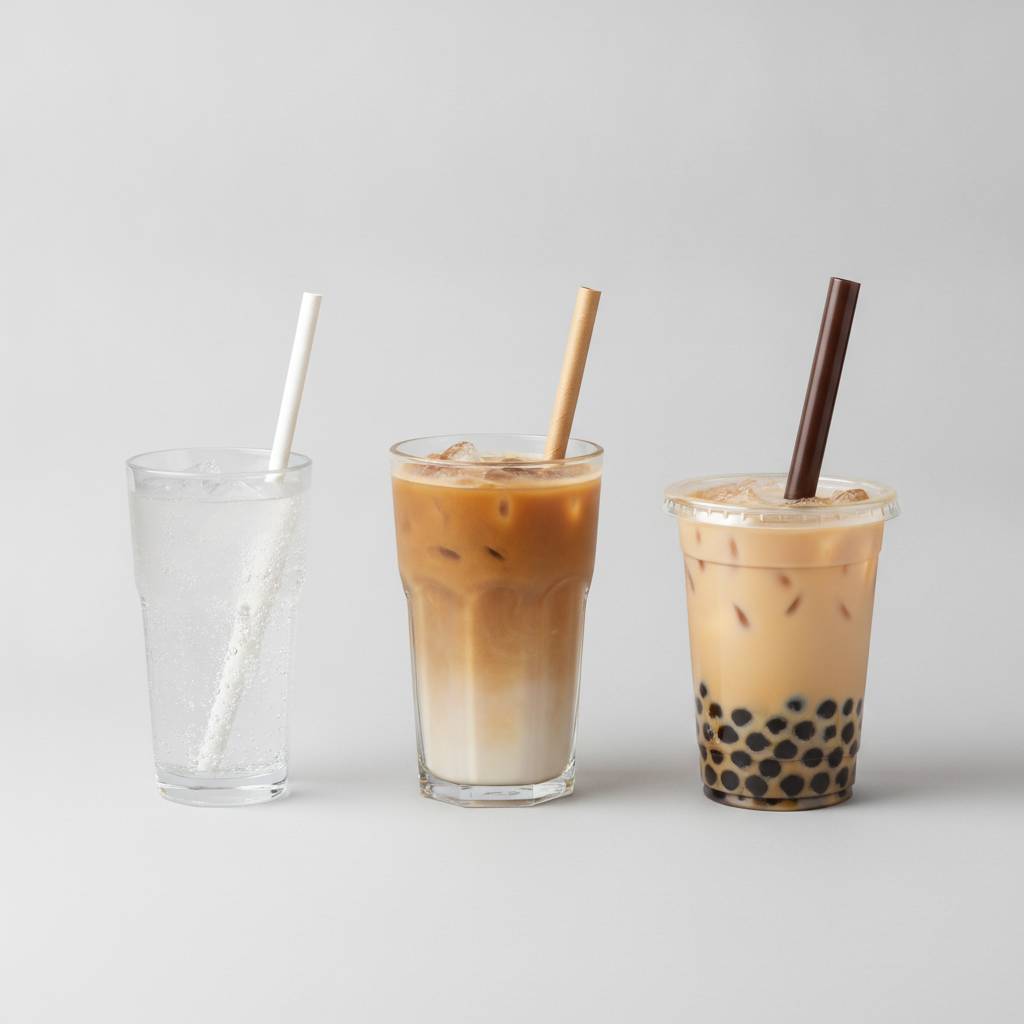
Performance isn’t just about how a straw feels in your hand. For a business, performance is about reliability in the cup, impact on your operations, and its real-world end-of-life path.
Before you commit to any large order, it’s a good practice to perform this simple test. A dry sample tells you very little about real-world use.
1. Take a sample straw. 2. Place it in your most challenging beverage (e.g., an icy, acidic lemonade or a thick smoothie). 3. Let it sit for a realistic duration, for example 30-45 minutes, to simulate how a customer would use it.
This test reveals the truth. For paper, it checks for sogginess. For PLA, it checks for brittleness or cracking in cold temperatures. It’s a practical way to reduce the risk of a large-scale sourcing failure.
"Eco-friendly" claims are only meaningful if you have the infrastructure to back them up.
The most practical choice is often the one that best fits the disposal infrastructure actually available to you and your customers.
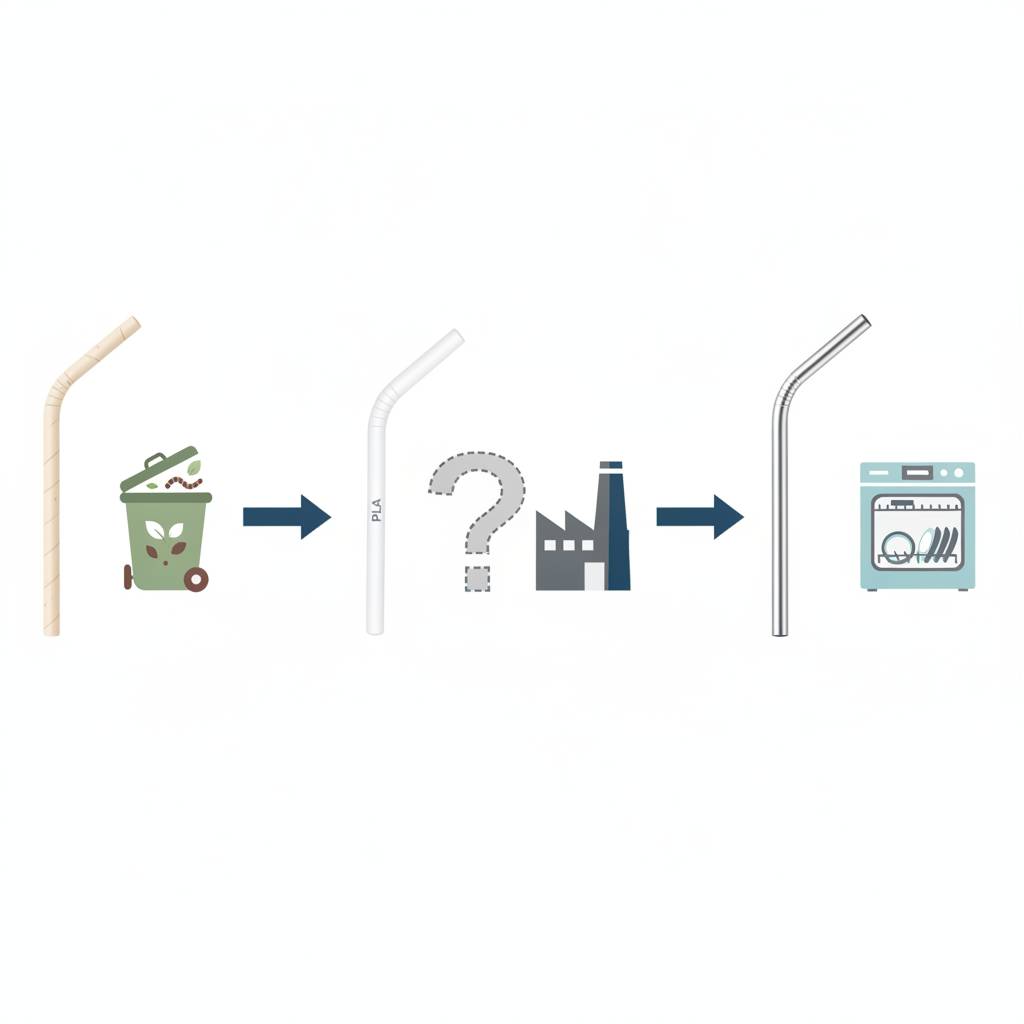
Instead of a simple pro/con list, use this matrix to evaluate alternatives against your business realities. This helps you disqualify unsuitable options quickly and focus on what works for your specific operation.
Table: B2B Decision Matrix for Straw Alternatives
| Alternative | Best Fit Application | What to Check in a Sample Test | Key Operational Consideration | End-of-Life Reality Check |
|---|---|---|---|---|
| Paper | High-volume, single-use settings; strong branding/customization needs. | Soak resistance in your most acidic or pulpy drink for 45+ mins. | No change to existing disposable workflow. | Confirm if paper is from a managed source; widely recyclable or compostable in many areas. |
| PLA | Single-use settings where a plastic-like feel is desired. | Brittleness and cracking in icy drinks; strength for piercing film. | No change to existing disposable workflow. | Confirm if an industrial composting facility that accepts PLA exists and is used in your area. |
| Bamboo (Reusable) | Controlled environments like dine-in restaurants or hotels with established washing systems. | Durability after multiple wash cycles; potential for flavor absorption. | Requires a new workflow for collection, commercial sanitization, and storage. | Relies on customer/staff returning the item; has a limited lifespan before disposal. |
| Metal (Reusable) | Premium, low-volume settings where durability and a high-end feel are valued. | Mouthfeel (temperature transfer); cleanliness after washing. | Requires a robust workflow for collection, sanitization, and managing loss/theft. | Very long lifespan, but requires energy to produce and wash; recyclable at end of life. |
Sending a vague inquiry like "how much for paper straws?" will get you a vague and unhelpful price list. To get an accurate, useful quote from any supplier, you should provide them with your specification. A good supplier will use these details to recommend the right product, not just sell you what’s on hand.
Preparing this information beforehand will save you time and help you make a true apples-to-apples comparison between suppliers.
Your Pre-Inquiry Checklist:
Having these details ready helps a knowledgeable supplier recommend the right specification for your business, not just a price. If you’re considering paper straws, providing this information allows us to help you find the right fit for your drinks, brand, and operations.