
You chose eco-friendly paper straws, but what about the packaging? If it fails, you create more waste and hygiene issues. True sustainability balances protection, cost, and eco-friendliness1.
Truly sustainable packaging for paper straws balances eco-friendliness with practical needs like moisture protection, hygiene, and durability. It’s not just about material choice but a system that fits your sales channel—bulk, individually wrapped, or retail—ensuring the straws remain usable and safe.
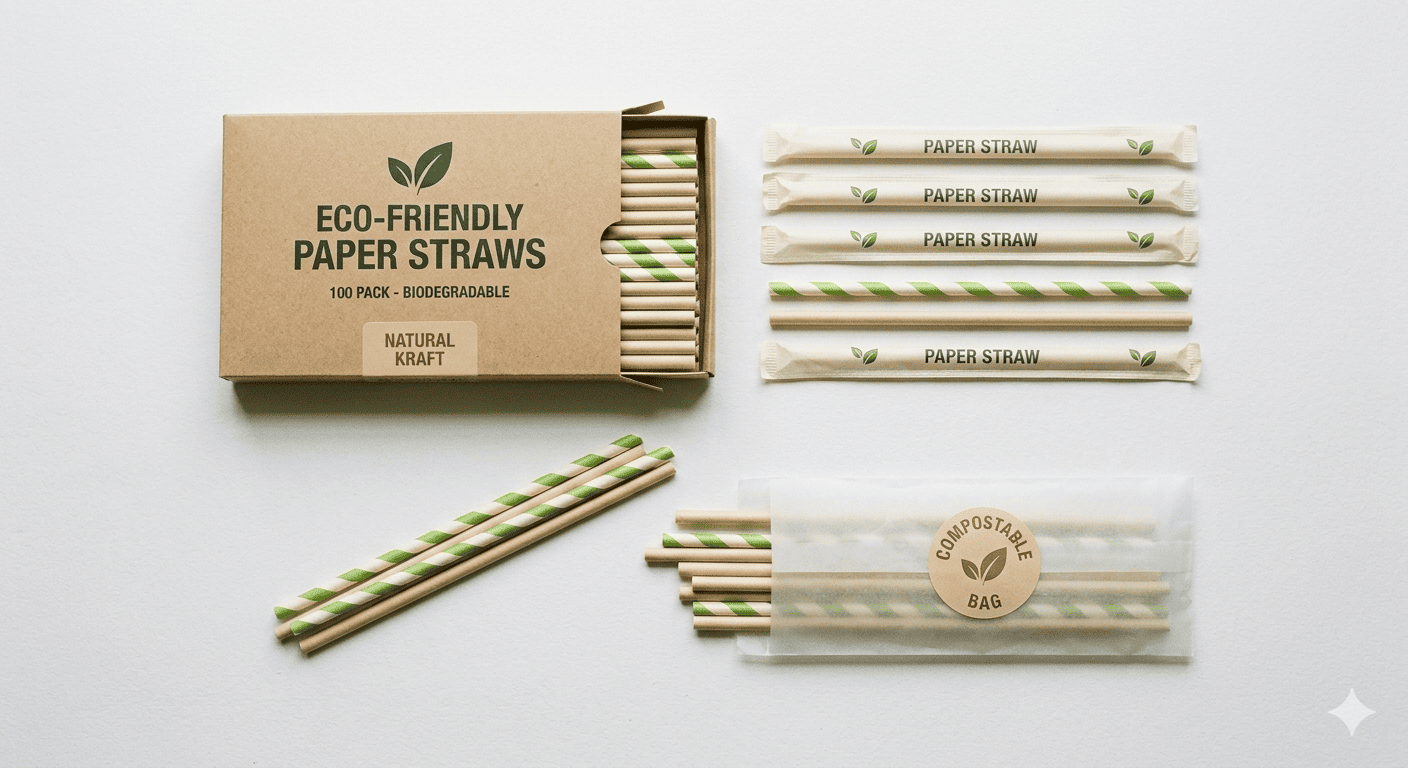
Many of my customers focus so much on the straw's material that they overlook the packaging. They assume because the straw is paper, everything about it must be "green." But in my years of manufacturing and shipping straws worldwide, I've learned that a sustainable solution is one that actually works. A beautiful biodegradable box that gets damp in a warehouse and ruins 10,000 straws isn't sustainable; it's just waste. Let's break down how to make a smart choice.
You want biodegradable packaging, but what if it gets wet or crushed during shipping? The entire batch is wasted. You must prioritize protection first to ensure sustainability is practical.
No, "eco-friendly" doesn't guarantee protection. The primary job of packaging is to shield paper straws from moisture, dust, and crushing. A biodegradable bag that tears or a paper box that gets damp and ruins the straws inside creates more waste, making it an unsustainable choice.
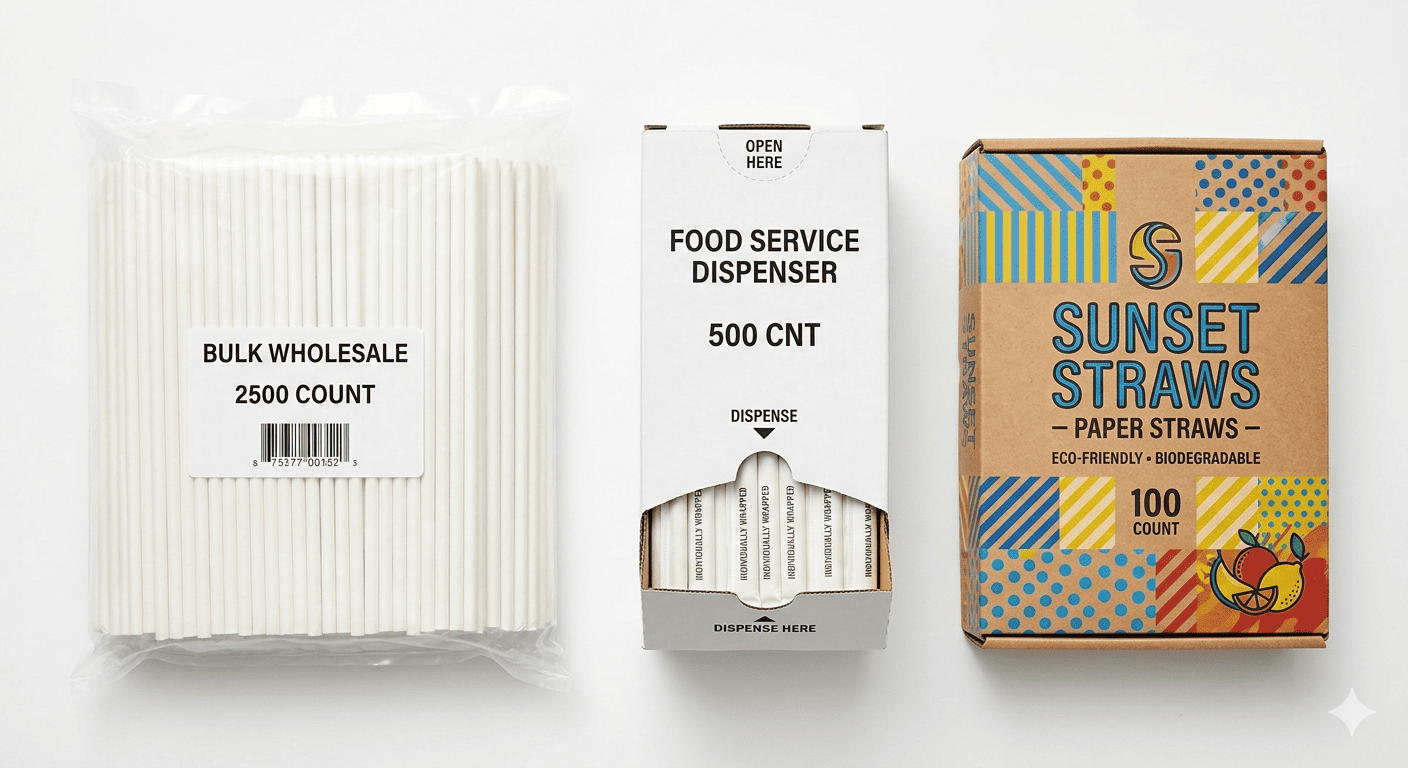
From our factory floor, I see firsthand how vital protection is. Paper straws are essentially tightly wound paper, which makes them very sensitive to their environment. A packaging system fails if it doesn't address three key risks: moisture, hygiene, and physical damage. A solution is only sustainable if it delivers usable products to the end customer.
Paper absorbs moisture from the air2. In humid climates or damp warehouses, unprotected straws can become soft, lose their shape, and even grow mold3. This is the fastest way to lose an entire shipment. While a kraft paper box is recyclable, it offers very little defense against humidity. That’s why for bulk orders, we almost always pack the straws in a sealed inner polybag before placing them in the master shipping carton. This combination provides a crucial moisture barrier.
For any food-contact item, hygiene is non-negotiable4. Packaging must keep the straws free from dust, dirt, and handling contamination until they are used. A simple paper band around a bundle of straws is not enough for most situations. Sealed bags or individually wrapped straws are the only reliable ways to maintain sanitary conditions5 from my factory to your customer’s drink.
Paper straws can be crushed or bent easily. During shipping and handling, boxes get stacked, dropped, and moved around. The outer packaging must be strong enough to withstand this pressure. We use sturdy, corrugated cardboard cartons designed for export. A flimsy box might save a few cents, but it costs a fortune in damaged goods6.
Here is a simple breakdown of common packaging trade-offs we discuss with clients:
| Packaging Element | Pro (Sustainability) | Con (Protection) | Best Use Case |
|---|---|---|---|
| Kraft Paper Box | Recyclable, biodegradable | Low moisture resistance | Retail shelves, dry storage |
| Inner Polybag (PE) | Excellent moisture/dust seal | Fossil-fuel based (plastic) | Bulk shipping, humid climates |
| Individual Paper Wrap | Biodegradable, hygienic | Minimal moisture protection | Cafes, restaurants (immediate use) |
| PLA Bag (Compostable) | Plant-based, compostable | Higher cost, needs specific composting7 | Eco-conscious brands, retail |
You need to package your straws, but the right choice for a bulk distributor is completely wrong for a local cafe. You must match your packaging to how your customer will use it.
Your sales channel dictates the packaging. Wholesalers need bulk cartons with inner bags for efficiency and protection. Restaurants require individually wrapped straws for hygiene. Retail stores need branded boxes that protect the straws on the shelf and attract customers. One size does not fit all.
I always start my conversations with new customers by asking, "Who are you selling to?" The answer changes everything about the packaging. A solution that is perfect for one business model can be a costly mistake for another. We typically design packaging for three main channels, each with its own priorities.
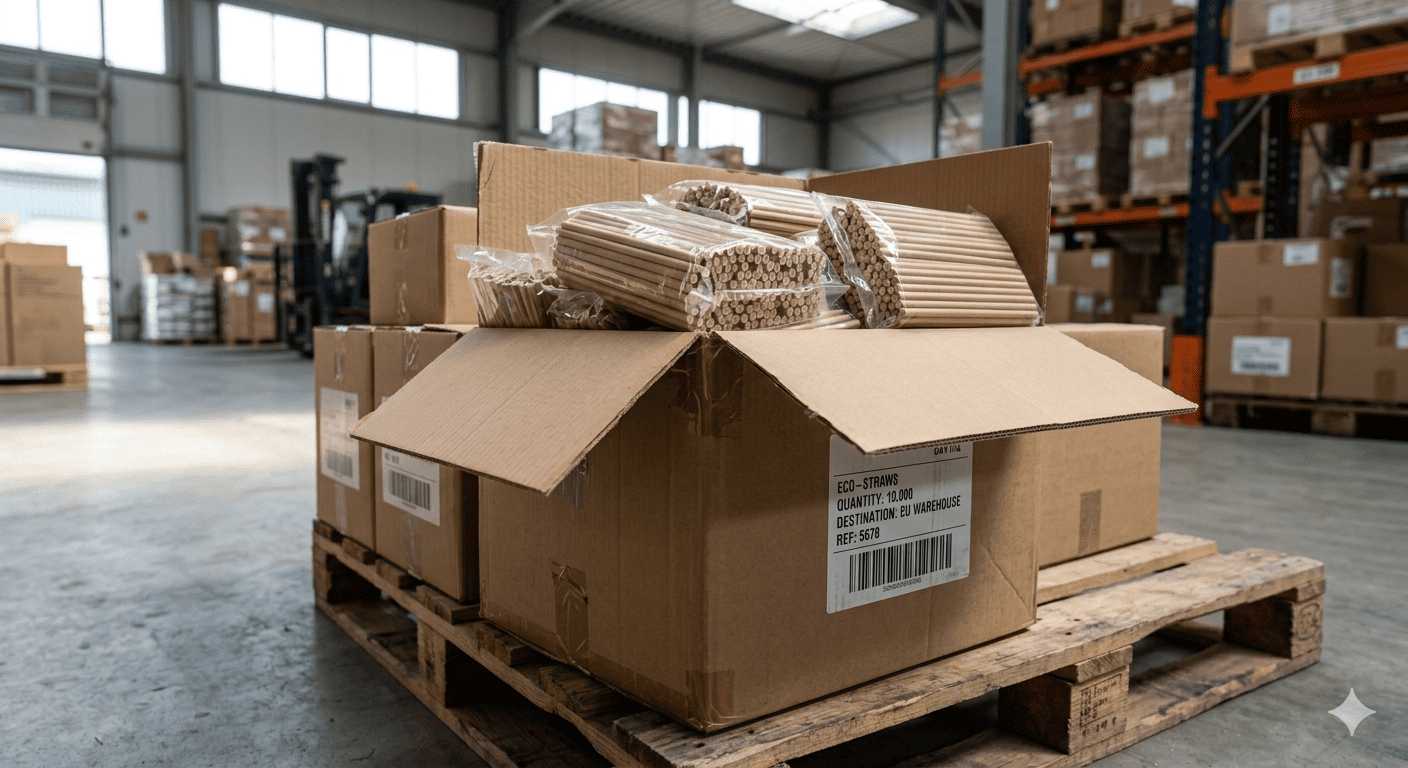
For customers who buy in massive quantities to resell, the priorities are cost per unit and durability for long-term storage and transport. The standard, most effective solution is packing loose straws into a sealed plastic bag, which then goes into a strong master carton. We might fit 5,000 or 10,000 straws in one carton this way. This method offers the best protection against moisture and crushing at the lowest possible cost. The distributor can then repackage the straws into smaller quantities for their clients. It’s not fancy, but it’s practical and prevents waste from damaged product.
Here, hygiene is the number one concern. Every straw must be untouched until the moment it's served to a customer. This makes individual wrappers essential. Most of our food-service clients request paper-wrapped straws to align with the eco-friendly image. This works perfectly in a fast-moving environment where straws are used quickly. The wrapped straws are then packed in a dispenser box or a bag for easy access by staff. We always double-check with the client about their storage environment to ensure a simple paper wrapper is enough.
When selling directly to consumers, the packaging becomes part of the product's appeal8. It needs to look good on a shelf, communicate the brand's message, and keep the straws safe. For this channel, we create custom-printed retail boxes, usually from kraft paper or recycled cardboard. These boxes (e.g., holding 50 or 100 straws) must be sturdy enough to prevent crushing in a shopping bag. Inside, the straws can be loose or bundled. The box is a marketing tool, so branding, instructions, and certifications become very important.
You found a supplier and are ready to import paper straws. But a shipment can get stuck in customs if you lack the right paperwork. Know which certifications to ask for.
For B2B imports, always ask your supplier about compliance documentation relevant to your market. This includes food-contact safety reports (like FDA or LFGB)9, raw material certifications (like FSC for paper), and material safety data sheets (MSDS) for inks and glues.
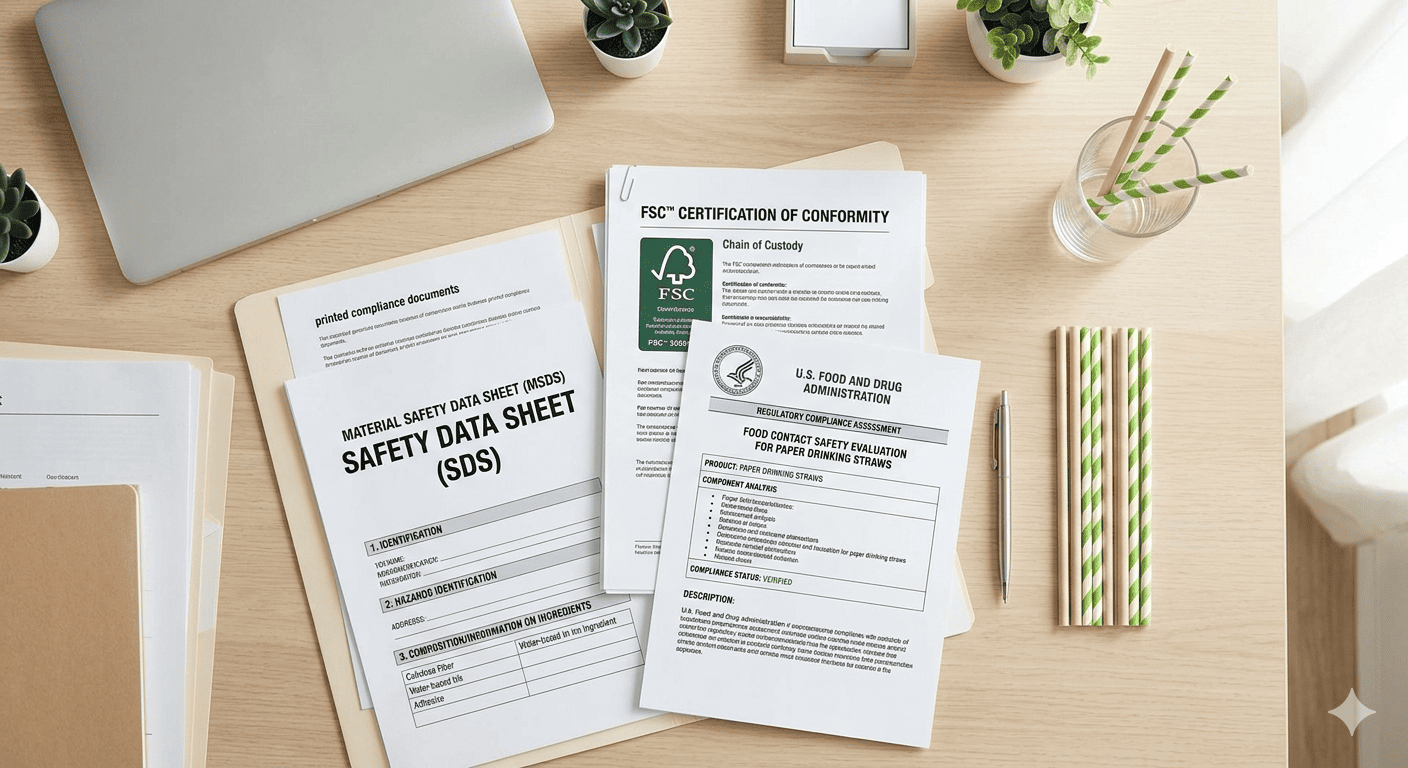
Navigating international trade regulations can seem complicated, but it comes down to proving your product is safe and made from the materials you claim. As a manufacturer, providing the correct documentation is a basic part of my job. However, the responsibility is on the buyer to know what their country requires. Don't just ask a supplier for "all certifications." Be specific. Here are the three main types of documents we handle regularly.
This is the most critical one. It’s a lab report that proves the final product—the straw itself—is safe to come into contact with food and beverages. The required standard depends on your sales market. For clients in the United States, we provide FDA-compliant reports. For those in Germany and other parts of Europe, LFGB is the standard. I always tell my clients to confirm their local regulations, and then we can provide the appropriate testing documents. Without this, your shipment could be rejected at the border.
These documents trace the raw materials back to their source. The most common request we get is for FSC (Forest Stewardship Council) certification10. This proves that the paper used to make the straws comes from responsibly managed forests11. It's a powerful marketing tool for your brand and shows a commitment to environmental ethics. While it can add a small amount to the cost, many retail and brand-conscious customers see it as essential.
An MSDS provides detailed information about the components used to make the straws, specifically the glue and inks. It shows that they are non-toxic and safe for their intended application. This document supports the overall food-contact safety claim and provides transparency about what’s in the product. It’s a standard piece of documentation that a reliable manufacturer should be able to provide easily.
My best advice is simple: tell your supplier exactly where you plan to sell the straws. A good partner will use their experience to help you get the right paperwork ready.
Sustainable packaging for paper straws requires a balanced decision. It involves choosing the right protection, matching the packaging to your sales channel, and ensuring compliance. It’s about a smart system.
"Sustainable Packaging | US EPA", https://www.epa.gov/smm/sustainable-packaging. Sources on sustainable packaging design confirm that a holistic approach, often guided by Life Cycle Assessment (LCA), is necessary to balance environmental goals with practical requirements such as product protection, hygiene, and cost-effectiveness, preventing product waste that would negate the benefits of eco-friendly materials. Evidence role: definition; source type: institution. Supports: The claim that sustainable packaging involves balancing environmental impact with functional requirements like product protection and economic factors.. ↩
"[PDF] effect of humidity on physical properties of paper", https://nvlpubs.nist.gov/nistpubs/Legacy/circ/nbscircular445.pdf. Scientific literature on paper science explains that the cellulose fibers in paper are hygroscopic, meaning they have a natural tendency to attract and hold water molecules from the surrounding air, a process that is dependent on relative humidity. Evidence role: mechanism; source type: paper. Supports: The claim that paper naturally absorbs moisture from the environment.. ↩
"Food Packaging and Chemical Migration: A Food Safety Perspective", https://pmc.ncbi.nlm.nih.gov/articles/PMC12096275/. Food safety organizations and studies on microbial contamination note that cellulose-based materials, including paper, can support mold growth when exposed to sufficient moisture and temperature, posing a potential risk for food-contact items. Evidence role: general_support; source type: government. Supports: The claim that damp paper products, like straws, can be a substrate for mold growth, posing a hygiene risk.. ↩
"Current Good Manufacturing Practices (CGMPs) for Food and ... - FDA", https://www.fda.gov/food/guidance-regulation-food-and-dietary-supplements/current-good-manufacturing-practices-cgmps-food-and-dietary-supplements. Regulatory bodies such as the U.S. Food and Drug Administration (FDA) and the European Food Safety Authority (EFSA) mandate that all food-contact materials must be manufactured and handled under sanitary conditions to prevent contamination and ensure consumer safety. Evidence role: general_support; source type: government. Supports: The claim that hygiene is a mandatory requirement for food-contact items.. ↩
"[PDF] SINGLE-SERVICE ARTICLES", https://www.hhs.nd.gov/sites/www/files/documents/DOH%20Legacy/FL/F%26L%20Retail%20Guidance/Single-Service%20Articles.pdf. Food safety guidelines from public health departments and restaurant associations often recommend that single-use items like straws be dispensed in a way that prevents contamination, with individual wrapping being a common method to ensure the item remains untouched until use. Evidence role: expert_consensus; source type: institution. Supports: The claim that individual wrapping is a key method for maintaining the hygiene of straws in food service.. ↩
"The hidden costs of shipping damage: Impact and solutions", https://eplogistics.com/blog/shipping-damage/. Supply chain and logistics studies indicate that the costs associated with product damage—including returns, replacements, lost sales, and reputational harm—frequently exceed the initial savings gained from using less-protective packaging, highlighting the importance of investing in durable packaging solutions. Evidence role: statistic; source type: research. Supports: The claim that the cost of product damage from insufficient packaging often outweighs the savings from using cheaper materials.. ↩
"Frequently Asked Questions about Plastic Recycling and Composting", https://www.epa.gov/trash-free-waters/frequently-asked-questions-about-plastic-recycling-and-composting. Research institutions and environmental agencies clarify that bioplastics like PLA are typically certified for commercial or industrial composting, which provides the sustained high temperatures (above 55°C or 131°F) necessary for microorganisms to break them down, conditions not reliably met in home compost systems. Evidence role: mechanism; source type: institution. Supports: The claim that PLA requires specific conditions found in industrial composting facilities to properly biodegrade.. ↩
"[PDF] Packaging As A Marketing Tool - sciphilconf.berkeley.edu", https://sciphilconf.berkeley.edu/index.jsp/mL266D/601061/Packaging%20As%20A%20Marketing%20Tool.pdf. Marketing research consistently demonstrates that packaging is a critical factor in consumer decision-making at the point of sale, influencing brand perception, attracting attention, and communicating product benefits. Evidence role: general_support; source type: paper. Supports: The claim that retail packaging significantly influences a product's appeal and consumer choice.. ↩
"Packaging & Food Contact Substances (FCS) - FDA", https://www.fda.gov/food/food-ingredients-packaging/packaging-food-contact-substances-fcs. In the United States, the FDA regulates food-contact materials under Title 21 of the Code of Federal Regulations. In the European Union, Regulation (EC) No 1935/2004 provides a harmonized framework, with specific standards like Germany's LFGB (Food and Feed Code) often used to demonstrate compliance. Evidence role: definition; source type: government. Supports: The claim that specific regulations like those from the FDA and under Germany's LFGB govern the safety of food-contact materials.. ↩
"[PDF] Facts and Figures on FSC growth and markets", http://www.unece.lsu.edu/certificate_eccos/documents/2008/ce08_24.pdf. The Forest Stewardship Council (FSC) is an international non-profit organization that promotes responsible management of the world's forests. FSC certification provides assurance that products such as paper and wood have been sourced in an environmentally responsible, socially beneficial, and economically viable manner. Evidence role: definition; source type: institution. Supports: The claim that FSC certification indicates paper is sourced from responsibly managed forests.. ↩
"Forest Stewardship Council", https://hrlibrary.umn.edu/links/fscprinciples.html. According to the Forest Stewardship Council, its certification ensures that forestry practices maintain biodiversity, productivity, and ecological processes, while respecting the rights of indigenous peoples and local communities, thereby constituting 'responsibly managed forests'. Evidence role: definition; source type: institution. Supports: The claim that FSC certification signifies that paper originates from responsibly managed forests.. ↩
"[PDF] Hazard Communication Standard: Safety Data Sheets - OSHA", https://www.osha.gov/Publications/OSHA3514.html. As defined by occupational safety agencies like the U.S. Occupational Safety and Health Administration (OSHA), a Safety Data Sheet (SDS) is a standardized document that provides detailed information on the properties, hazards, handling, and emergency measures for a given chemical substance or mixture. Evidence role: definition; source type: government. Supports: The claim that a Material Safety Data Sheet (MSDS), now known as a Safety Data Sheet (SDS), provides information on chemical components.. Scope note: The term MSDS has been largely replaced by the globally standardized term Safety Data Sheet (SDS). ↩