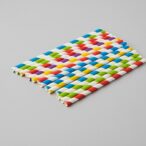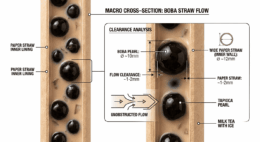
Two paper straws can have the same 6mm diameter and 197mm length. They can look identical on a table. But one will survive a 45-minute iced coffee, and the other will turn to mush in 10 minutes. The difference is not a matter of luck; it is decided by a series of specific, controlled steps inside the factory.
Many buyers start by asking for a price, assuming all straws of a certain size are the same. This often leads to comparing quotations that are not truly comparable, resulting in orders that fail in real-world use or have hidden costs that erase any initial savings.
A look inside a paper straw factory shows that the final product’s performance is determined by a series of controlled manufacturing steps. How the raw paper is chosen, how the layers are bonded and dried, and how the straws are finally packed into cartons all affect rigidity, user experience, and your total landed cost. Buyers should check the paper specifications, the gluing and drying process controls, and the final export packaging details before approving samples or comparing suppliers.
As a supplier involved in the entire paper straw ecosystem—from machinery and raw materials to finished straws—we see where the disconnect between a buyer’s expectation and a final order often begins. Understanding the journey from a giant paper roll to a packed carton is the key to asking better questions and making a more confident sourcing decision.
The raw paper is the backbone of the straw. The paper’s grade, thickness, and the number of layers used directly control the final product’s rigidity and how it holds up in a drink.
The process does not start with a straw; it starts with a large, heavy roll of paper. This master roll is loaded onto a machine that slits it into much narrower strips. The number and quality of these strips determine the straw’s "build quality".
A simple 3-ply straw for water or juice might use standard paper. A straw intended for a thick milkshake or a high-acid smoothie may require more layers or a higher-grade, more moisture-resistant paper to prevent it from softening too quickly.
A common mistake is specifying a size without considering the application. A straw that works perfectly for a 12oz soda will likely fail in a 20oz iced latte that a customer sips for an hour. Before you approve an order, ask the supplier what paper structure they recommend for your specific drink menu. This conversation alone can tell you a lot about their technical expertise.

These "invisible" steps are where a straw’s resistance to sogginess, delamination, and odor is locked in. A failure here cannot be fixed later.
After slitting, the paper strips are fed into a straw-forming machine. Here, they are spirally wound around a metal rod called a mandrel to form a continuous tube. During this winding process, an adhesive intended for food-contact applications is precisely applied to bond the layers together.
This is where many quality issues begin:
I would never approve a bulk order based only on a dry sample’s appearance. The real test is to let the sample sit in your actual beverage—be it iced coffee, juice, or a carbonated drink—for at least 30 to 60 minutes. Watch for any layers peeling apart, check for any off-smells, and see how the structure holds up.
The precision of the cut affects the user’s mouthfeel and your brand’s quality perception. A frayed or crushed end feels cheap.
The long, continuous tube coming out of the dryer is cut into individual straws by a high-speed cutting unit. This is where the final length is set. A straw that is too short for the cup is frustrating for the user, while one that is too long can be unstable.
It is crucial to specify your required length based on your cup height and lid design. A common request for a "standard" size is incomplete. A 197mm straw might be standard for a regular cup, but if you use a tall cup with a high dome lid for smoothies, you may need a 230mm or 250mm straw.
Beyond length, inspect the cut quality on your samples. The ends should be clean, smooth, and cut at a 90-degree angle. Crushed, angled, or frayed ends are a sign of a poor cutting process or dull blades, which reflects a lack of attention to detail in the factory.
Because the carton’s dimensions and packing density determine your shipping cost. A low unit price can be quickly erased by paying to ship empty air.
The manufacturing process does not end when the straw is cut. "Finished packaging" includes everything from the individual wrapper to the final master carton the straws are shipped in. A common buyer mistake is to focus only on the price per thousand straws while ignoring the carton data.
Here is a real-world scenario I see often:
Supplier A looks cheaper on paper. However, their inefficient packing means you are paying to ship 60% more volume for the same number of straws. Depending on the freight route, this can make Supplier B the significantly cheaper option when you calculate the total landed cost.
Always demand the following information before placing an order:
If a supplier cannot provide this data, you cannot accurately calculate your final costs.

A problem with a finished straw can often be traced back to a specific step in the factory. Understanding this helps you diagnose issues with samples or bulk orders.
| Common Problem | Likely Factory Cause | Buyer Check / Action |
|---|---|---|
| Straw gets soggy too fast | Wrong paper grade or too few layers for the drink; incomplete drying process. | Test samples in your actual beverage for 30-60 minutes. Ask the supplier about the paper specifications. |
| Straw has a slight taste or odor | Issue with the bonding agent or an incomplete curing process. | Smell both dry and wet samples. Ask the supplier about their glue and drying controls. |
| Paper layers unravel in drink | Poor bonding quality or inconsistent glue application during the winding stage. | Watch the straw closely during your soak test to see if the seams begin to separate. |
| Straw ends are rough or frayed | Imprecise cutting mechanism or using dull blades. | Inspect the ends of all sample straws. They should be clean, smooth, and feel comfortable. |
| Shipping cost is higher than expected | Inefficient carton packing (too much empty space, low density). | Before ordering, get the final carton dimensions and total CBM to calculate your volumetric weight and landed cost. |
| Colors on a custom straw are wrong | Artwork was not properly approved; ink mismatch; poor color control. | Always approve a final pre-production sample or a detailed digital proof before authorizing bulk production. |
Understanding the factory process allows you to prepare an inquiry that gets you a fast, accurate, and useful response. A professional supplier will appreciate a well-prepared buyer, as it allows us to recommend the right product instead of just guessing.
Before you request a quotation, gathering these details will help ensure you are comparing apples to apples and getting a product that truly fits your needs.
To help us recommend the right straw and provide a meaningful quote, please try to include the following in your inquiry: