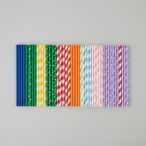
Are you sourcing custom-branded paper straws but feeling concerned about the safety of the materials used? The risk of non-compliant inks causing health issues[1] or damaging your brand’s reputation is a major headache. The solution isn’t just to find a supplier who claims to use water-based ink for printed paper straws; it’s about knowing exactly how to verify those claims with concrete proof.
Yes, water-based ink for printed paper straws can be perfectly safe, but its safety is not guaranteed by the name alone. True safety depends on the specific chemical composition and requires verification through key documents. A buyer must confirm that the ink has passed third-party migration tests for heavy metals and other harmful substances, and that it holds food-contact certifications relevant to the target market, such as FDA or LFGB compliance.
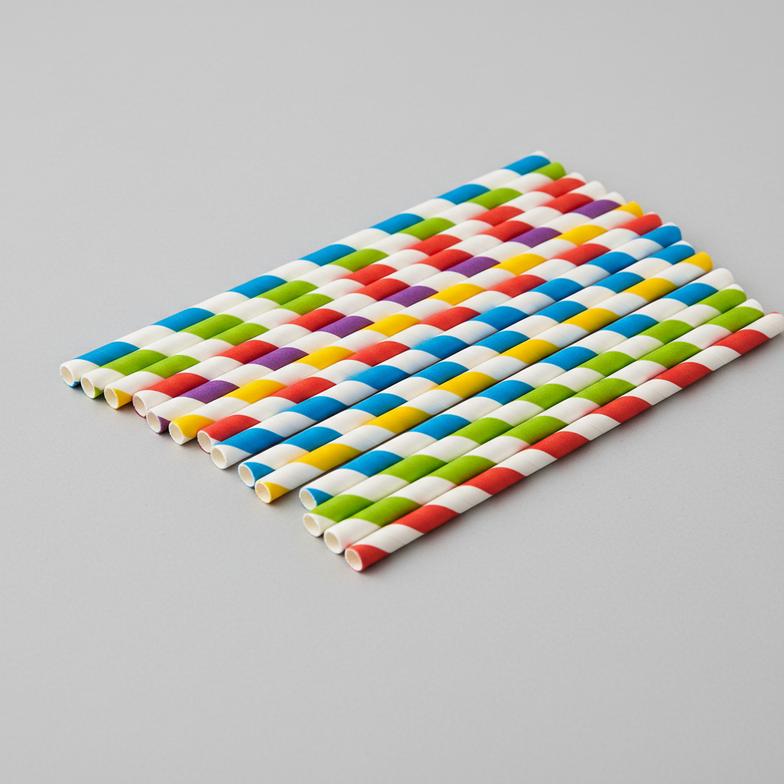
Simply accepting "water-based" at face value is a common but risky oversight. To truly protect your customers and your business, you need to look beyond the marketing terms. In this article, I’ll share the exact framework we use to guide our clients, helping you differentiate between a supplier’s promises and provable safety.
You’ve probably been told that "water-based" is the safe, eco-friendly choice. While it’s a great starting point, what if that ink contains hidden pigments with heavy metals or other unlisted additives? Relying on the term alone could expose your business to serious compliance failures and safety liabilities.
The label "water-based" simply refers to the liquid solvent used to carry the ink’s solid components[2]—in this case, water instead of petroleum-based solvents. The real safety concerns lie within the other ingredients, like pigments, binders, and additives, which can still contain harmful chemicals.
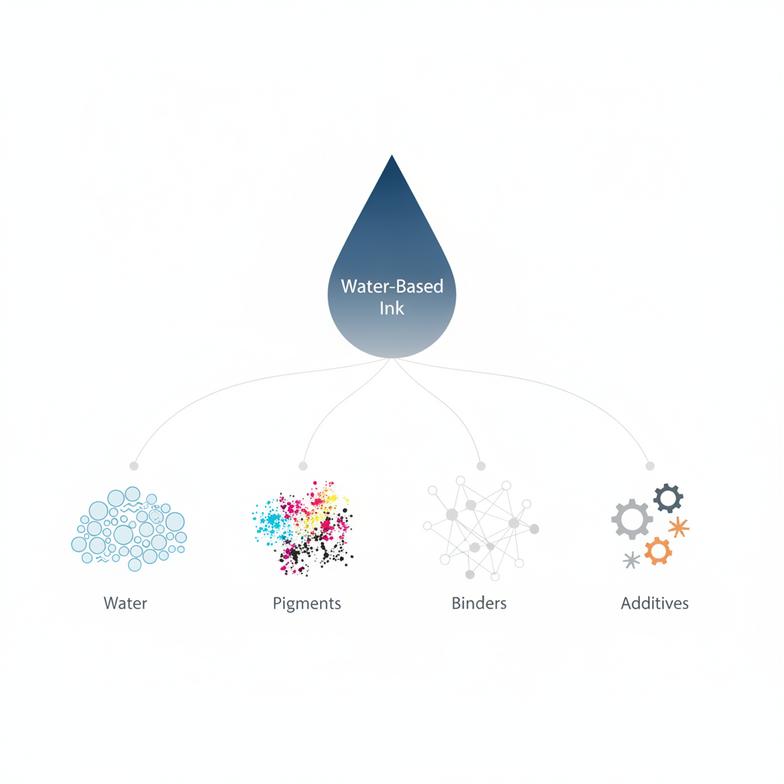
As a solution provider in this industry, a frequent question from our clients is, "If it’s water-based, it’s non-toxic, right?" My answer is always: "Not necessarily." The safety of water-based ink for printed paper straws depends entirely on its complete formula. Let’s break it down.
An ink’s composition is more than just its solvent. The key components include:
The primary risk is migration, which is the transfer of chemical substances from the packaging material (the straw) to the food (the drink). Even if the print is on the outside of the straw, migration can still occur if the straws are stacked together[4], handled, or if the ink leaches through the paper. This is why just being "water-based" isn’t enough. The entire formulation must be proven safe for incidental food contact.
You’re comparing quotes from multiple suppliers, and every single one claims to use "safe, food-grade ink." How do you separate the trustworthy partners from the ones just paying lip service to safety? Without demanding hard evidence, you are essentially taking a supplier’s word for it, which is a gamble your brand can’t afford.
To effectively vet a supplier and confirm their claims, you must request a specific set of documents. The three most critical pieces of evidence are the Material Safety Data Sheet (MSDS), third-party laboratory test reports, and region-specific food-contact certificates.

When I work with a new client sourcing printed straws, I always walk them through this verification process. It moves the conversation from vague claims to verifiable facts. A reliable manufacturer will have these documents ready and will be happy to explain them. Here are the three documents we provide to validate our ink’s safety.
An MSDS (now more commonly called a Safety Data Sheet, or SDS) is the starting point. It’s a standardized document that outlines the ink’s chemical properties, potential hazards, and safe handling instructions.
This is the most crucial piece of evidence. Independent, accredited laboratories perform tests to check if the ink complies with specific safety standards. You should ask for reports that cover:
When a supplier provides a recent, third-party lab report, it offers unbiased proof that their water-based ink for printed paper straws has been scientifically tested and found to be safe under simulated use conditions.
Finally, the ink must comply with the laws of the country or region where you plan to sell your straws. A certificate of compliance is a formal declaration that the material meets these legal requirements.
The table below summarizes what to ask for:
| Document | What It Is | Why It’s Important for a Buyer |
|---|---|---|
| MSDS/SDS | A document outlining chemical properties and handling hazards, provided by the ink maker. | A basic first step. It confirms the ink’s identity but does not prove food-contact safety. |
| Lab Test Report | An unbiased, third-party analysis verifying composition, especially for heavy metals and migration. | The core evidence. It provides scientific proof that the ink meets specific safety benchmarks under simulated conditions. |
| Food-Contact Certificate | A declaration of compliance with regional regulations (e.g., FDA, LFGB). | Legal assurance. It confirms the material is legally approved for sale in your target market. |
A common oversight I’ve seen is buyers accepting a general "food-grade" claim without asking which standard it complies with. An FDA-compliant straw may not be sufficient for the German market, and vice-versa. Always match the documentation to your specific market needs.
It’s easy for any factory to buy a drum of ink and start printing. But how can you identify the suppliers who have built a truly robust and transparent process around safety? Choosing a supplier based on claims alone exposes you to quality inconsistencies, compliance failures, and potential brand damage down the line.
A truly responsible supplier of water-based ink for printed paper straws operates with full supply chain transparency. They don’t just use compliant ink; they can prove it with a clear documentation trail, understand the nuances of global standards, and proactively manage risk throughout their production process.
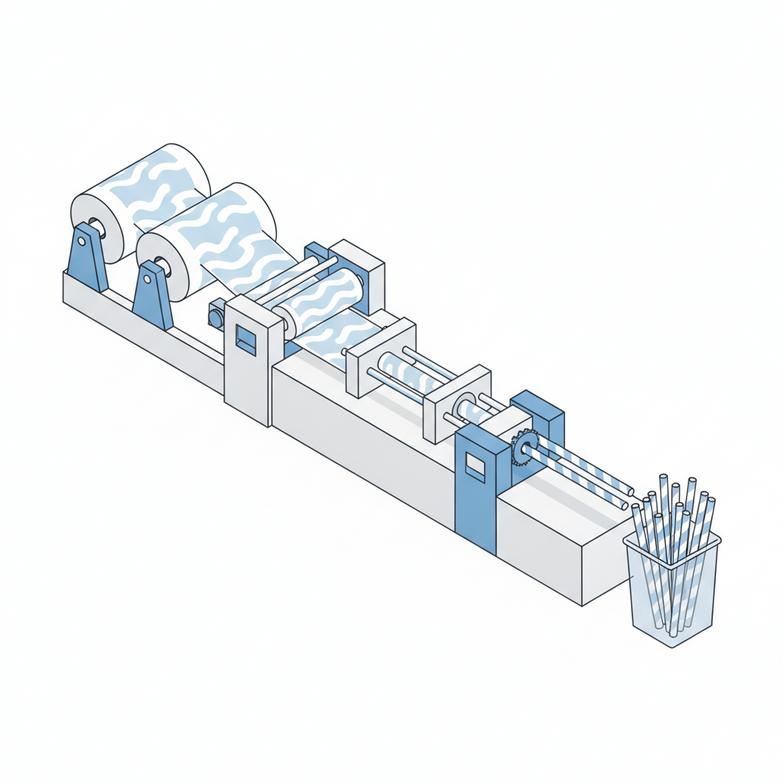
At RainbowBear, we’ve built our business on being a solution provider, not just a manufacturer. This means we’ve had to master the complexities of material safety to protect both our clients and ourselves. Our approach is built on a foundation of traceability and proactive validation.
We don’t just buy any "water-based ink." We partner with a select group of reputable ink manufacturers who share our commitment to safety. Before we even consider an ink for our production lines, we put the supplier through the same vetting process I’ve outlined for you. We demand and review their MSDS, third-party lab reports, and food-contact certifications. This ensures that the materials entering our factory are already verified as safe. This unbroken chain of custody for documentation is critical. If your straw supplier can’t tell you exactly where their ink came from and provide proof of its safety, that is a major red flag.
Even with safe ink, the application matters. Almost all high-quality printed paper straws have the print on the outermost layer of paper. The ink should never be on the inside surface that is in constant, direct contact with the beverage.
However, external printing doesn’t eliminate the need for food-contact safe ink. Consider these scenarios:
Because of these factors, a responsible manufacturer will only use certified food-contact safe water-based ink for printed paper straws, regardless of whether it’s an external print. This non-negotiable rule eliminates any ambiguity about safety. When we built our own factory with 10 production lines, this was one of the core principles we engineered our process around.
Not necessarily. While the water solvent is harmless, the biodegradability of the ink depends on its other components, like pigments and binders. Some inorganic pigments may not biodegrade[8]. For a fully biodegradable product, you need to ensure every component—paper, glue, and ink—is certified as such.
FDA compliance is based on US regulations and primarily focuses on ensuring that no harmful substances migrate from the material into food above set limits. LFGB is a German (and influential EU) standard that is often stricter, including tests for sensory changes—meaning the material cannot alter the taste or smell of the food.
Yes, absolutely. Different color pigments are made from different chemical compounds. A safety report for black ink does not automatically apply to red ink from the same supplier.[9] Each color formulation should ideally have its own safety verification to ensure all pigments used are free from heavy metals and other contaminants.
VOCs are Volatile Organic Compounds, chemicals that can easily become vapors or gases. Traditional solvent-based inks are high in VOCs, which can contribute to air pollution and health issues. Water-based inks have significantly lower VOC levels, but "low" isn’t the same as "zero." Verifying low VOC content is another element of ensuring a truly safe and environmentally conscious product.
Ultimately, the question is not just whether water-based ink for printed paper straws is safe, but how you can be certain that the specific straws you’re buying are safe. The answer lies in shifting your focus from marketing claims to verifiable evidence. True safety is not an assumption; it is a demonstrable fact backed by a clear documentation trail. By demanding and understanding the MSDS, third-party lab reports, and region-specific certifications, you empower yourself to make an informed decision that protects your customers and your brand. A trustworthy manufacturing partner will not only provide this proof but will welcome the diligence.
If you are looking for a supplier who builds safety and transparency into every step of the process, your search ends here. Whether you need wholesale-finished paper straws or are planning to build your own production line with fully compliant materials, our team at PaperStrawTech is ready to help. Contact us for a consultation and let’s build a safe, reliable, and sustainable paper straw solution together.