
Receiving your first set of paper straw quotations can be exciting, but the wildly different prices quickly become confusing. You’re worried that picking the cheapest option might be a huge mistake, while overpaying could sink your budget before you even start. The solution isn’t to just find the middle ground; it’s to learn how to decode what these documents are really telling you about a potential supplier.
To effectively compare paper straw quotations, you must analyze the total value, not just the unit price. This involves verifying raw material certifications (like FSC and FDA), understanding the supplier’s production capacity and quality control, and assessing the scope of their support, especially for turnkey factory solutions.

So, you have these numbers in front of you. It’s more than just a price list—it’s a window into a supplier’s entire operation. Let’s break down how to read between the lines and make a decision that protects your investment and sets your business up for success.
A super low price in a quotation looks tempting, right? It feels like you’ve found a secret deal. But what if that "great deal" leads to customer complaints about soggy straws and a damaged brand reputation just a few months down the line?
A suspiciously low price in a paper straw quotation often indicates compromises in raw material quality. The supplier might be using cheaper, non-certified paper or glue, which results in straws that fall apart in drinks, are potentially unsafe, and create massive waste.

When we first started our own factory, we tested dozens of materials. We learned very quickly that the price of paper and glue has a direct, dramatic impact on the final product. A quote that seems too good to be true usually is, and here’s where the costs are often hidden.
The two most critical components of a paper straw are the paper and the glue. A low-cost supplier might cut corners on both.
From running our 10 production lines, I can tell you that a 5% cheaper quotation is meaningless if it leads to a 10% higher defect rate. The cost of wasted materials, production downtime, and returned orders will quickly erase any initial savings.
Don’t just accept the price. Use the quotation as a starting point for a deeper conversation. Ask any potential supplier these direct questions:
A supplier who can confidently provide this documentation is one who has invested in their quality chain, and their quotation, even if slightly higher, reflects that reliability.
You’ve found a supplier with certified materials and a fair price, but is their offer actually right for you? The needs of a distributor who buys finished goods are completely different from an entrepreneur building a factory from scratch. Your business model dictates what a "good" quotation looks like.
The best paper straw quotation is one that is perfectly aligned with your specific business model. A wholesaler needs a reliable supply of retail-ready products, while a new manufacturer needs a comprehensive solution that includes machinery, training, and long-term support.
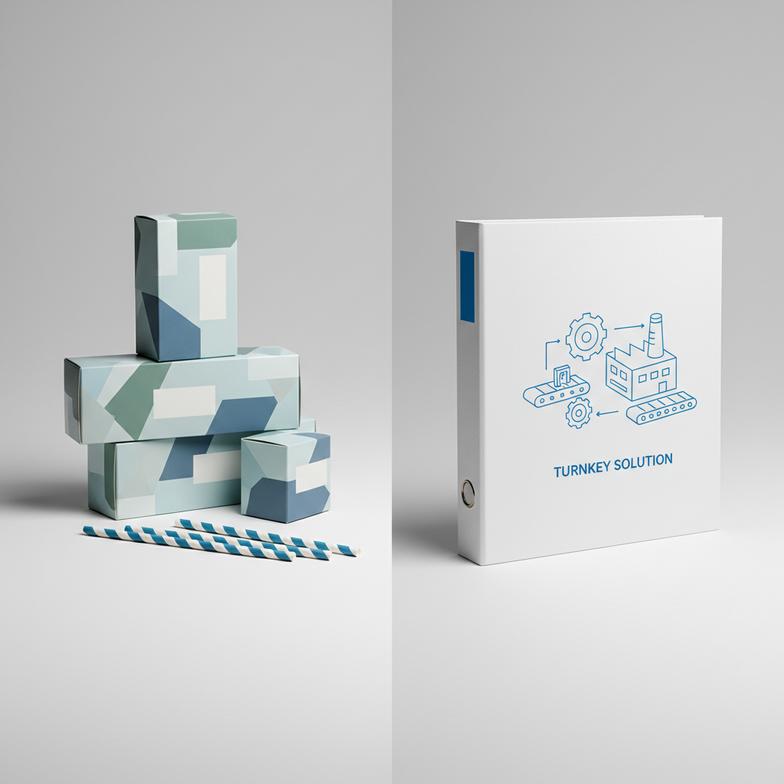
We talk to both types of buyers every day, and the conversations are completely different. One is about product specifications; the other is about building an entire production system.
If you plan to buy and resell straws, your focus should be on the finished product and its packaging. Your quotation should clearly detail things like individual wrapping, custom branding, and carton specifications.
Let’s look at a quick comparison:
| Feature | Supplier A (Lower Price) | Supplier B (Higher Price) |
|---|---|---|
| Unit Price | $0.005 / straw | $0.006 / straw |
| Packaging | Bulk packed in master carton | Individually paper-wrapped |
| Custom Printing | Simple 1-color logo | Full-color custom pattern |
| Certifications | Vague "Eco-friendly" claim | FSC Paper, FDA Glue provided |
| Lead Time | 45-60 days | 30 days |
For a cafe owner or a distributor selling to restaurants, Supplier B is the clear winner, even at a higher price. The individual wrapping is more hygienic, the custom branding adds value, and the verified certifications protect their business. Supplier A is only "cheaper" on paper.
If you are building your own factory, the machine price is only a small part of the story. You are not just buying equipment; you are investing in a manufacturing capability. A quotation for a "production line" should be a detailed project proposal, not a one-line item.
A strong quotation for a factory solution should include:
A low price on a machine from a supplier who can’t answer these questions is a massive gamble.
Nearly every equipment supplier will claim they offer a "turnkey solution." But how can you tell if it’s a real, proven system that gets you from an empty room to a running factory, or just a marketing buzzword that leaves you stranded with a machine you don’t know how to run?
To verify a turnkey solution in a paper straw quotation, you must demand specific, documented details. Ask for machine model numbers, a clear scope of training, after-sales support SLAs, and, most importantly, evidence of their own manufacturing experience.

I’ve heard horror stories from buyers who purchased a "turnkey" package, only to find the supplier had never actually run the machines themselves. When a real-world problem came up—like the glue not setting properly because of high humidity—the supplier had no answers.
"Turnkey" should mean you can "turn the key" and start production. A supplier offering a true turnkey solution is acting as your project partner. When a client asks us for a turnkey solution, my first response is, "Great. Let’s define exactly what you need to be successful."
This includes discussing:
A quotation that doesn’t reflect this level of personalized planning isn’t a true turnkey solution.
This is the single most important factor that is never listed on a quotation. Does the supplier manufacture straws themselves?
A company that only sells machines knows the theory. A company that runs its own factory knows the reality. As a business that operates 10 of our own paper straw production lines, we have already solved the problems you are going to face. We know which paper rolls tend to jam, how to adjust glue viscosity on a hot day, and how to train an operator to spot a quality issue from 10 feet away.
This experience is our most valuable asset, and it’s what transforms us from a simple vendor into a long-term partner. When you evaluate a supplier, ask them:
A supplier who is also a manufacturer is invested in your success because their equipment’s reputation depends on it. Their quotation is backed by real-world proof.
The price varies widely, from a few thousand dollars for a basic, slow-speed machine to over $50,000 for a high-speed, fully automated line. The initial price is less important than the total cost of ownership, which includes reliability, support, and the quality of straws it produces.
For most international markets, FSC (Forest Stewardship Council) certification for the paper is crucial for demonstrating sustainability. For safety, FDA (or equivalent local regulation) compliance for all food-contact materials—paper, glue, and ink—is non-negotiable. Always ask for documentation.
An integrated manufacturer who uses their own machines (like us) offers unparalleled technical support and real-world advice. A pure trading company might offer a slightly lower price by sourcing from various factories, but they often lack the deep, hands-on experience needed to help you troubleshoot production issues.
With quality materials and a well-maintained machine, your defect rate should consistently be under 3%. If a supplier’s machine has a higher defect rate during testing, or if they can’t give you a clear answer, it’s a major red flag that will cost you money in the long run.
Comparing paper straw quotations is far more than a simple price check; it’s a deep exercise in risk management for your business. The cheapest price often hides expensive problems like poor material quality, production inefficiencies, and a lack of support. The right approach is to treat the quotation as the beginning of a conversation. Dig deeper by asking about material certifications, matching the offer to your specific business model, and, most critically, verifying the supplier’s own hands-on manufacturing experience. Choosing a partner who has already solved the problems you will face is the surest path to building a reliable, profitable, and sustainable paper straw business.
If you are ready to move past confusing price lists and want a transparent proposal based on years of real-world manufacturing experience, contact our team. We’re here to help you build your business the right way.