
Choosing the right paper straws for restaurants feels like a small decision, but getting it wrong can cause big headaches. You’re trying to balance sustainability goals with your budget, but the market is flooded with options that look the same. The temptation to just pick the cheapest one is strong, but that often leads to soggy straws, customer complaints, and hidden costs that eat into your profits[1].
The best way to buy paper straws for your restaurant is to evaluate them based on Total Cost of Ownership (TCO), not just the price per straw. This means factoring in durability, waste from customers needing multiple straws, and the potential impact of a poor customer experience on your brand’s reputation. A slightly more expensive, high-quality straw often proves more economical by preventing complaints and protecting your bottom line.

Now that you know the secret isn’t finding the cheapest straw but the one with the best overall value, let’s break down why. I’ll walk you through the real costs—the ones that don’t show up on the supplier’s invoice but definitely show up in your operations and online reviews.
It’s so easy to look at a supplier’s price list and just sort it from low to high. You feel like you’re making a smart, cost-saving move. But what happens when that “great deal” ends up costing you more in wasted product, frustrated staff, and unhappy customers?
Focusing only on the unit price is a trap because it ignores the hidden costs that come with low-quality straws. These include the “double consumption” effect where customers use multiple straws per drink, the staff time wasted handling complaints, and the long-term brand damage from negative online reviews[2].

The most common mistake I see restaurant managers make is underestimating how many cheap straws they actually go through. They buy a straw for one cent, thinking that’s the cost per customer. But the reality is often very different.
When a paper straw gets soggy or breaks within 10 minutes, what does your customer do? They grab another one. Suddenly, your one-cent straw is a two-cent straw. If it happens again, it’s a three-cent straw.
I remember talking to a cafe owner in Texas who was frustrated with his supply costs. He told me, “I tracked our usage for a week. I was shocked. Our actual cost per drink served was nearly double the per-straw price on my invoice. Customers were grabbing a second one before their first drink was even half-finished.”
This is the “Double-Consumption Trap.” A slightly more expensive but durable straw is almost always the more economical choice.
Let’s look at a simple cost comparison:
| Straw Type | Unit Price | Straws Used per Drink | True Cost per Customer |
|---|---|---|---|
| Cheap Straw | $0.01 | 2 | $0.02 |
| Durable Straw | $0.015 | 1 | $0.015 |
As you can see, the “cheaper” option is actually 33% more expensive in practice[3].
Don’t take my word for it—run a small test in your own establishment. For one day, pay close attention to straw usage. Use this simple formula:
True Cost per Customer = (Unit Price per Straw) x (Average Straws Used per Customer)
This simple calculation will give you a much clearer picture of what you’re really spending. It shifts the focus from a meaningless unit price to a meaningful business metric: the cost to serve a customer properly.
You’ve invested so much time, money, and effort into building a great reputation. You’ve perfected your recipes, trained your staff, and created a welcoming atmosphere. The last thing you want is for all that hard work to be undermined by a flimsy paper straw.
Low-quality straws directly damage your brand by creating negative customer experiences that quickly turn into damaging online reviews. A single public complaint about “soggy straws” or a “weird paper taste” can deter hundreds of potential new customers[4], making any savings on cheap straws a terrible investment.
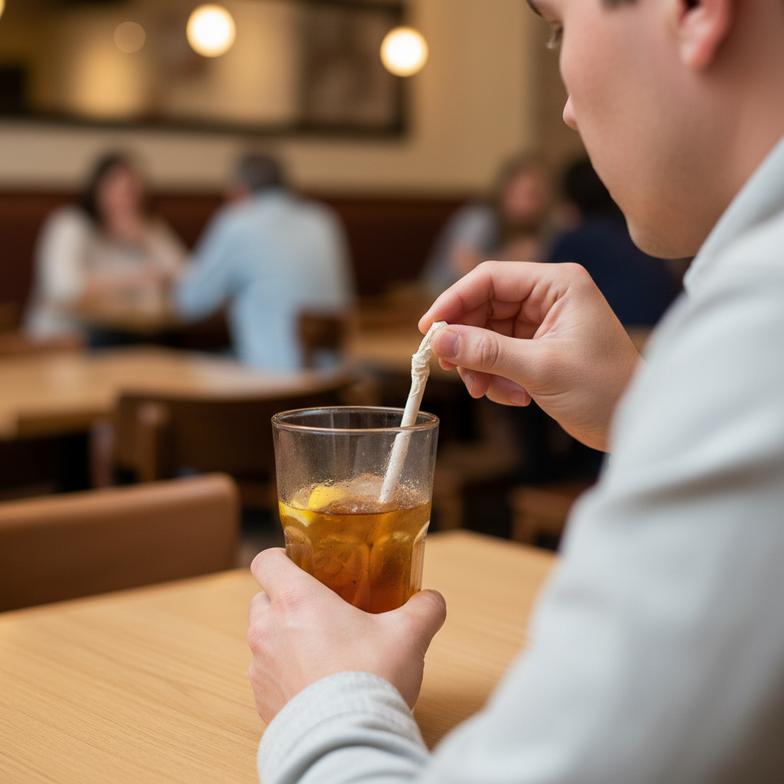
In today’s digital world, your online reputation is everything. A potential customer is more likely to check your Google or Yelp reviews than to see a traditional ad. And in those reviews, small details matter.
Think about this hypothetical—but very realistic—review:
> “⭐⭐⭐ The food was great and the staff was friendly, but the paper straw completely fell apart in my iced tea after five minutes. I had to awkwardly drink from the lid and almost spilled it on myself. It’s a small detail, but really annoying. Please get better straws!”
This isn’t a one-star review, but it’s just as damaging. It plants a seed of doubt. The reader thinks, “If they cut corners on something as simple as a straw, what else are they cutting corners on?”
In our experience analyzing feedback for our restaurant clients, “soggy paper straws” is one of the top complaints that turns an otherwise 5-star experience into a 3 or 4-star one[5]. It’s often the single point of friction that sours a customer’s entire visit.
That one review isn’t just one person’s opinion; it’s a public signal. When multiple reviews mention the same problem, it forms a pattern that screams “poor quality control.” The cost of acquiring a new customer is high[6]. Losing future customers to save half a cent on a straw is a financial misstep.
We advise our clients to reframe the purchase. The extra cost for a durable, reliable paper straw isn’t an expense; it’s a small insurance policy. It’s an investment in customer satisfaction and a defense for the brand reputation you’ve worked so hard to build. The ROI on preventing a single bad review is immense[7].
Your team is the engine of your restaurant, already juggling dozens of tasks to keep things running smoothly. The last thing they need is to be slowed down by product failures, re-making drinks, or acting as customer support for a faulty straw.
Cheap paper straws create significant operational drag by increasing waste, disrupting workflow, and forcing your staff to handle complaints. More importantly, poorly made straws can introduce serious hygiene risks[8] if they are not produced with certified food-grade paper, glues, and inks, potentially putting your business in a precarious compliance situation.
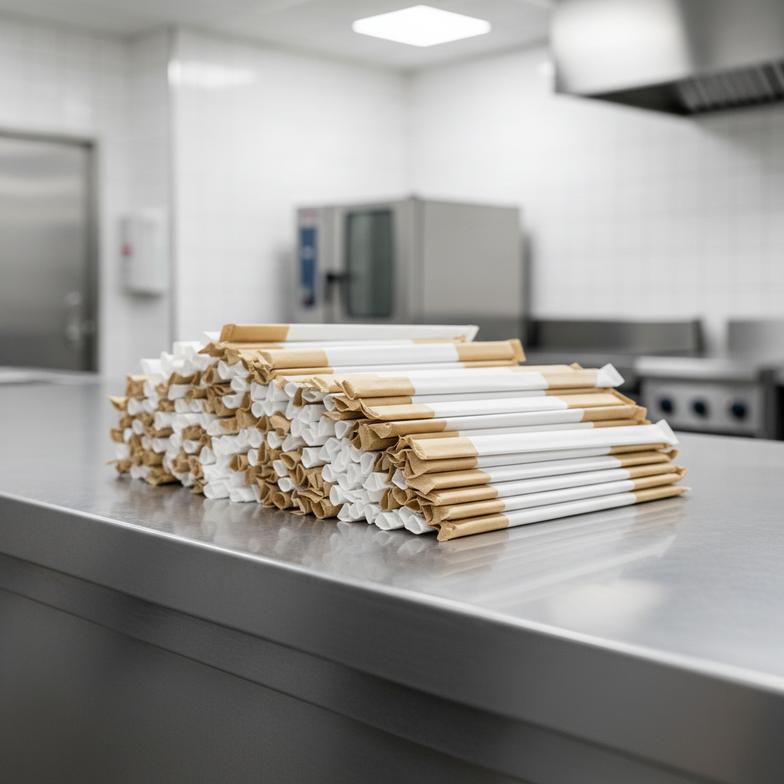
While a soggy straw is an annoyance, the issues with cheap paper straws for restaurants can run much deeper. Let’s look at the risks that impact your team and your legal obligations.
Imagine this scenario playing out during your lunch rush: 1. A customer’s straw splits and collapses into their soda. 2. They flag down a busy server to complain. 3. The server has to stop what they are doing, apologize, and go get a new straw. 4. If the drink was a milkshake or smoothie, the broken straw might be unrecoverable, forcing the staff to remake the entire drink—wasting time and inventory.
Each step in this process is a distraction from revenue-generating activities. It’s a small but constant drag on your team’s efficiency and morale. Good operational flow depends on reliable tools, and a paper straw is one of those tools.
This is where the risk becomes serious. The term “food-grade” isn’t a marketing buzzword; it’s a critical safety standard. It means that every component of the straw—the paper, the glue holding it together, and any ink used for branding—is certified as safe for human contact.
The cheapest straws on the market sometimes cut corners here, using industrial-grade adhesives or non-compliant paper to lower costs. These materials may contain chemicals that are not meant to be ingested[9].
As a consultant for our clients at PaperStrawTech, this is the first thing we teach them to vet. We advise them to ask every potential supplier a direct question: “Can you provide the food-contact safety documentation for the paper, the glue, and the ink?”
A reputable manufacturer will have this documentation ready. They should be able to provide things like:
If a supplier hesitates, dodges the question, or cannot provide these documents, it is a massive red flag. The risk of serving customers a non-compliant product is simply not worth the pennies saved.
So you’re convinced. You need to look beyond the unit price. But what exactly should you be looking for? Every supplier’s website claims they have “high-quality, durable, eco-friendly” straws. You need a practical framework to cut through the marketing noise.
The smart way to evaluate suppliers of paper straws for restaurants is to act like a detective. Request samples for real-world testing, demand proof of safety compliance, and investigate the supplier’s manufacturing experience. A true partner will be transparent and welcome your due diligence.

Here is the simple, actionable checklist we give our B2B clients to help them choose the right long-term partner, not just a one-time vendor.
Never place a bulk order without testing samples first. But don’t just look at them—put them through a rigorous trial.
Use this list to interview potential suppliers. Their answers will reveal a lot about their quality and reliability.
Use this table to guide your evaluation process. It helps contrast a superficial, price-focused approach with a smarter, value-focused one.
| Evaluation Area | Price-Focused Buyer Asks | Value-Focused Buyer Asks |
|---|---|---|
| Cost | “What’s your lowest price per case?” | “What is the true cost per satisfied customer, considering durability and waste?” |
| Quality | “Are they paper straws?” | “How long do they last in a real-world test with my drinks? Let me test your samples.” |
| Safety | Assumes they are safe. | “Please send me your food-grade certifications for all components.” |
| Supplier | “Who is the cheapest option today?” | “What is your manufacturing experience? Can you be a reliable partner for the long term?” |
By following this framework, you transform the procurement process from a simple price comparison into a strategic business decision.
The price per straw can range from less than a cent to over three cents, depending on quality, size, and whether they are wrapped. However, the more important metric is the cost-per-use. A durable $0.015 straw is cheaper than a flimsy $0.01 straw that requires a customer to use two per drink.
Yes, as long as they are sourced from a reputable manufacturer that uses food-grade materials and clean production processes. For the highest level of hygiene, especially for takeout or delivery, individually wrapped paper straws are the best option to prevent contamination.
The solution is in your purchasing decision, not in how the straw is used. To prevent sogginess, you must choose straws made from heavier, multi-ply paper and bonded with strong, water-resistant, food-safe adhesive. Always test samples from a supplier before committing to a large order.
Absolutely. Many manufacturers, including us at PaperStrawTech, offer custom printing on both the straw and the individual wrapper. This is a great way to reinforce your brand identity and show customers you’ve invested in a quality, sustainable experience.
Choosing the right paper straws for restaurants is far more than a simple line item on your procurement list; it’s a strategic decision that directly affects your budget, your brand’s reputation, and your daily operations. By moving away from the tempting trap of the lowest unit price and embracing a Total Cost of Ownership mindset, you can avoid the hidden costs of waste and customer dissatisfaction. A durable, hygienic, and reliable paper straw is not an expense—it’s an investment in the customer experience. By focusing on the cost-per-satisfied-customer, you will protect your bottom line and ensure that this small but significant detail enhances, rather than detracts from, the quality your patrons have come to expect.
If you’re ready to find a dependable paper straw solution that delights your customers and makes sound financial sense, our team at RainbowBear is here to help. We can guide you through the evaluation process and provide high-quality samples for you to test in your own restaurant.