
As a procurement manager, you’re faced with multiple paper straw quotations, and the price differences can be staggering. The temptation to choose the lowest unit price is strong, as it looks like an easy win for your budget. But a nagging feeling tells you there’s more to the story. This is why it’s crucial to learn how to properly compare paper straw samples and quotations, moving beyond price to evaluate the total risk to your business.
To effectively compare paper straw samples and quotations, you must prioritize verifying compliance documentation over simple price and sample tests. The biggest risks are not in performance but in material safety. Demand complete, unredacted third-party certifications for paper (FSC), glue (MSDS, food-contact grade), and ink (MSDS, food-contact grade) to de-risk your procurement and avoid the massive hidden costs of non-compliance.
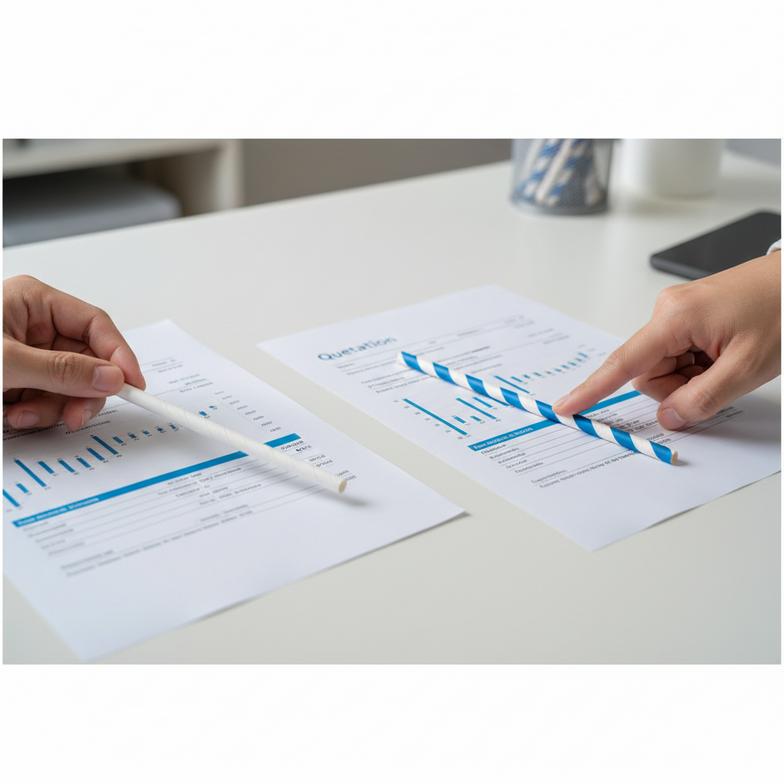
Looking at a price sheet only tells you part of the story. The real work of a professional buyer is to uncover what isn’t listed on that quotation. Let’s dive into a more robust evaluation process that protects your brand, your customers, and your bottom line.
The lowest bid on your desk is practically shouting to be chosen. It promises immediate savings and an easy decision. But in my experience, that low price is often a giant red flag, signaling compromises in areas that aren’t immediately obvious—like using non-food-grade glue or uncertified paper to cut costs.
The lowest unit price is deceptive because it rarely reflects the total cost of ownership. It omits the immense financial and reputational risks associated with non-compliant materials, which can lead to product recalls, legal action, and being delisted by major retailers[1]—costs that dwarf any initial savings.
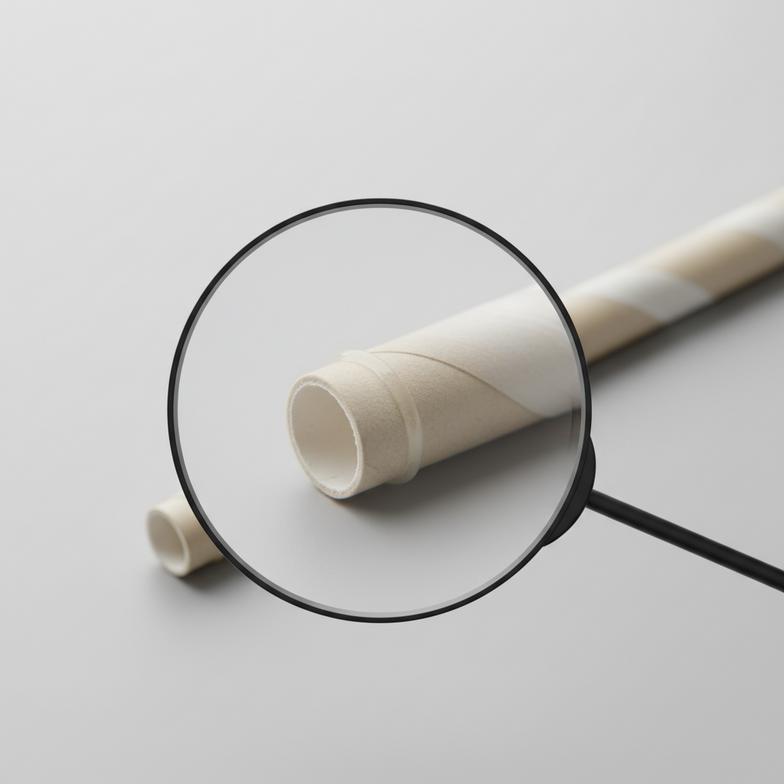
Let’s be honest. When you see a quote that’s 30-40% lower than the average, the supplier didn’t magically invent a more efficient manufacturing process. They cut corners. The question is, where?
A paper straw’s cost comes down to a few key components:
The easiest places to slash costs are the ones you can’t see. A supplier can use cheaper, non-FSC certified paper. They can switch to industrial-grade glue instead of more expensive food-safe adhesives. They can use inks with chemicals that should never come into contact with a beverage[2]. These choices are invisible in a photo and may not even be obvious in a simple sample test.
I once worked with a client who had secured a huge contract with a national distributor by sourcing from a very low-cost supplier. They were celebrating their win. A few weeks later, they got a call. Their end-customer, a well-known coffee chain, had conducted its own independent lab tests. The straws failed the food-contact safety analysis due to chemicals leaching from the glue[3]. The entire order was rejected, the contract was canceled, and their company’s reputation was damaged. They had to scramble to find a compliant supplier like us under immense pressure, ultimately spending far more than if they had chosen a verified partner from the start.
This table shows what you’re really comparing:
| Feature | Low-Cost Quote (The Trap) | Verified Quote (The Safe Bet) |
|---|---|---|
| Unit Price | Very Low | Moderate |
| Paper Source | Unspecified, likely non-FSC | FSC Certified (Verifiable) |
| Glue | Industrial grade, unknown safety | Food-Contact Grade (MSDS provided) |
| Ink | Standard, potential for heavy metals | Food-Safe Soy/Water-Based (MSDS provided) |
| Compliance Risk | High: Risk of recall, legal issues | Low: Fully documented and traceable |
| Brand Risk | High: Potential for bad press, customer complaints | Low: Protects brand reputation |
| Total Cost | Deceptively High (after potential damages) | Transparent and Predictable |
When you look at it this way, the “cheaper” option is clearly the most expensive one in terms of risk.
Every supplier’s website is filled with words like “eco-friendly,” “high-quality,” and “safe.” These claims are meaningless without proof. As a professional buyer, your job is to cut through the marketing fluff and get to the hard facts. How do you do that?
The most powerful action you can take is to demand the complete documentation. Don’t ask, tell the supplier that providing these documents is a non-negotiable part of your evaluation. This simple step shifts the burden of proof from you to them and quickly separates the serious players from the risky ones.

Your goal is to establish a clear, unbroken chain of custody and safety for every component of the straw. Don’t accept excuses or summaries. Request the full, original documents.
Here is your essential checklist:
1. Forest Stewardship Council (FSC) Certification:
2. Food-Contact Material (FCM) Test Reports:
3. Material Safety Data Sheets (MSDS/SDS)[7]:
When you receive the documents, you’re not just checking a box. You’re investigating. Here’s what to look out for:
Demanding and scrutinizing these documents is the single most important step you can take. It transforms your role from a price-shopper to a risk manager, which is the true heart of professional procurement.
Once you have the documents and have shortlisted a few compliant suppliers, it’s time to look at the physical samples. Just dropping a straw in a glass of water and waiting for it to get soggy is a start, but it’s not enough to truly compare paper straw samples.
A simple soak test doesn’t replicate real-world conditions or reveal deeper quality flaws. To test intelligently, you need a protocol that mimics actual customer behavior and is designed to find the weak points in a straw’s construction, such as the glue, paper integrity, and ink fastness.

At our facility, we don’t just test for sogginess; we test for total performance and safety. Here is a simple but effective protocol you can use right at your desk. Test samples from different suppliers side-by-side for a true comparison.
1. The “Out of the Box” Smell Test Before you do anything else, open the sample pack and smell the straws. Do they have a neutral, papery scent, or is there a noticeable chemical or glue-like odor? A strong, unpleasant smell is a major warning sign that non-food-grade materials might have been used. No amount of performance can fix a straw that smells like a chemical factory.
2. The 3-Hour Cold Liquid Test
3. The Warm Liquid & Ink Bleed Test
4. The Mouthfeel and End-Cut Quality Test Rub the end of the straw. Is it smooth and clean-cut, or is it rough, flaky, and papery? A poorly cut straw can leave paper residue in a drink and creates a negative tactile experience for the user. It also suggests a lack of precision in the manufacturing process.
Remember, this physical testing protocol is designed to complement your document verification, not replace it. A straw can pass all these tests and still be made with non-compliant materials. But when you combine rigorous document checks with smart physical testing, you get a complete, 360-degree view of the product’s true quality and safety.
Based on our experience, a fully compliant paper straw made with FSC-certified paper and food-grade materials can cost 15-30% more[9] than a low-cost, non-compliant alternative. This price difference covers the higher cost of certified raw materials, third-party testing, and ethical sourcing, which you should view as an investment in risk mitigation.
No, it is not. The paper mill’s certification covers the paper itself, but for the final product (the straw) to be sold as FSC certified, the straw manufacturer must have their own FSC “Chain of Custody” (CoC) certificate. This proves they have the systems in place to track certified materials through their production process. Always ask for the manufacturer’s certificate.
This is a critical trust factor. One way to ensure consistency is to include specifications from your approved sample in your purchasing contract. You can also request a “Certificate of Analysis” (CoA) with your bulk shipment that confirms the batch meets the agreed-upon standards. Building a long-term relationship with a transparent supplier is the best defense here.
The biggest hidden costs are almost never related to the product’s performance. They are: 1. Product Recalls: A compliance failure can force you to recall products, costing millions. 2. Legal Penalties: Fines from regulatory bodies for using non-food-safe materials. 3. Brand Damage: Negative press and loss of customer trust can be irreversible. 4. Lost Business: Being delisted by major distributors or retail partners.
Choosing a paper straw supplier based on unit price is one of the riskiest decisions a procurement professional can make. The real task is to look past the quote and focus on what truly matters: safety, compliance, and total risk. When you compare paper straw samples and quotations, your primary goal should be to verify the invisible components—the paper’s origin, the glue’s safety, and the ink’s composition—through rigorous documentation checks. Use physical sample testing not as your main tool, but as a final confirmation of performance.
By shifting your focus from a simple price comparison to a comprehensive risk assessment, you are not just buying a better straw; you are protecting your brand, ensuring customer safety, and making a sound business decision. You are vetting a supply chain partner, and that requires diligence far beyond the numbers on a price sheet.
If you’re looking for a transparent partner who provides complete documentation from the start and can help you de-risk your supply chain, contact us. Whether you need finished paper straws or want to build your own profitable production line, we’re here to help you succeed.