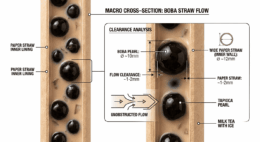
Struggling to make sense of the wide range of quotes you’re receiving for bulk paper straws? The fluctuating paper straw price can be frustrating, making you wonder if you’re overpaying or, worse, choosing a cheap option that will cost you more in the long run. The key is to look beyond the price tag and understand the trade-offs you’re making.
The final paper straw price for bulk orders is determined by four key factors: the grade of raw materials used (like FSC-certified vs. standard paper), the straw’s construction (e.g., 3-ply vs. 4-ply for durability), the complexity of customization (such as multi-color printing and individual wrapping), and the total order volume. A lower unit cost almost always signals a compromise in one of these areas, which can directly impact quality, brand reputation, and business risk.
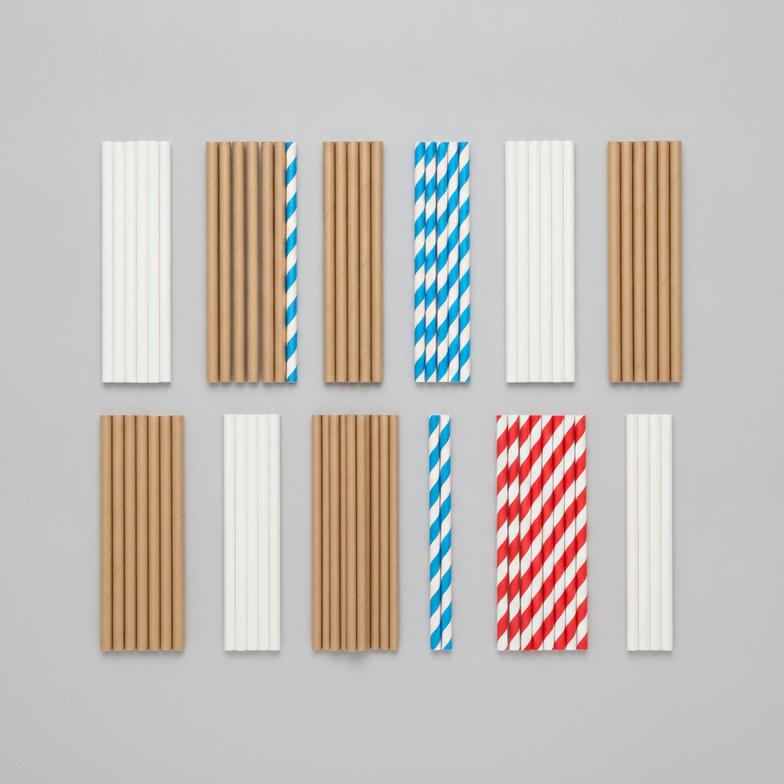
But these variables are just the surface. The real story behind the price is about managing your business’s total cost of ownership and mitigating risk. Let’s break down how each choice impacts not just your unit cost, but your brand’s reputation and your bottom line.
Are you trying to decide between FSC-certified paper and a cheaper, uncertified alternative? The initial cost difference might seem small, but the downstream consequences for your business can be significant. Understanding this trade-off is the first step to making a smart procurement decision.
A higher-grade raw material, like food-safe paper certified by the Forest Stewardship Council (FSC), costs more due to its verified sustainable sourcing and strict chain-of-custody requirements[1]. This directly increases the final paper straw price but serves as crucial insurance against market access risk and validates your brand’s sustainability promises.
Procurement managers often ask me about the ROI of using premium materials. My answer is always the same: think of it as a risk management strategy, not an expense.
Using FSC-certified paper isn’t just about environmental brownie points; it’s a critical key to market access. Many large retailers, distributors, and even entire countries have regulations or corporate policies that mandate products come from sustainably managed sources[2]. If your straws lack the proper certification, a major client could refuse your shipment, or your products could be barred from entering a lucrative market.
Based on feedback from our clients, trying to save a fraction of a cent on uncertified paper can lead to catastrophic losses if an entire container is rejected at port. The slightly higher paper straw price for certified materials is an insurance policy that protects your investment and your brand’s integrity.
The other major material factor is paper weight, measured in grams per square meter (GSM).
Choosing a straw made with 60 GSM paper for a milkshake bar is a recipe for customer complaints. The material must match the application.[3]
| Feature | Standard Paper | FSC-Certified Paper |
|---|---|---|
| Unit Cost | Lower | Higher |
| Brand Image | Neutral / Potential Risk | Positive / Verifiable |
| Market Access | Limited in regulated markets | Unrestricted |
| Supply Chain Risk | High risk of rejection | Low risk of rejection |
Are you worried about negative reviews from customers complaining about soggy straws? That one piece of feedback can harm your brand reputation far more than the money saved on a flimsier product. The construction of the straw is your primary defense against this common problem.
Yes, the straw’s construction is a major driver of its final unit cost. A 4-ply straw uses roughly 33% more paper and adhesive than a standard 3-ply straw[4] and may require slower, more precise machine settings during production. This increases the unit cost but provides superior durability, rigidity, and resistance to sogginess.
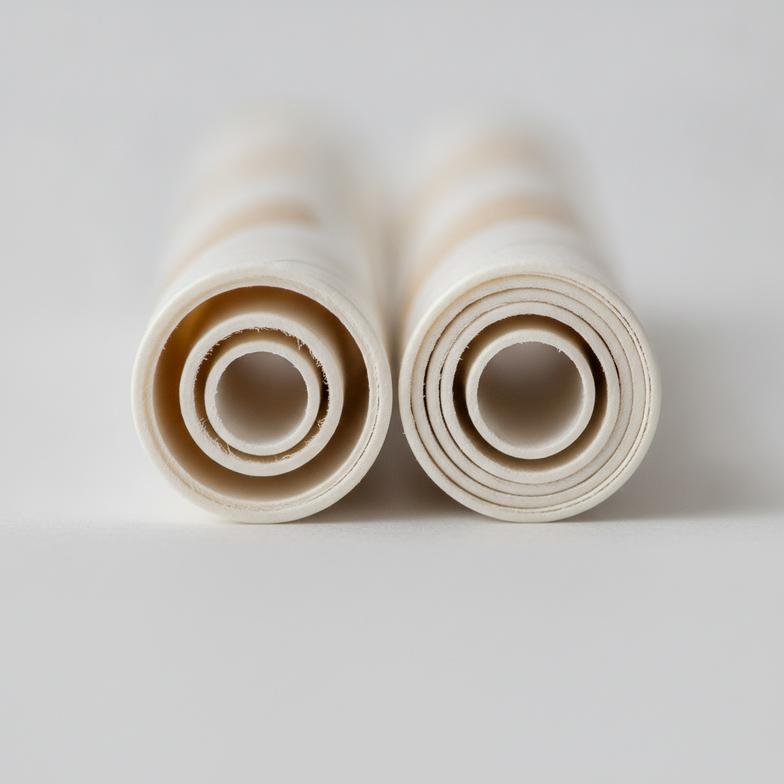
The difference between a 3-ply and a 4-ply straw might only be fractions of a cent, but the difference in customer experience is massive. This is where the concept of Total Cost of Ownership becomes critical. The “cost” of a bad review or a lost customer is much higher than the cost of that extra layer of paper.
From my experience at our own factory, where we run 10 production lines, I can tell you the choice is application-dependent:
Another construction element that affects the paper straw price is the adhesive. To cut corners, some manufacturers use cheap, industrial-grade glues that may not be certified for food contact. This poses a serious health and legal risk[6]. A reputable supplier will always use food-grade adhesives and be able to provide the corresponding Material Safety Data Sheet (MSDS). This cost is non-negotiable for any brand that values its customers’ safety and its own legal standing.
You want your straws to carry your brand’s logo and colors, but the customization quotes you’re getting are confusing. What are you actually paying for when you add branding to a simple paper straw?
Customization directly influences the paper straw price by adding costs related to printing plates, ink usage, specialized wrapping materials, and machine setup time. The more complex the design—for instance, a multi-color logo on an individually printed paper wrapper—the higher the final unit cost will be.
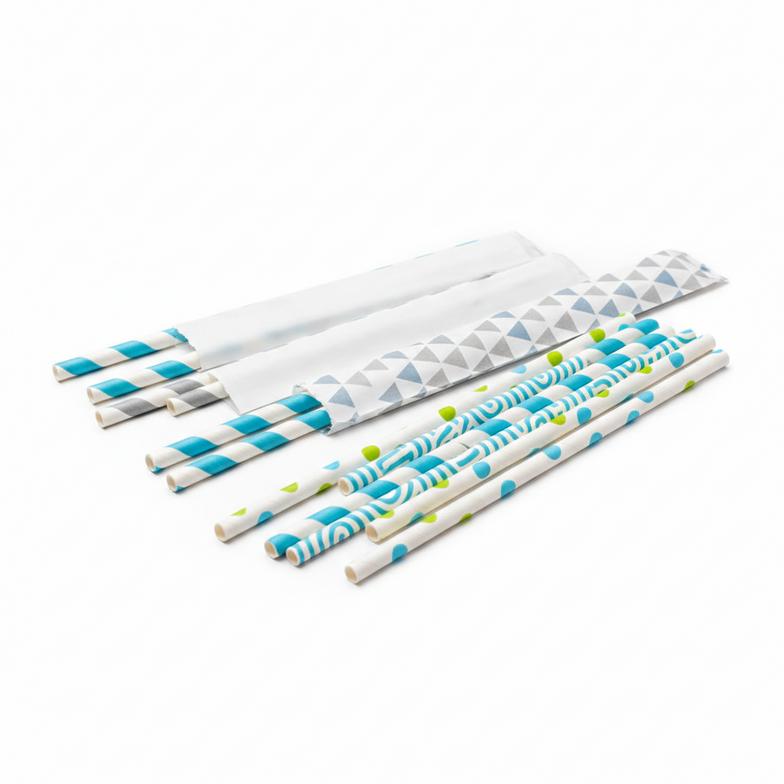
When a client asks for a quote on a custom straw, I break it down into its core components to provide full transparency. This helps them understand exactly where their money is going.
The most common customization is adding a logo or pattern to the straw itself. Here’s how it impacts cost:
Individual wrapping is a standard for hygiene in most foodservice and quick-service restaurant (QSR) settings[8].
I recently worked with a fast-casual chain that wanted a two-color logo on an individually paper-wrapped straw. By breaking down the cost—the base 4-ply straw, the printing plate setup, the per-unit ink cost, the wrapper material cost, and the wrapper printing cost—we helped them understand the value. They realized the branded wrapper was a powerful marketing tool that justified the investment.
You’ve received a quote from a supplier that is significantly lower than all the others. It’s incredibly tempting, but a voice in your head is warning you that it might be too good to be true. In my experience, that voice is usually right.
Focusing only on the lowest paper straw price often exposes your business to hidden costs from inconsistent quality, unexpected production delays, and poor communication. A reliable manufacturing partner provides stability, quality assurance, complete documentation, and proactive support—assets that prevent operational disruptions and ultimately protect your bottom line.

“What is your price for one million straws?” is the most common first question I get. However, procurement managers who successfully minimize risk ask better questions. The real goal isn’t to find the cheapest straw; it’s to find the most dependable supply chain.
A cheap first order can be misleading. A common complaint I hear from buyers who switch to us is that their previous low-cost supplier had terrible batch-to-batch consistency[9]. The first shipment was perfect, but the second was full of straws that were flimsy, had sloppy printing, or unraveled in drinks. A reliable partner invests in robust quality control processes to ensure that the millionth straw is just as good as the first.
Based on feedback from our clients, one of the biggest unexpected costs comes from a supplier who goes dark. A production delay is an inconvenience, but a delay you only discover when your shipment is already late is a catastrophe for your inventory management and sales commitments.
A true partner communicates proactively. They confirm order details, provide production updates, and give you advance warning of any potential shipping delays. This transparency allows you to manage your business effectively.
To properly evaluate a potential supplier, shift your focus from price to process.
The answers to these questions will tell you far more about the true value and risk of a supplier than any price sheet ever could.
The MOQ for custom orders typically ranges from 100,000 to 300,000 units[10]. This volume is necessary to make the setup costs for custom printing plates and machine calibration economically viable for both the buyer and the manufacturer.
A 4-ply straw is usually only a fraction of a cent more expensive per unit[11] than a 3-ply straw. While the exact difference depends on the paper grade and order volume, this small incremental investment delivers a significant improvement in durability, preventing sogginess and elevating the customer experience.
Yes, the raw material cost for FSC-certified paper is higher due to the rigorous audit and chain-of-custody tracking required. This increases the unit price slightly. However, this cost should be viewed as an investment in brand integrity and insurance against being locked out of environmentally conscious markets.
Shipping is a major variable that significantly impacts the final cost, especially for international freight. The total cost depends on the shipping method (sea freight is cheaper but slower than air freight), total order volume and weight, and destination port fees and tariffs. Always ask your supplier to clarify the Incoterms (e.g., FOB, CIF)[12] to understand who is responsible for shipping costs and risk.
Ultimately, the paper straw price is not a single number but a dynamic outcome of your choices regarding materials, construction, and customization. A lower price almost always reflects a compromise—be it in durability, safety compliance, or brand aesthetics. The most successful buyers I work with have learned to look beyond the unit cost and evaluate the total picture: supply chain reliability, risk mitigation, and the long-term value of a dependable partner. Your goal should not be to find the cheapest quote, but to secure the best value that protects your brand and ensures a stable supply.
A reliable partner is your greatest asset in this industry. If you’re ready to move beyond simple price comparisons and discuss building a stable, high-quality, and cost-effective supply chain for your business, contact our team at PaperStrawTech. We provide everything from finished wholesale straws to complete turnkey factory solutions.