
Struggling to find the right hemp filter tips for your pre-rolled cones can feel like a frustrating puzzle with too many pieces. A poor match leads to clogged draws, production jams, and negative customer reviews[1], ultimately damaging your brand’s hard-won reputation. The solution lies in understanding the key variables that guarantee a perfect fit and a flawless smoking experience every time.
To successfully match hemp filter tips with pre-rolled cones, you must focus on three critical variables: diameter and taper, length and density, and material compatibility. The tip’s diameter must create a snug seal with the cone’s base to prevent air leaks. Its length and fiber density dictate structural support and airflow. Finally, the tip’s material must be compatible with your cone paper and filling machinery to ensure smooth, efficient production.

Getting these three elements right is more than a technical detail; it’s a strategic business decision. A perfect match creates a premium product, while a mismatch introduces costly risks into your operation. Let’s break down exactly what you need to look for to avoid these mistakes and build a product your customers will love.
You’ve sourced hemp filter tips that seem to fit your cones, but customer complaints about a tight or airy draw are starting to pile up. That tiny, almost invisible gap between the tip and the cone paper is causing major performance issues. The key is to understand precisely how diameter and taper work together to create a perfect, airtight seal.
Yes, diameter and taper are absolutely critical to the smoking experience. A tip that is too small for the cone’s base creates air leaks, resulting in a harsh, thin, and unsatisfying draw[2]. Conversely, a tip that is too large or has the wrong taper can block airflow entirely, making the cone difficult to smoke and causing it to clog.
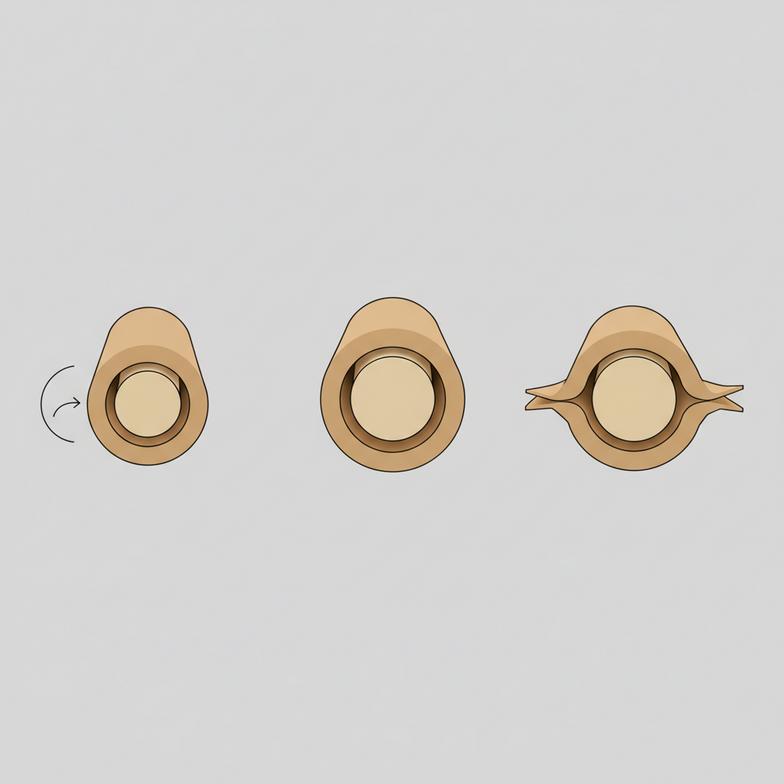
The relationship between the tip and the cone is the foundation of your pre-roll’s performance. Think of it as an engineering tolerance problem where even a fraction of a millimeter can make a difference between a premium product and a defective one.
A frequent question we get from new brands is, “What’s the standard tip diameter?” While 8mm is a common size[3], it’s not universal. It entirely depends on the cone you are using. King-size cones (109mm) typically have a different base diameter than 1¼ (84mm) or 98mm cones. The first step is always to know the exact inner diameter of your cone’s base. Your cone supplier should provide this specification.
Your goal is to find a tip diameter that sits in the “Goldilocks Zone”—not too tight, not too loose.
The taper is just as important. Most pre-rolled cones have a conical shape that narrows toward the base. A straight, cylindrical tip can leave small, triangular gaps when inserted into a tapered cone. For the most secure seal, the taper of the tip should match the taper of the cone’s base. This ensures full contact all the way around, eliminating air leaks.
| Fit Type | Diameter Mismatch | Taper Mismatch | User Experience | Production Impact |
|---|---|---|---|---|
| Loose | Tip is too small | Straight tip in tapered cone | Airy, harsh, hot draw; weak flavor | Tips may fall out during production/packaging |
| Tight | Tip is too large | N/A | Clogged, difficult draw; frustrating | Jams in automated fillers; torn cones; crushed tips |
| Perfect | Tip fits snugly | Taper of tip matches cone | Smooth, consistent draw; full flavor | Seamless automated filling; low defect rate |
You’re evaluating two different hemp filter tips. One is long and feels very sturdy, but the draw seems a bit tight. The other is shorter with a more open structure, but it feels like it could bend easily. Choosing between them feels like a trade-off, and you’re right. Striking the right balance is crucial for both user perception and functional performance.
A tip’s length provides essential structural integrity, preventing the cone from bending or collapsing[5] near the mouth. Its density, determined by how tightly the hemp fibers are packed, directly controls the level of filtration[6] and the smoothness of the draw. The ideal combination of length and density depends entirely on the specific smoking experience you want to deliver to your customers.
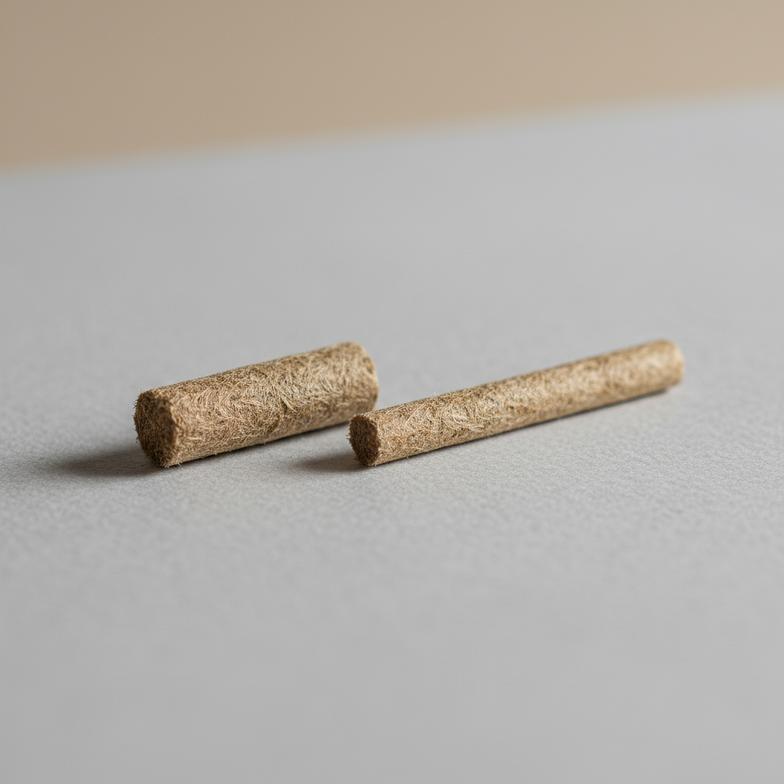
While diameter ensures a proper seal, length and density define the character of your pre-roll. These two attributes have a direct impact on mouthfeel, durability, and the quality of the smoke itself.
Choosing the Right Length
The length of a filter tip typically ranges from 15mm to over 30mm. This choice affects more than just aesthetics.
Understanding Fiber Density
The density of the hemp fibers inside the tip is where you fine-tune the smoking experience.
The perfect combination depends on your brand positioning. A wellness-focused brand might prioritize high-density filtration[10] for a smoother experience, while a brand focused on delivering maximum flavor might opt for a lower density to ensure nothing gets in the way of the terpenes.
Your new batch of hemp filter tips looked perfect on the spec sheet, but now they are repeatedly jamming your automated filling machine. Production has ground to a halt, your team is frustrated, and you’re wasting expensive cones and flower with every failed unit. This isn’t a machine problem; it’s a material compatibility issue.
Material compatibility ensures your hemp filter tips work seamlessly with both your cone paper and, most importantly, your production machinery. A mismatch in texture, rigidity, or dimensional consistency can cause constant machine jams, inaccurate fills, and high defect rates. This directly inflates your cost per unit and threatens your ability to meet demand.

Focusing only on the end-user experience is a common mistake. I’ve seen clients run into trouble when they overlook how their chosen components will perform on the production line. A tip that feels great to a smoker can be a complete disaster in a high-speed automated environment.
The Tip vs. The Machine
Automated pre-roll machines—whether they are knockbox-style fillers or more sophisticated robotic systems—are calibrated for consistency. Here’s where things can go wrong:
The Tip vs. The Paper
The interaction between the tip and the cone paper is also crucial. A very rigid tip with a sharp edge could potentially tear ultra-thin papers, like rice or hemp paper, during the insertion process.
The single most important piece of advice I can give is this: always request samples and test them on your actual production equipment before placing a bulk order. Don’t just test ten samples; run a few hundred if you can. This is the only way to confirm that your chosen hemp filter tips are truly compatible with your entire system. This small step can save you thousands of dollars in wasted materials, downtime, and production headaches.
The most common diameter is around 8mm, which is designed to fit standard 1¼ (84mm) and King (109mm) size cones. However, there is no universal standard. The correct diameter is entirely dependent on the specific pre-rolled cones you are using, so always confirm your cone’s base measurements before ordering tips.
Generally, yes, as long as the cone base diameter is the same. However, it’s wise to test them. Ultra-thin papers (like rice paper) are more delicate and could potentially be damaged by a very rigid tip during automated filling. Thicker papers, like unbleached brown paper, are more forgiving.
Yes, denser fibers create a more complex path for the smoke, which is more effective at trapping fine particulates[12] and cooling the smoke. This results in a smoother draw. The trade-off is higher draw resistance, which could lead to clogging if the tip is too dense or the flower is packed too tightly.
A manual test is a great first step. Insert a tip into a cone—it should slide in snugly with minimal force and have no visible gaps around the edges. Roll the cone between your fingers to feel for sturdiness and ensure the tip doesn’t collapse. While this can’t replace a real production run, it helps quickly eliminate obviously poor matches.
Successfully matching hemp filter tips with pre-rolled cones is not about finding a universal “best” product, but about making a calculated decision. It requires a holistic view that balances airflow, user experience, and production reality. By focusing on the critical variables—diameter and taper for a perfect seal, length and density for the desired smoking experience, and material compatibility for manufacturing efficiency—you can move beyond trial and error. Making an informed choice protects your brand’s reputation for quality, minimizes production waste, and ensures you deliver a consistent, premium product every single time.
If you’re looking for a reliable partner to source high-quality, consistent hemp filter tips or need guidance on integrating them into your production line, contact our team at PaperStrawTech. We help you de-risk your supply chain and build a better pre-roll.