Worried about the safety of inks in colored paper straws[1]? This is a huge risk for your brand if your supplier isn’t compliant. You need a clear process to verify safety.
The key to ensuring ink safety is not just asking if it’s ‘food-grade.’ Buyers must request and verify specific documents from their supplier, such as a Material Safety Data Sheet (MSDS)[2] and food-contact test reports for the exact inks used. This shifts the focus from a simple claim to verifiable proof.
Many buyers we talk to start with one simple question about ink safety. But as a solution provider in this industry for over a decade, I’ve learned that protecting your business requires looking deeper. Ensuring safety goes beyond a single component and involves a process of verification. Let’s break down what you really need to ask to protect your customers and your brand.
You ask suppliers "Is your ink safe?" but get vague answers like "Yes, it’s food-grade." This leaves you uncertain and exposed to risk. Let’s reframe the question to get proof.
Instead of asking "Is your ink safe?", ask "Can you provide the Material Safety Data Sheet and third-party food-contact test reports for the specific inks used on my order?". This forces a supplier to provide documentation, not just a verbal promise.
Procurement managers often ask us, "Is your ink safe?" and I understand why. It’s the most direct question. The problem is, a simple "yes" from a supplier is meaningless without proof. The word "food-grade" is a marketing term, not a certification. A common mistake we see is buyers accepting this answer and moving on. A better approach is to change the question to demand evidence. This shifts the conversation from a sales pitch to a technical verification. Your job as a buyer is to manage risk, and that starts with asking questions that can only be answered with documents.
Asking stronger questions puts the responsibility on the supplier to prove their claims. Here is a simple breakdown:
| Weak Question | Strong, Actionable Question |
|---|---|
| Is your ink safe? | Can you provide the Material Safety Data Sheet (MSDS) for the exact ink used on my straws? |
| Is it food-grade? | Do you have a third-party test report showing the finished straw complies with my market’s standards (e.g., FDA, LFGB)? |
| Do you use safe materials? | Can you confirm the paper, glue, and ink in my order all have current food-contact safety documentation? |
By asking these questions, you are no longer relying on trust alone. You are performing the necessary due diligence to protect your business.
A supplier sends you documents, but you don’t know what you’re looking for. Ignoring the details could mean you’re unknowingly accepting a non-compliant product. Let’s cover key red flags.
When reviewing safety documents, check that the supplier’s name, the ink’s model, and the test standards (e.g., FDA 21 CFR[3], Regulation (EC) 1935/2004[4]) match your needs. Outdated reports, mismatched names, or vague descriptions are major red flags that require further questioning.

A trustworthy supplier has the burden of proof; they must provide the documents. But you, the buyer, have the burden of verification. You have to check them. Based on helping clients navigate compliance, here’s what to focus on. Don’t worry, you don’t need to be a scientist. You just need to be a good detective.
A Material Safety Data Sheet (MSDS) lists the components and safety information for a chemical product. You’re not trying to understand complex chemistry. You are just confirming that the supplier has this document for the ink they are using. Does the product name on the MSDS match the ink they claim to use? This simple check shows if the supplier has a basic system for tracking their raw materials. If they can’t produce this, it’s a serious red flag.
This is your most important piece of evidence.
You’ve spent all your energy verifying the ink for your colored paper straws. But the paper, glue, or even the factory’s hygiene could still contaminate the final product. A truly safe straw needs a holistic quality system.
Ink safety is crucial, but it’s just one piece. The paper must be food-contact grade (ideally FSC certified), the glue must be safe, and the production environment must prevent cross-contamination. A reliable supplier manages safety across all components, not just the obvious one.
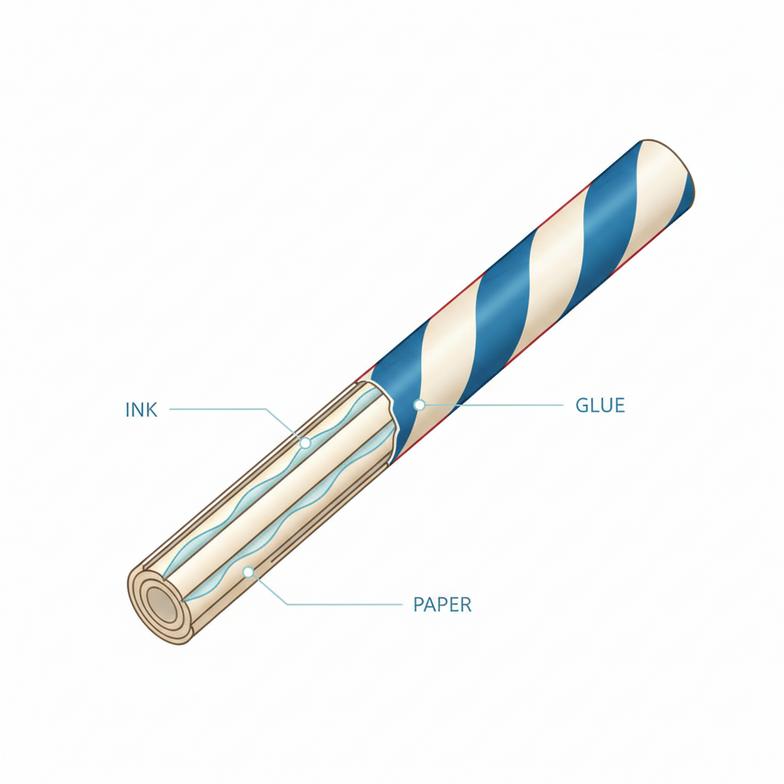
A common mistake we see is focusing only on the ink. The final straw is a system of three components put together in a specific environment. A failure in any one of these areas can compromise the safety of the entire product. After helping numerous buyers source products, we’ve learned to emphasize this complete picture.
The paper makes up over 95% of the straw. It must be made from virgin wood pulp and rated for food contact. We recommend asking for Forest Stewardship Council (FSC) certification[6]. This not only confirms the paper is sourced responsibly but also adds another layer of traceability to the supply chain, which is often linked to better quality control.
The glue holds the three layers of paper together. It must also be a food-grade adhesive that is tested to ensure no harmful chemicals migrate into the drink[7]. We’ve seen cases where buyers get so focused on ink that they forget to ask about the glue. It’s a critical component that requires its own safety verification.
A factory’s cleanliness and processes matter. Is the paper straw production area separate from other industrial manufacturing? Does the factory have any certifications like ISO 9001 (for quality management)[8] or a BSCI audit (for social compliance)? A clean, well-managed factory is less likely to have issues with cross-contamination.
Choosing a cheaper supplier with unverified safety claims seems like a good deal. But a single safety incident could lead to product recalls, legal fines, and irreversible brand damage. Let’s look at the true cost of risk.
The risks of using unverified colored straws go beyond health. They include costly product recalls, rejection by customs[9], lawsuits, and long-term damage to your brand’s reputation. The small initial savings are not worth these potentially business-ending consequences.
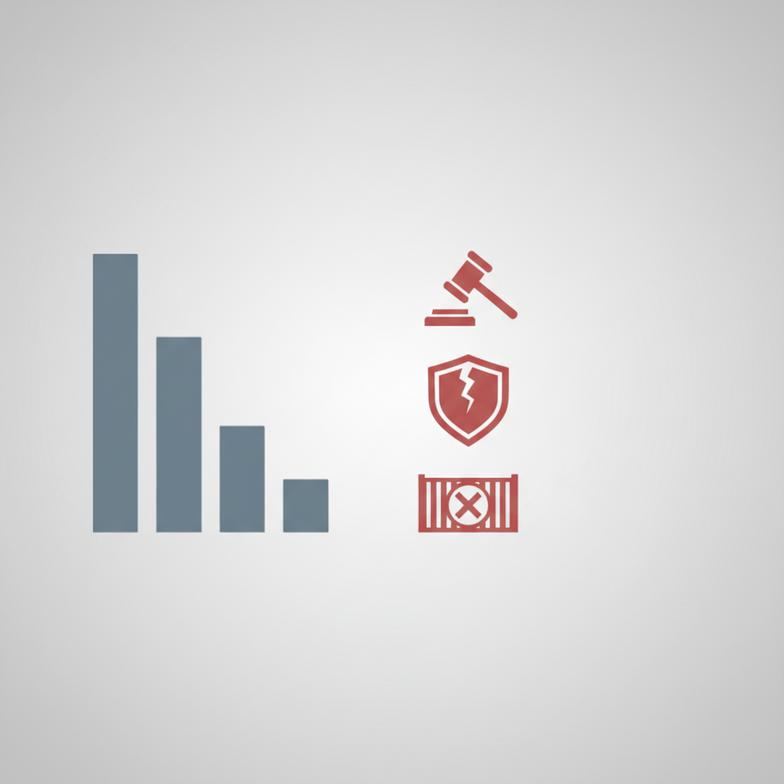
The temptation to save a few cents per case is strong. I get it. But from our experience supporting businesses, the small cost savings are not worth the potential business-ending risk. You are not just buying a straw; you are inheriting all the risks associated with its production. Thinking about these risks can help you make a more balanced sourcing decision.
Imagine a container of your straws being held at the port by customs for non-compliance. You lose the entire shipment, the money you paid for it, and the sales you expected to make. Or, if a problem is discovered after distribution, you face the enormous cost of a product recall. These direct financial hits can be devastating.
If a customer is harmed or claims to be harmed by your product, your business is legally liable. Regulations around food-contact materials are strict and getting stricter[10]. Claiming "my supplier told me it was safe" is not a legal defense. You are responsible for the products you sell.
This is often the most damaging risk of all. In today’s world of social media, one customer’s negative experience can go viral in hours[11]. A story about "toxic straws" can destroy the trust you’ve spent years building with your customers. A damaged reputation is incredibly difficult and expensive to repair.
Verifying the safety of colored paper straws is an essential part of your job. Focus on documentation and process, not just promises, to protect your customers and your business.