Worried your bulk paper straw order won’t meet expectations? A bad batch can damage your brand and budget[1]. Learn how to verify quality before you commit to a large purchase.
To properly prepare for a bulk order, treat samples as evidence. Create a specific test plan to check for sogginess, durability, and safety. Also, request production-run samples with full compliance documentation. This approach de-risks your investment and verifies supplier capability.

I see it all the time in my work. A potential partner asks for "some samples" and waits for the package. A week later, they might email back "they’re good" and then proceed to place a huge order. Sometimes this works out just fine. But when it doesn’t, the problems are costly and stressful for everyone involved. A sample is not just a straw; it’s a test of your future supplier’s quality and professionalism. To really know what you’re getting, you need a plan. This simple shift in thinking turns a sample request into a powerful tool for making a safe and profitable decision for your business.
Getting a perfect "golden sample" is easy, but it often says nothing about the quality of a full production run. This can lead to surprise issues later.
Don’t just ask for generic samples. Instead, provide the supplier with your "test plan." Specify your exact use case, such as "for use in thick, cold milkshakes for over 60 minutes." This forces the supplier to send a relevant product and shows you are a professional buyer.

Based on our experience helping buyers, the most successful ones don’t just ask for a product; they define a problem they need to solve. A generic sample request often gets you a generic, all-purpose straw that might not be right for your specific needs. The first step is to think about how your customers will actually use the straw. This is your use case.
Are the straws for a fast-food chain serving iced sodas? Or a high-end café serving hot lattes? Maybe they are for thick smoothies or milkshakes. Each scenario places different demands on the straw. Write this down. For example: "We need straws for 16oz iced coffees, to last at least 2 hours without going soft." This clarity helps us, the supplier, select the right product for you.
Next, think about what could go wrong. This helps you build your test. The most common risks are sogginess, ink bleeding, strange smells or tastes, and straws breaking.[2] For custom-branded straws, you also have the risk of incorrect colors or logos.
A simple checklist makes your testing structured and repeatable.
| Test Item | Condition | Pass/Fail Criteria |
|---|---|---|
| Durability | Submerged in a 4°C carbonated drink | Must remain firm and usable for 2 hours.[3] |
| Ink Safety | Rubbed with a damp white cloth after 10 mins | No color transfer to the cloth.[4] |
| Odor/Taste Transfer | Placed in a glass of still water for 30 mins | Water should have no noticeable paper taste or smell.[5] |
| Branding Accuracy | Compared against the provided Pantone color code | Color and logo must match the design file exactly. |
This simple plan changes the conversation from "send me straws" to "help me solve my quality requirements."
Are you worried the beautiful samples you received won’t represent the final bulk order? Many suppliers send specially made "golden samples."[6] This can hide inconsistencies in their regular production process.
Always request samples from a recent, standard production run. Be sure to ask for the production date. This gives you a true picture of their day-to-day quality and consistency, not just what they can produce for marketing purposes. It’s a simple way to spot potential issues early.
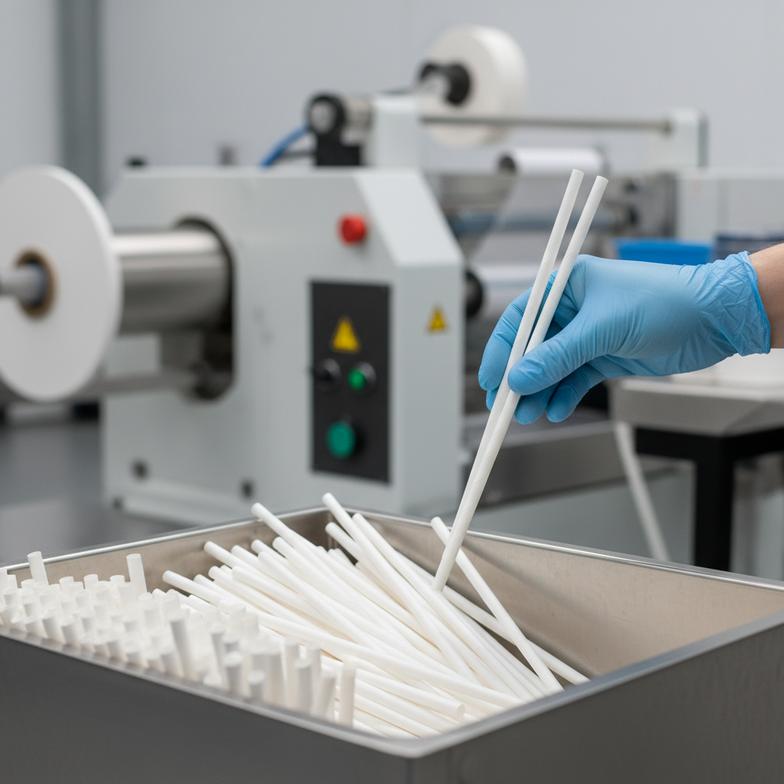
A common question we get is, "How do I know the bulk order will be as good as the sample?" This is a very valid concern. The key is to understand the difference between a marketing sample and a production sample.
Some suppliers have a special batch of perfect samples set aside just for new customers. These are often made slowly, with extra quality checks, and using the best materials. They look fantastic, but they don’t represent the reality of a high-speed production line running thousands of straws per minute[7]. Relying on these "golden samples" is a major risk. Your bulk order may be produced under completely different conditions, leading to a drop in quality that you did not expect.
To avoid this trap, be very specific in your request. Ask for "samples taken from your most recent standard production run from last week." You can even ask for the specific production date and batch number. As a manufacturer with our own factory, we appreciate this question. It shows the buyer is experienced. A transparent and confident supplier will have no problem providing this. If a supplier hesitates or makes excuses, it could be a red flag that their quality is inconsistent.
Testing a real production sample gives you a baseline for the supplier’s average quality. It tells you what you can realistically expect from your large order. If the production sample is excellent, you can have more confidence. If it has minor flaws, you can discuss them before committing. This simple step helps you assess the true manufacturing capability of a potential partner, not just their ability to make a few perfect straws.
A straw might feel strong, but is it actually safe and compliant with regulations? Without proof, you expose your business to legal and safety risks. Don’t let a lack of paperwork undermine your brand.
Treat the sample package as a test of professionalism. Request not just the straws, but also key documents like Material Safety Data Sheets (MSDS), food-contact certificates (e.g., FDA, LFGB)[8], and material source proof (e.g., FSC). How a supplier handles this request reveals their maturity.

The physical straw is only half of the product. The other half is the guarantee that it’s safe, legal, and made from responsible sources. In my role, I’ve seen buyers focus so much on sogginess that they forget to ask for the paperwork that protects their business. Don’t make this mistake.
A professional supplier is more than just a factory; they are a partner in your compliance. They should have a well-organized system for managing and providing essential documentation. Asking for these documents along with your samples is a great way to test their operational maturity. A disorganized or hesitant response to a request for documents is a major warning sign. It suggests they may not have proper quality control or supply chain management in place.
Your request should be clear. Here are the most important documents you should ask for, depending on your market.
| Document Type | What It Verifies | Why It’s Important |
|---|---|---|
| Food Contact Certificate | That the materials (paper, glue, ink) are safe for contact with food. | Protects consumers and meets legal requirements (e.g., FDA in the US, LFGB in Germany). |
| Material Safety Data Sheet (MSDS)[9] | The chemical properties and safety information for the glue and ink. | Ensures the components are non-toxic and handled safely. |
| FSC Certificate[10] | That the paper comes from responsibly managed forests. | Supports your brand’s sustainability claims and meets consumer expectations. |
| Supplier’s Business License | That the company is a legally registered entity. | Basic due diligence to confirm you are dealing with a legitimate business. |
A professional supplier should be able to provide these documents promptly, usually as digital files. If they make excuses, send expired documents, or provide certificates that don’t match their company name, you should be very cautious. Their ability to handle this simple request is a strong indicator of how they will handle your larger business relationship, especially if any problems arise later.
You’ve tested the samples, and some of them failed. Just telling the supplier "they’re bad" gets you nowhere. This kind of vague feedback prevents any real problem-solving and wastes everyone’s time.
Provide structured, specific feedback. Instead of "it got soggy," say "the straw collapsed after 45 minutes in a 4°C iced soda." Share photos and reference your initial test plan. This tests your supplier’s technical communication and problem-solving abilities[11].
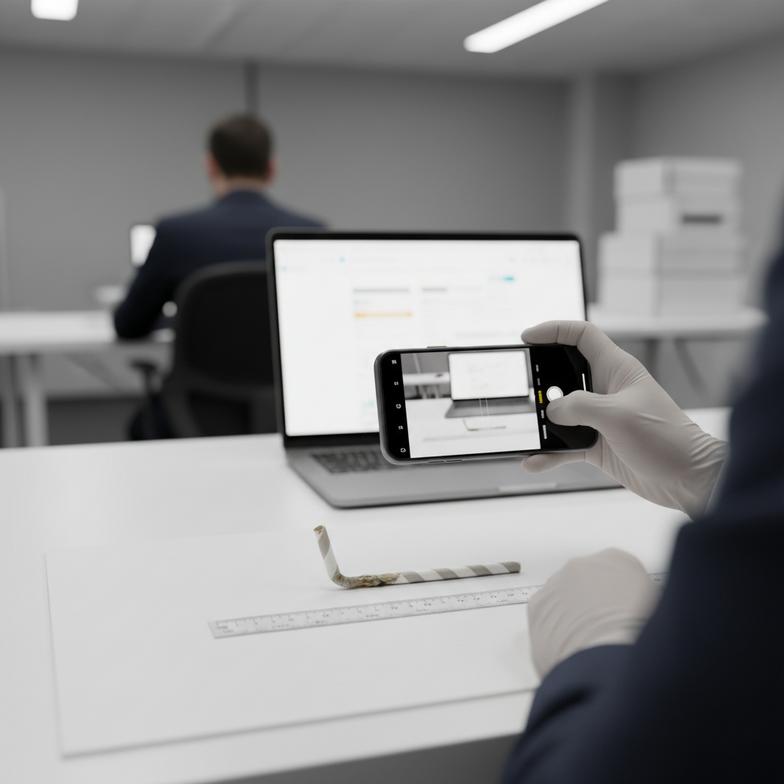
The final step in the sample process is communicating your results. This is not about complaining; it’s about starting a technical conversation. How a supplier responds to detailed feedback tells you everything you need to know about their post-sales support and commitment to quality.
From our experience on the manufacturing side, we can’t fix a problem we don’t understand. "Your straw is bad" is not helpful. But "Your straw started to unravel at the seam after 20 minutes in hot coffee at 80°C" is actionable data. It helps our engineers identify the potential cause, whether it’s the glue, the paper tension, or the drying process[12]. Good feedback turns you from a customer into a testing partner.
When you write your feedback email, structure it around your test plan. Here is a good example: "Hi [Supplier Name], Thank you for the samples. We have completed our initial testing based on the plan we discussed.
Can you advise if you have a more robust model suitable for carbonated drinks, or if there’s a way to improve the durability for this use case?"
This type of communication does two things. First, it allows the supplier to solve your problem effectively. Second, it tests their ability and willingness to engage in a technical, problem-solving dialogue. A great supplier will see this as an opportunity to demonstrate their expertise. They might suggest a different paper type, a thicker wall, or a different glue. Their response will show you if they are a true partner or just a transactional seller. This is critical for building a long-term, reliable supply chain.
A structured sample plan with clear testing, documentation requests, and specific feedback protects your investment and helps you find a reliable partner for your bulk paper straw order.