Your customers are frustrated. Their straw sinks into the cup or clogs with their drink. This reflects poorly on your business.1 Let's match the right straw to every beverage.
Choose your paper straw size based on three things: drink thickness, cup height, and lid type. Standard 6mm straws work for thin liquids, while wider 8mm-12mm straws are essential for smoothies, milkshakes, and bubble tea2 to prevent clogging and ensure a good customer experience.
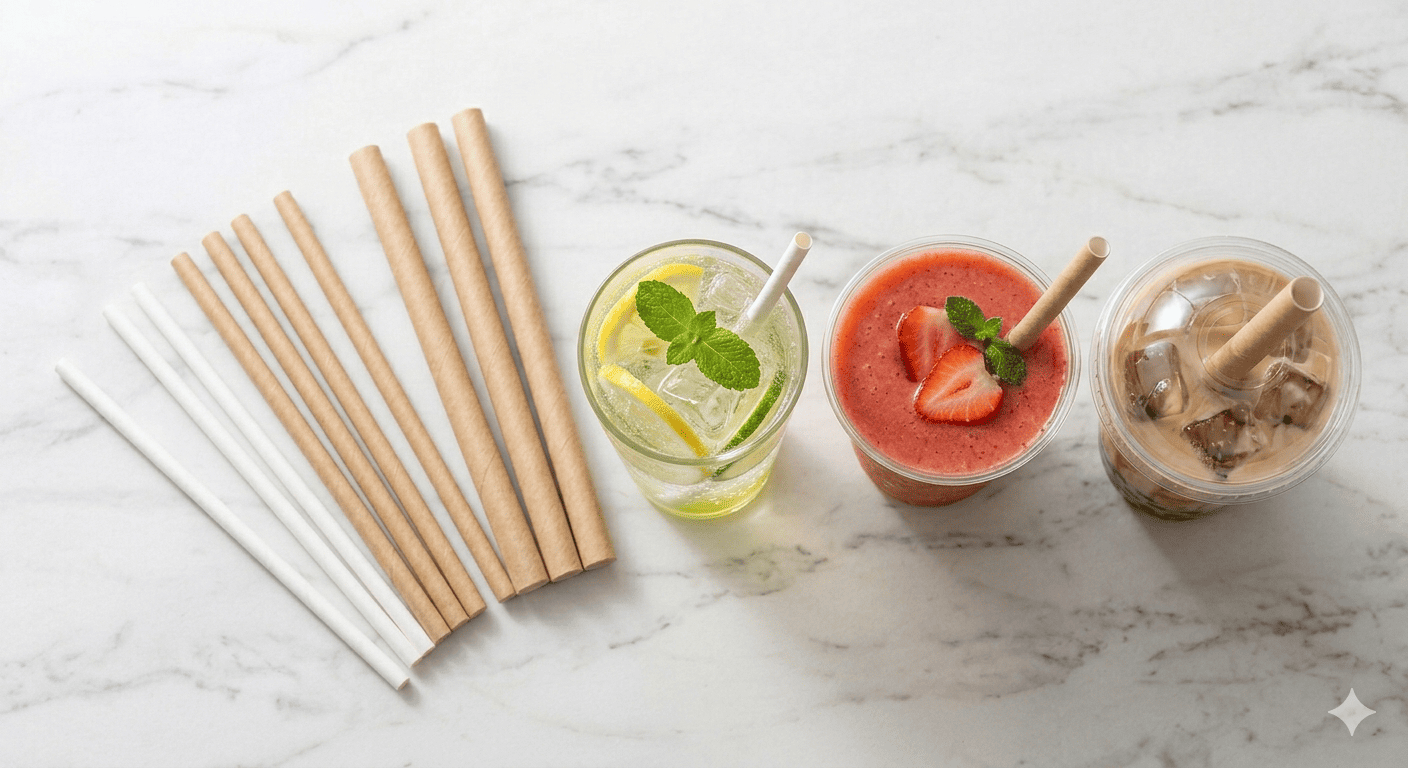
Picking the right size seems simple, but it's one of the most important details for customer satisfaction. After helping hundreds of businesses from my position here at our factory, I've seen how this small choice makes a big impact. We've learned that a "one-size-fits-all" approach just doesn't work. It leads to wasted inventory and unhappy customers. Let's break down the options so you can choose with confidence and give your customers the best experience every time.
You see terms like "6mm" and "8mm" but are unsure what they're for. Ordering the wrong standard size can leave you with useless stock and unhappy customers. Let's clarify.
The most standard paper straw is 6mm in diameter and about 197mm (7.75 inches) long.3 It's perfect for thin liquids like water, soda, and juice in standard-sized cups. For slightly thicker drinks or larger cups, an 8mm diameter straw is a more versatile choice.4
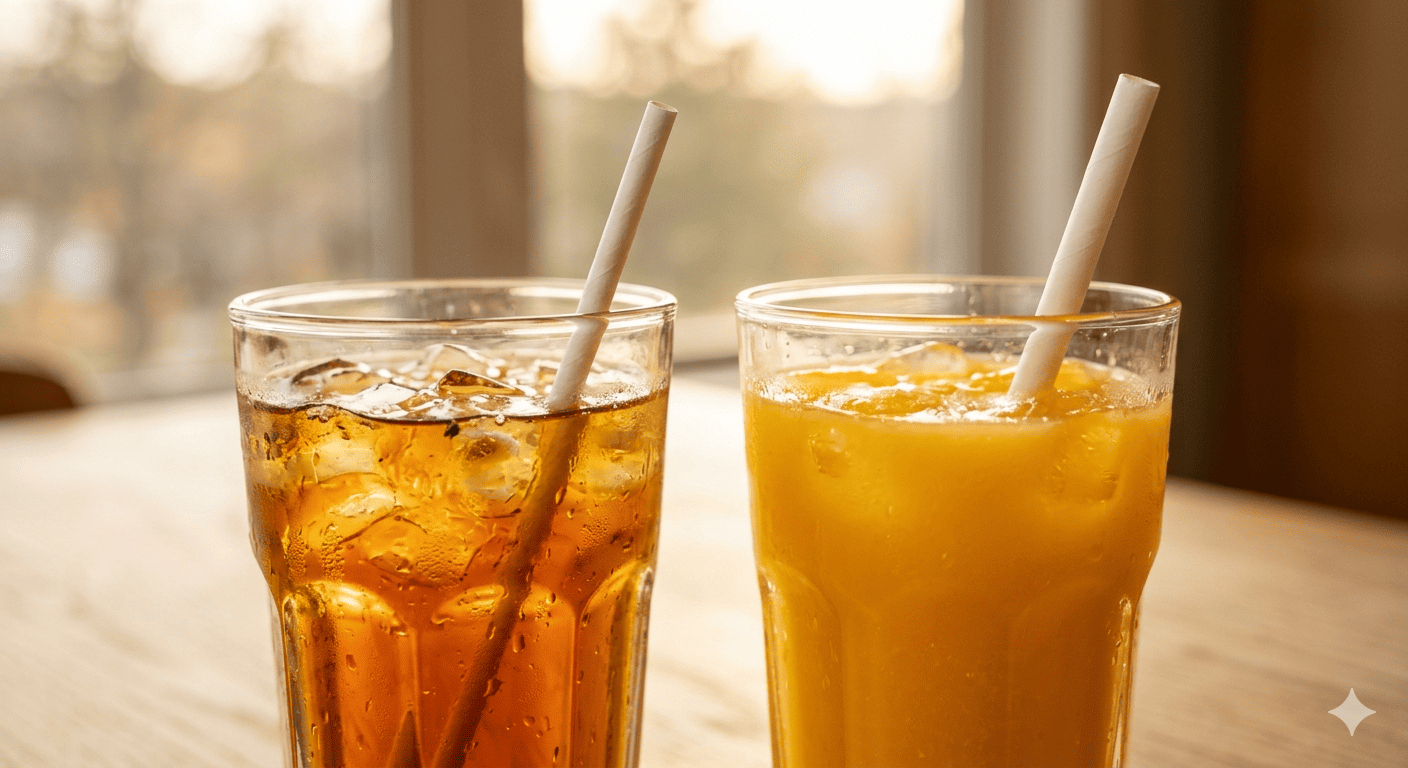
In my factory, we produce millions of 6mm x 197mm straws every month. It’s the industry workhorse. Think about fast-food restaurants or large events—they serve a lot of soda, water, and iced tea in standard 16oz cups. This size is cost-effective and does the job perfectly for those thin drinks. But I often advise new cafe owners to consider the 8mm diameter as their primary straw. Why? Because it offers more flexibility. A customer who orders an orange juice with a little pulp won't have a problem. Someone drinking an iced coffee or a light smoothie will find it works great. It rarely clogs and provides a better drinking experience for a slightly wider range of beverages. The small extra cost for the 8mm straw often pays for itself in customer satisfaction.5 Here’s a simple breakdown of these two popular choices:
| Diameter | Common Name | Common Lengths | Best For |
|---|---|---|---|
| 6mm | Standard Straw | 197mm (7.75") | Water, Soda, Juice, Iced Tea |
| 8mm | Jumbo Straw | 197mm-210mm (7.75"-8.25") | Thicker Juices, Light Smoothies, Cocktails |
Choosing between these two often comes down to your menu's focus. If 90% of your drink sales are sodas, the 6mm is your most efficient option. If you have a varied menu, the 8mm is a safer and more premium-feeling choice.
Your customer struggles to sip a thick smoothie through a narrow straw. It’s frustrating for them and makes your premium beverage seem poorly planned. Let’s fix this problem for good.
For thick drinks like smoothies, milkshakes, and slushies, you need a wider straw. A 10mm diameter straw is a great choice for most smoothies. For extra-thick milkshakes or drinks with add-ins like bubble tea pearls, a 12mm diameter straw is the best option to prevent clogging.6
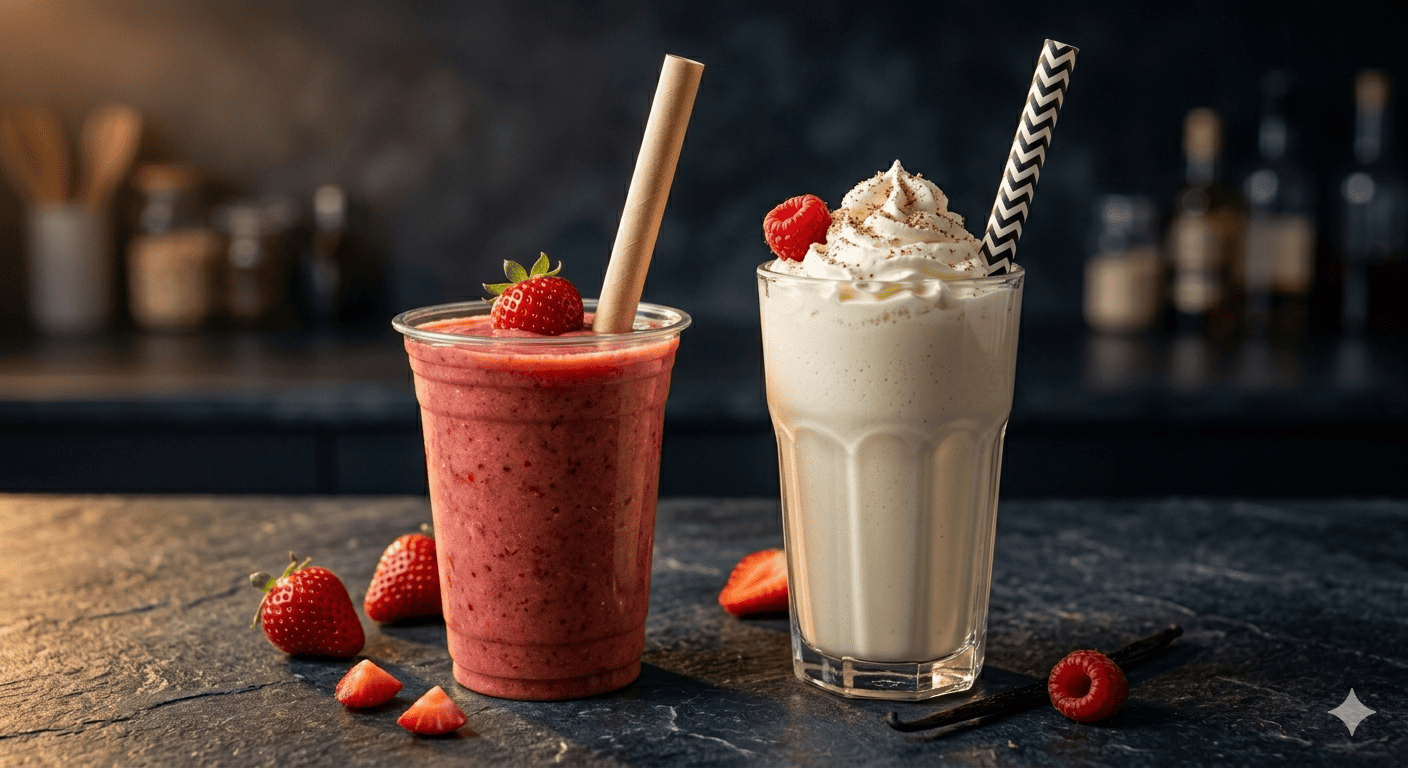
I remember a client who was launching a new line of premium milkshakes. They initially ordered our standard 6mm straws to save on costs. A week later, they called me in a panic. Customers were complaining they couldn't drink the shakes at all. It's a simple physics problem: a thick liquid can't flow easily through a narrow tube.7 We immediately switched them to our 12mm straws, and the problem vanished. For anything thicker than juice, you must increase the diameter. A 10mm straw is my go-to recommendation for smoothie bars. It provides a great flow without feeling overly large. But if you have bubble tea with tapioca pearls or very thick, ice-cream-based shakes, the 12mm straw is non-negotiable. The extra space is essential to pull up the liquid and any add-ins without creating a vacuum. Don't let the wrong straw ruin your best-selling specialty drinks.
Here is how I explain it to our customers:
| Diameter | Common Name | Best For | Key Consideration |
|---|---|---|---|
| 10mm | Smoothie Straw | Smoothies, Milkshakes, Frappes | The perfect all-rounder for most thick drinks. |
| 12mm | Boba Straw | Bubble Tea (with tapioca pearls), Extra-thick shakes | Essential if you serve anything with solid add-ins. |
Investing in the right wide-diameter straw shows your customers that you’ve thought about their entire experience, from the first sip to the last.
A customer gets their drink, and the straw disappears completely into the cup. It’s an awkward and unhygienic experience that makes your service look unprofessional. Let’s get the length right.
The ideal straw length should be at least one inch (about 2.5 cm) taller than the rim of the cup.8 Measure your cup's height, add one inch, and choose the closest available straw length. For a standard 16oz cup (around 7 inches tall)9, a 197mm (7.75-inch) straw is perfect.
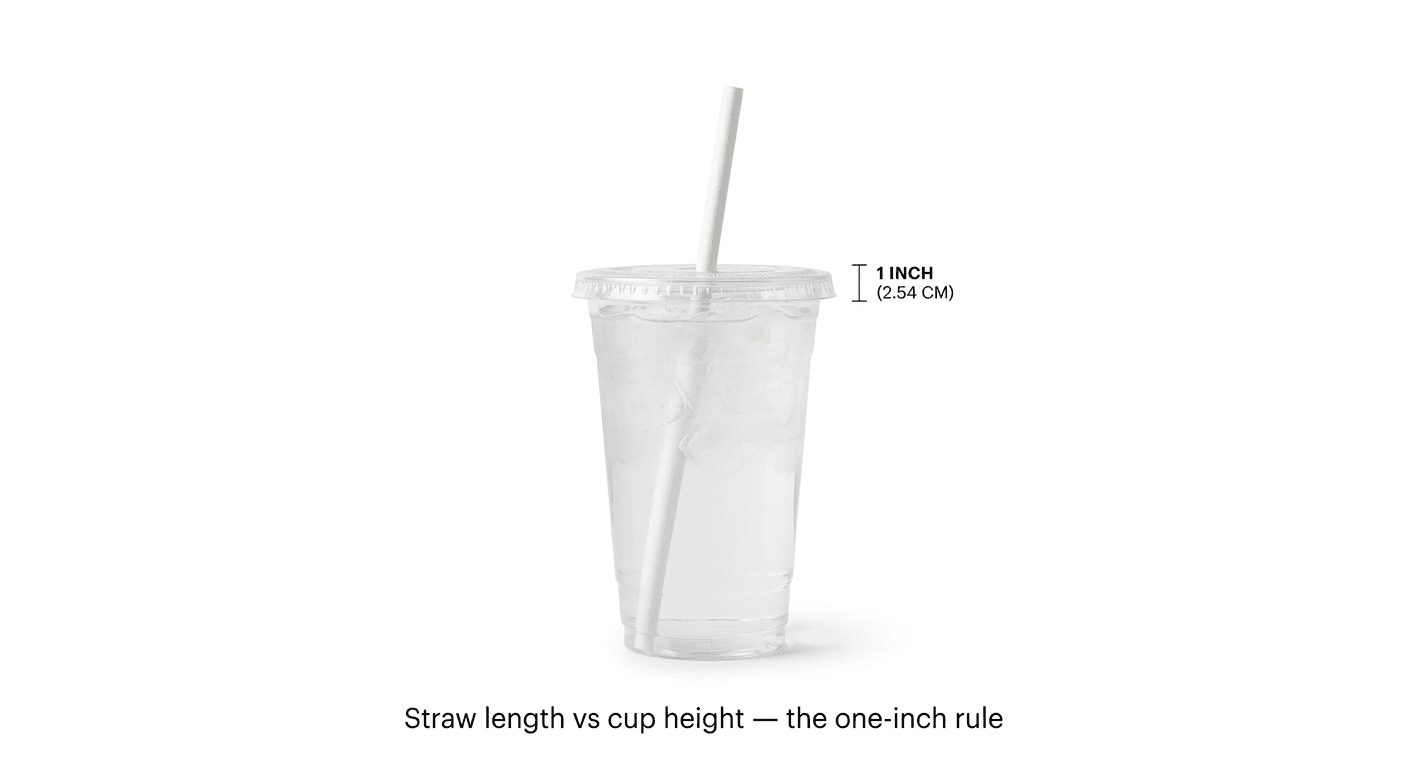
The "one-inch rule" is my starting point for every consultation on straw length. It ensures the straw is easy to grab and use without the customer having to fish it out with their fingers. But we also have to consider the lid. A flat lid doesn't add much height, so the one-inch rule works perfectly. However, if you use dome lids for whipped cream or frappes, you need to add another inch to that rule.10 A straw that’s perfect for a flat lid can get lost under a dome lid. I once worked with a bar that used very tall, narrow highball glasses for their cocktails. A standard 197mm straw looked silly and barely peeked over the top. We produced a custom 250mm (10-inch) straw for them, and it completely elevated the look and feel of their drinks. Your straw is part of the presentation.11
Here’s a quick guide I share with clients to match straw length to common cup sizes.
| Cup Size (Approx.) | Common Cup Height | Recommended Straw Length |
|---|---|---|
| 8-12 oz (Short Cup) | 4-5 inches (10-13 cm) | 140mm-150mm (5.5"-6") |
| 16-20 oz (Standard Cup) | 6-7 inches (15-18 cm) | 197mm (7.75") |
| 24 oz+ (Large Cup) | 7-8 inches (18-20 cm) | 210mm-240mm (8.25"-9.5") |
| Tall Cocktail Glass | 8+ inches (20+ cm) | 250mm+ (10"+) |
Always measure your actual cups, don't just guess based on their ounce capacity. A small measurement check can save you from a big purchasing mistake.
Choosing the right paper straw isn't about a single "best" size. It's about matching the diameter and length to your specific drinks and cups for the best customer experience.
"Service design touch point failure model and effect analysis ... - PMC", https://pmc.ncbi.nlm.nih.gov/articles/PMC8729327/. Studies in service design and customer experience show that minor usability issues, often termed 'micro-frustrations,' can have a disproportionately negative impact on overall customer satisfaction and brand loyalty. Evidence role: general_support; source type: paper. Supports: The source should demonstrate that minor points of friction in the customer journey, such as inadequate packaging or utensils, can lead to significant dissatisfaction and negatively affect brand perception.. ↩
"A Guide to Drinking Straw Sizes - Million Pack", https://millionpack.com/a-guide-to-drinking-straw-sizes/. Food service industry guidelines generally recommend straw diameters based on beverage viscosity: approximately 5-7mm for thin liquids like soda and juice, and 8-12mm for thicker drinks such as smoothies and milkshakes to ensure proper flow. Evidence role: general_support; source type: other. Supports: The source should be a food service industry guide or manufacturer's specification sheet that outlines common straw diameters and their recommended applications based on beverage viscosity.. Scope note: While these are common industry practices, formal standards can vary by region and manufacturer. ↩
"A Guide to Drinking Straw Sizes - Million Pack", https://millionpack.com/a-guide-to-drinking-straw-sizes/. The 7.75-inch straw, often with a diameter of about 6mm, is widely recognized in the food service supply industry as a standard, high-volume size, commonly paired with 16 to 20 oz cups. Evidence role: statistic; source type: other. Supports: The source should confirm that the 7.75-inch length (approximately 197mm) and 6mm diameter is a prevalent, high-volume size in the food service industry.. ↩
"ALINK 8mm Wide Assorted Bright Colors Smoothie Straws, Fat ...", https://www.amazon.com/ALINK-Assorted-Smoothie-Plastic-Milkshakes/dp/B07P1G5K4N. Industry guides for beverage accessories often categorize 8mm straws as 'jumbo' or 'all-purpose,' suitable for a range of drinks from sodas to light smoothies or juices with pulp, offering more versatility than the standard 6mm straw. Evidence role: general_support; source type: other. Supports: The source should indicate that a slightly wider straw (around 8mm, often called 'jumbo') is suitable for both thin liquids and those with mild thickness or pulp, making it a versatile option for varied menus.. ↩
"Customer retention through service quality and satisfaction - PMC", https://pmc.ncbi.nlm.nih.gov/articles/PMC9483587/. Research in marketing and customer experience management indicates that small investments in improving product usability and customer touchpoints can yield significant returns in customer satisfaction and loyalty, often outweighing the initial marginal cost. Evidence role: general_support; source type: paper. Supports: The source should provide evidence that investments in small but noticeable customer experience improvements can lead to measurable gains in satisfaction, loyalty, and long-term profitability.. Scope note: The source would support the general principle rather than providing specific financial data on straw selection. ↩
"Tapioca Pearls Guide: 8.5mm vs 9.5mm – Which is Best ... - Boba Buzz", https://bobabuzz.co.uk/blogs/boba-buzz-blog/tapioca-pearls-guide-8-5mm-vs-9-5mm-which-is-best-for-your-shop?srsltid=AfmBOoqyVShztaxxSwH8SsSvizAs9hmdFWBIVo3QDUy81y0MjhnZxrkF. Standard tapioca pearls (boba) typically measure between 8mm and 11mm in diameter, requiring a straw with a wider opening, such as 12mm, to allow them to pass through without causing a blockage. Evidence role: definition; source type: other. Supports: The source should state the typical diameter of tapioca pearls used in bubble tea, demonstrating the need for a wide straw.. ↩
"Hagen–Poiseuille equation - Wikipedia", https://en.wikipedia.org/wiki/Hagen%E2%80%93Poiseuille_equation. This phenomenon is described by principles of fluid dynamics, such as the Hagen–Poiseuille equation, which shows that the volumetric flow rate of a viscous fluid is highly dependent on the radius of the tube, meaning a small decrease in straw diameter causes a large decrease in flow. Evidence role: mechanism; source type: encyclopedia. Supports: The source should explain the Hagen–Poiseuille equation or a similar principle of fluid dynamics, which describes the relationship between pressure, viscosity, and flow rate in a cylindrical tube.. ↩
"Table Setting Etiquette 101: A Brief Guide - Escoffier", https://www.escoffier.edu/blog/recipes/setting-the-perfect-table/. Design and ergonomic principles for eating and drinking utensils suggest that they should extend sufficiently beyond the container's edge (e.g., 1-2 inches) to allow for easy and hygienic handling by the user without their fingers touching the contents. Evidence role: general_support; source type: education. Supports: The source should be a guide on food service, product design, or ergonomics that recommends a utensil extend a certain length beyond a container for ease of use and hygiene.. Scope note: The source would likely provide a general design principle rather than a specific rule for straws. ↩
"Cup Dimensions - The Paper Cup Company", https://www.thepapercupcompany.com/html/cup_dimensions.html?fbclid=IwAR3tD_xtfPGxWR12x4BAyemWhHYc-zt4mjjY9s9gnCUcEQVzc13mS1NTgOQ. Specification sheets from major food service packaging suppliers show that while dimensions vary, a typical 16-20 oz cold cup often has a height ranging from 5.5 to 7 inches, depending on the specific design and manufacturer. Evidence role: definition; source type: other. Supports: The source should be a specification sheet or product catalog from a packaging manufacturer or distributor that lists the dimensions of common cup sizes.. Scope note: The exact height can vary significantly between manufacturers and cup styles (e.g., squat vs. tall). ↩
"Size Guide for Plastic Straws - Custom Cup Factory", https://customcupfactory.com/blogs/news/size-guide-for-plastic-straws?srsltid=AfmBOoqMj-hScEgxnivxJOafnen464cWLGviJQOSN8A1dmHhqBmpZt5B. Food service packaging guides note that dome lids, which can add an inch or more to the total height of a beverage container, necessitate the use of longer straws to maintain proper extension above the lid's opening for customer accessibility. Evidence role: general_support; source type: other. Supports: The source, such as a food packaging supplier's guide, should explain that dome lids add effective height to a cup and require a longer straw to ensure it remains easily accessible.. ↩
"Tasting More Than Just Food: Effect of Aesthetic Appeal of Plate ...", https://pmc.ncbi.nlm.nih.gov/articles/PMC8997541/. Research in food science and hospitality management confirms that the overall presentation of a beverage, including the color, shape, and quality of the cup, lid, and straw, acts as a visual cue that can influence taste perception and overall customer experience. Evidence role: general_support; source type: paper. Supports: The source should discuss how the visual presentation of food and beverages, including the choice of serviceware and utensils, influences customer perception, enjoyment, and perceived value.. ↩