Your customers hate soggy paper straws, which reflects poorly on your brand.1 But you can solve this by understanding what really makes a straw durable and choosing the right one.
The most durable paper straw isn't about a single material. It's a combination of the right paper (like kraft or food-grade white paper), strong food-safe glue, and the number of layers, all chosen to match your specific drink type, temperature, and expected use time.
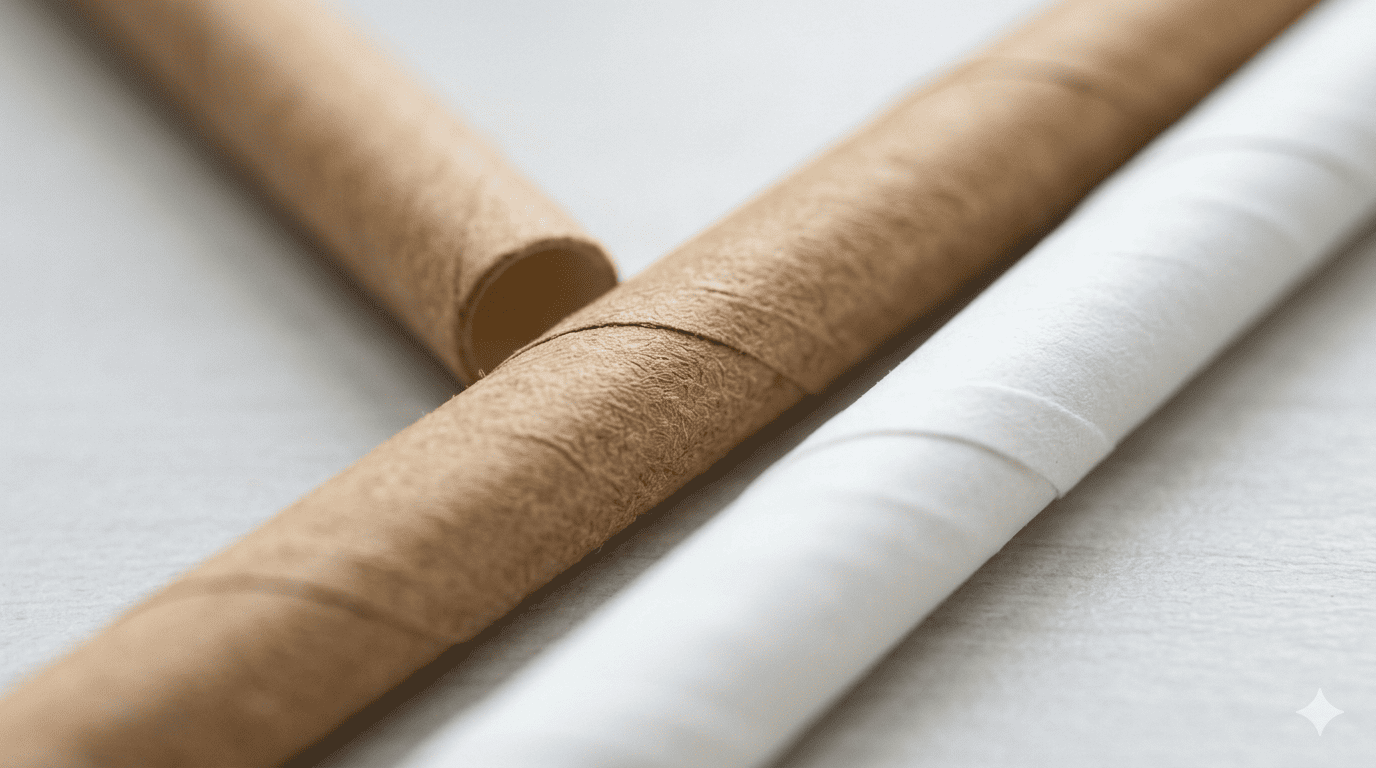
When people ask me about paper straws, their first question is almost always about durability. They want to know which material is the strongest, thinking there's a simple answer. From my experience running a paper straw factory, I can tell you that this isn't the right question. A straw's strength is not about one "best" material.
It's a complete system. If you want to find a straw that won't lead to customer complaints, you need to look beyond the raw material. You have to understand how all the parts work together. Let's break down what really creates a durable paper straw that lasts in the drink.
You chose a straw made from "strong" paper, but it still got soggy. This is frustrating and feels like a waste of money. The problem is often the glue or construction.
A straw's durability depends on a system. High-quality paper is just one part. The food-grade glue holding it together, the tightness of the winding, and the number of layers are equally crucial. A weak link in this system will cause the straw to fail, no matter how good the paper is.
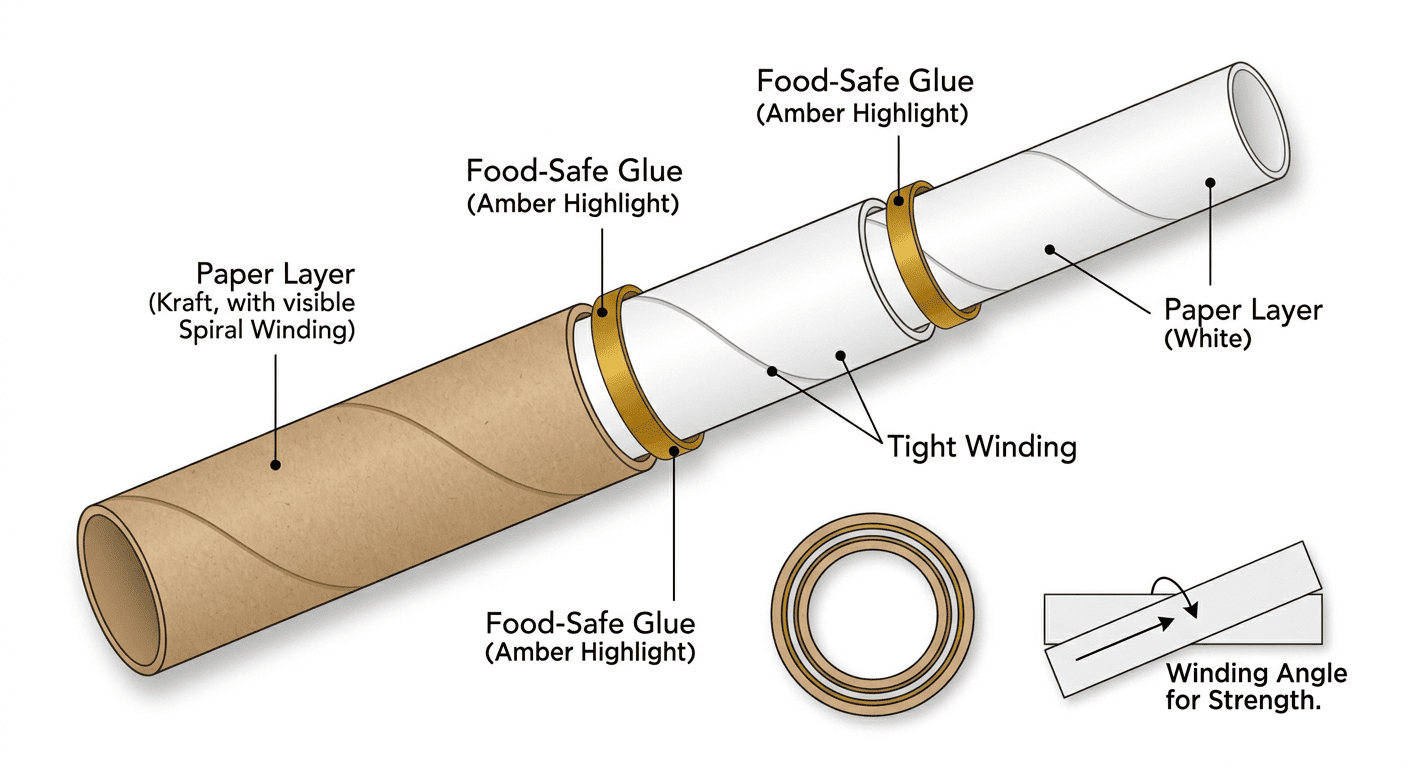
Think of a paper straw like a chain. A chain is only as strong as its weakest link. In our factory, we see this every day. You can use the most expensive, strongest paper in the world, but if you pair it with cheap glue, the straw will fall apart. The same is true if the machine doesn't wind the paper tightly enough.
Here are the key parts of the system:
The Paper:
The Glue: This is the hidden hero of a durable straw. The glue must be food-safe (with certifications like FDA3) and strong enough to hold the paper layers together when soaked. If the glue softens in liquid, the layers will separate, and the straw will quickly become a soggy mess.
The Construction: This refers to how the straw is made. A straw with three paper layers is called 3-ply, and one with four is 4-ply. A tightly wound straw will absorb liquid much slower than a loosely wound one.4 A well-made 3-ply straw with great glue will easily outperform a poorly made 4-ply straw with weak glue.5 It's the combination of all these factors that creates a straw that lasts.
You might think that buying the thickest, 4-ply straw is the safest way to avoid problems. But this increases your costs and might not even be necessary for your specific use.
No, thicker isn't always better. While more layers or higher grammage (paper thickness) add stiffness, they also raise costs and can create a less pleasant mouthfeel6. The goal is to find the right balance: a straw that's durable enough for its intended use without being over-engineered and overpriced.
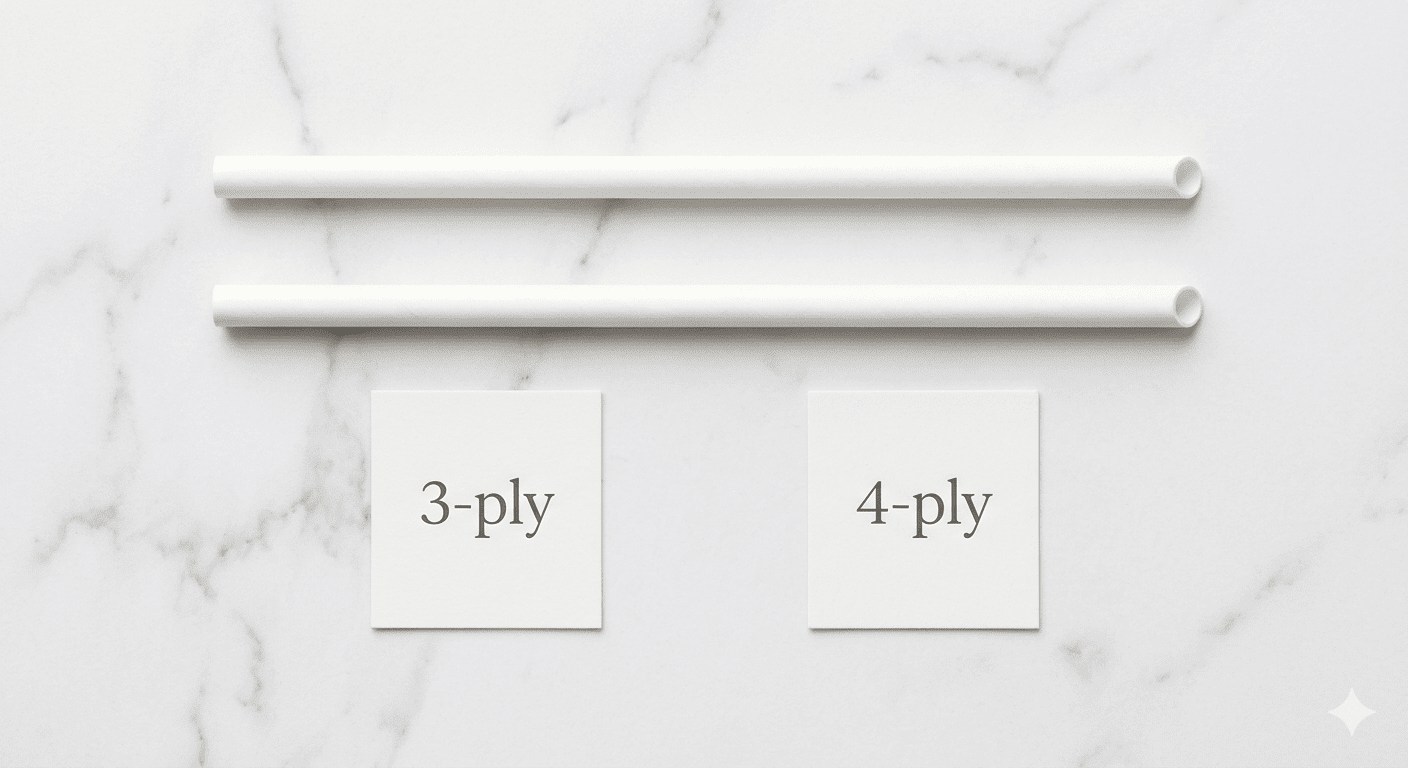
One of the most common mistakes I see buyers make is assuming that more is always more. They request a 4-ply straw with the highest paper grammage because they believe it guarantees durability. While it's true that this makes a straw stiffer, it's often overkill. This decision has trade-offs that can affect both your budget and your customer's experience. A very thick, hard straw can feel bulky and unpleasant in the mouth compared to a smoother, well-made 3-ply straw.
In our production, we guide customers by asking what drink the straw is for. For a fast-food restaurant serving sodas, a quality 3-ply straw is perfect. It holds up for the typical time a customer needs, feels good to use, and keeps costs reasonable. The extra money for a 4-ply straw would be wasted. Let’s look at the trade-offs more closely.
| Feature | Impact of Increasing Layers/Grammage | Consideration for Buyers |
|---|---|---|
| Stiffness | Increases. Better for thick drinks like milkshakes. | Is this level of stiffness necessary for water or juice? |
| Durability | Can improve soak resistance, but only if glue is good. | A well-made 3-ply can outperform a poor 4-ply. |
| Cost | Increases significantly. More raw material is used. | Balance the performance need with your budget. Don't overpay. |
| Mouthfeel | Can feel bulky or hard in the mouth. | Customer experience matters. A well-made straw can feel better. |
The smart choice is not to default to the "strongest" option but to select the most appropriate one. This saves you money and ensures your customers get a straw that works perfectly for their drink without feeling like a piece of cardboard.
A straw that works perfectly for iced coffee might fail miserably in a glass of lemonade. This inconsistency can damage your brand's reputation for quality and leave customers unhappy.
Different drinks attack a straw in unique ways. Hot drinks test the glue's heat resistance.7 Acidic juices can break down paper fibers.8 Carbonation can accelerate liquid absorption.9 Thick milkshakes require stiffness.10 You must define the use case first to choose a straw that will reliably perform.
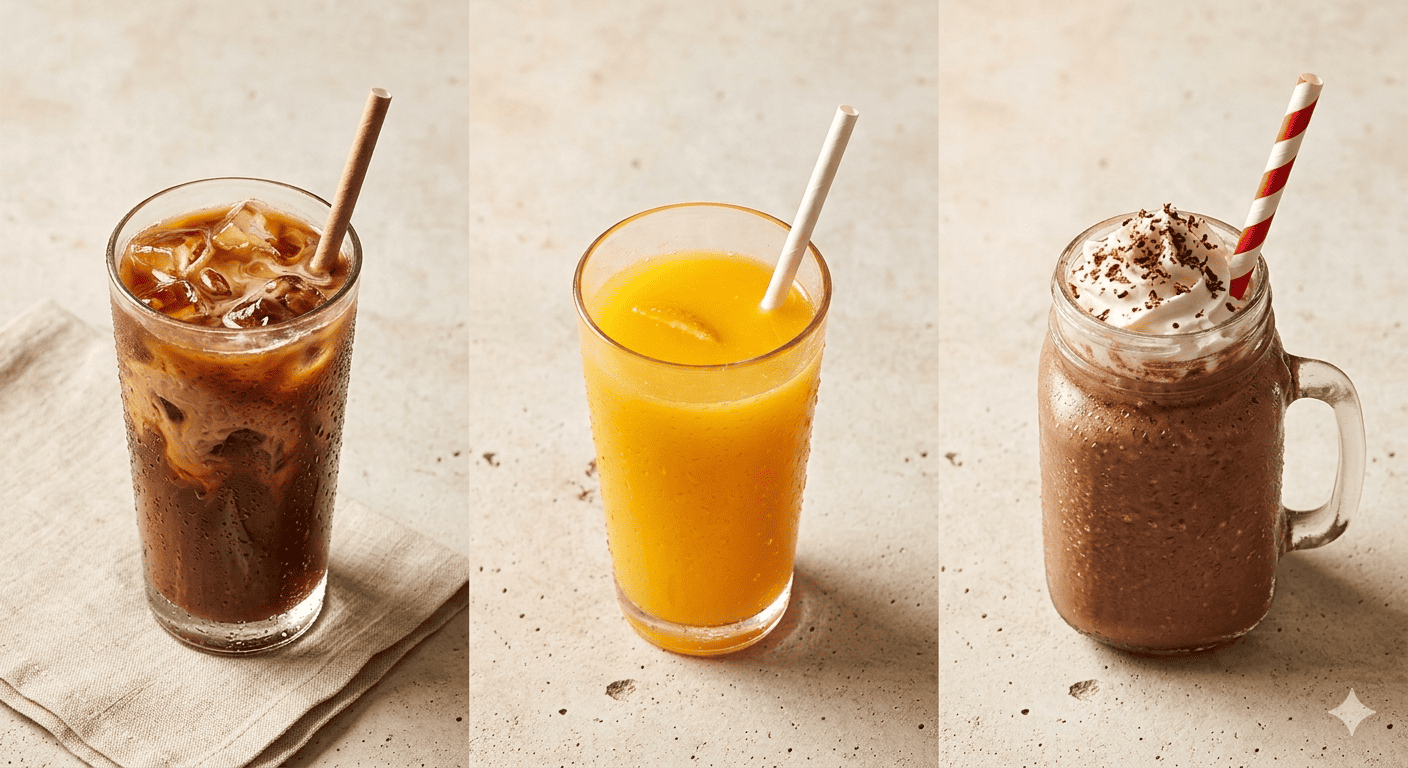
You cannot choose a paper straw in a vacuum. The single most important question I ask my clients is: "What drink will this be used for?" A customer once showed us straws that turned to mush in orange juice within 15 minutes. It wasn't a paper problem; it was a glue failure because the glue wasn't resistant to acid. Another time, a client complained that straws were unraveling in hot lattes. The issue was a standard glue that couldn't handle temperatures above 60°C.
These experiences taught us that matching the straw's entire material system to the beverage is critical. Here’s a simple guide to help you think about it.
| Drink Type | Primary Challenge | Recommended Straw Specification |
|---|---|---|
| Cold Drinks (Water, Soda) | General sogginess over time. Carbonation. | Standard 3-ply with quality glue. A good all-rounder. |
| Hot Drinks (Coffee, Tea) | Heat can weaken the glue, causing the layers to separate. | Must use a special heat-resistant glue. |
| Acidic Drinks (Juice, Lemonade) | Acid can degrade paper fibers and glue faster. | Requires high-quality paper and acid-resistant glue. Test samples. |
| Thick Drinks (Milkshakes) | Requires stiffness to prevent bending and collapse. | Higher grammage paper and/or 4-ply construction. A wider diameter helps. |
| Alcoholic Drinks | Alcohol can act as a solvent, affecting some glues.11 | Needs robust, well-cured glue. Sample testing is critical. |
Before you place an order, define your drink menu and usage time. Are customers sipping a soda for 30 minutes or nursing a cocktail for over an hour? Will the straw be in hot coffee or a thick, icy smoothie? Answering these questions first will lead you to a straw that works every time, protecting your reputation and keeping customers happy. The best way to be sure is to test samples in your actual drinks.12
Choosing a durable straw is about matching the material system—paper, glue, and layers—to your specific drink, not just picking the "strongest" material. Test samples to find your perfect fit.
"Influence of food packaging color and foods type on consumer ...", https://pmc.ncbi.nlm.nih.gov/articles/PMC10832432/. Studies on customer experience show that the quality of secondary items, including packaging and utensils, can significantly influence overall brand perception and customer loyalty. Evidence role: general_support; source type: research. Supports: The source should support the idea that poor-quality ancillary items, like straws, lead to customer dissatisfaction and can negatively affect their perception of the primary brand or establishment.. ↩
"Wet strength - Wikipedia", https://en.wikipedia.org/wiki/Wet_strength. Kraft paper's manufacturing process preserves long cellulose fibers, contributing to its high tensile strength and durability, particularly its ability to resist tearing and disintegration when saturated with water, a property known as wet strength. Evidence role: definition; source type: paper. Supports: The source should define wet strength in the context of paper manufacturing and confirm that kraft paper is known for this property due to its long fibers and minimal processing.. ↩
"Food Packaging & Other Substances that Come in Contact with Food", https://www.fda.gov/food/food-ingredients-packaging/food-packaging-other-substances-come-contact-food-information-consumers. In the United States, adhesives used in food-contact applications are regulated by the Food and Drug Administration (FDA) under Code of Federal Regulations Title 21 (21 CFR), which specifies substances permitted for use. Evidence role: general_support; source type: government. Supports: The source should confirm that adhesives intended for use in items that come into contact with food, such as drinking straws, are regulated as 'food contact substances'.. ↩
"Capillary transport in paper porous materials at low saturation levels", https://pmc.ncbi.nlm.nih.gov/articles/PMC7776977/. The rate of liquid absorption in porous materials is governed by principles of capillary flow, where a denser, less porous structure (achieved through tighter winding) presents a more tortuous path for liquid, slowing its ingress. Evidence role: mechanism; source type: paper. Supports: The source should explain how increasing the density and reducing the void space in a porous material like paper slows the rate of liquid penetration via capillary action.. ↩
"Evaluation of paper straws versus plastic straws - BioResources", https://bioresources.cnr.ncsu.edu/resources/evaluation-of-paper-straws-versus-plastic-straws-development-of-a-methodology-for-testing-and-understanding-challenges-for-paper-straws/. Testing of composite paper tubes shows that structural integrity is highly dependent on the interlaminar shear strength provided by the adhesive, which can be a more significant factor in overall durability than the number of layers. Evidence role: case_reference; source type: paper. Supports: The source should provide test data showing that paper tubes (or straws) with fewer layers but superior adhesive bonding can exhibit greater compressive strength or resistance to liquid degradation than tubes with more layers but weaker bonding.. Scope note: The source may be a technical paper on composite tubes in general, not specifically paper straws for beverages. ↩
"An evaluation of alternative biodegradable and reusable drinking ...", https://pubmed.ncbi.nlm.nih.gov/34118069/. Sensory analysis studies demonstrate that the physical properties of an object, such as thickness and rigidity, significantly impact the tactile experience and consumer perception of 'mouthfeel' during oral contact. Evidence role: general_support; source type: research. Supports: The source should show that physical characteristics of eating or drinking utensils, such as rigidity, texture, and thickness, are key factors in the sensory experience known as 'mouthfeel'.. Scope note: The source may discuss the concept in general terms for food or utensils rather than specifically for paper straws. ↩
"Effects of treatment temperature on properties of starch-based ...", https://bioresources.cnr.ncsu.edu/resources/effects-of-treatment-temperature-on-properties-of-starch-based-adhesives/. The performance of many adhesives is temperature-dependent; when exposed to temperatures exceeding their service range, such as in hot beverages, they can soften and lose adhesive strength, leading to bond failure. Evidence role: mechanism; source type: paper. Supports: The source should explain that many adhesives exhibit a glass transition temperature, above which they soften and lose significant bond strength.. ↩
"A comprehensive kinetic model for dilute-acid hydrolysis of cellulose", https://pubmed.ncbi.nlm.nih.gov/12721457/. Paper, which is primarily composed of cellulose, is susceptible to acid hydrolysis, a chemical process where acid acts as a catalyst to break the glycosidic bonds linking glucose units, thereby weakening the paper's fibrous structure. Evidence role: mechanism; source type: encyclopedia. Supports: The source should explain that acids can catalyze the breakdown of the long-chain cellulose polymers that give paper its structure.. ↩
"Effects of carbonation of liquids on penetration–aspiration and ...", https://pmc.ncbi.nlm.nih.gov/articles/PMC8297430/. Research into two-phase flow in porous media suggests that the formation and detachment of gas bubbles (effervescence) at a solid-liquid interface can alter wetting dynamics and potentially enhance liquid penetration into the porous structure. Evidence role: mechanism; source type: paper. Supports: The source should describe how the nucleation of gas bubbles on a porous surface can affect liquid-solid interaction and potentially increase the rate of liquid penetration.. Scope note: Direct research on carbonated drinks and paper straws may be limited; the evidence may be based on analogous physical systems. ↩
"Physical Characterization of Natural Straw Fibers as Aggregates for ...", https://pmc.ncbi.nlm.nih.gov/articles/PMC5453354/. To drink a high-viscosity fluid like a milkshake, a user must generate a low pressure inside the straw, causing the higher atmospheric pressure outside to push the liquid up. This pressure difference also exerts a compressive force on the straw walls, requiring sufficient stiffness to resist buckling. Evidence role: mechanism; source type: education. Supports: The source should explain that drinking a viscous fluid requires creating a significant pressure differential, which exerts a compressive force on the straw, necessitating sufficient column stiffness to prevent buckling.. ↩
"Estimation of the effect of acetone- or ethanol-based solvents on ...", https://pmc.ncbi.nlm.nih.gov/articles/PMC11498242/. Ethanol is a common solvent that can cause swelling, softening, or dissolution of various polymers and adhesives, thereby compromising the structural integrity of composite materials held together by a susceptible glue. Evidence role: mechanism; source type: research. Supports: The source should explain that ethanol is a polar solvent capable of weakening or dissolving certain polymers and adhesives, especially if they are not specifically formulated for chemical resistance.. ↩
"The “Big Three” in biocompatibility testing of medical devices - PMC", https://pmc.ncbi.nlm.nih.gov/articles/PMC10800850/. Industry standards for quality assurance emphasize the importance of performance testing that simulates the actual end-use conditions, as this is the most effective method for validating a product's fitness for a specific purpose and ensuring material compatibility. Evidence role: general_support; source type: institution. Supports: The source should describe the importance of performance testing under real-world conditions as a critical step in quality control and product validation.. ↩