
Sourcing paper straws for airlines and other large institutions feels like a high-stakes tightrope walk. You’re under pressure to meet sustainability goals, but you know that a single soggy straw in a passenger’s drink can ignite a firestorm on social media[1]. This turns a seemingly small procurement choice into a major brand risk, where the wrong decision can cost far more than you’d save on a cheaper product.
To ensure a brand-safe choice when sourcing paper straws for airlines, cruise lines, or institutional catering, you must shift your evaluation from a simple cost-per-unit comparison to a comprehensive risk assessment. This means scrutinizing the supplier’s manufacturing process, raw material quality (paper grade, ply count, and adhesive), batch-to-batch consistency, and their documented experience with the complex logistics of large-scale hospitality.
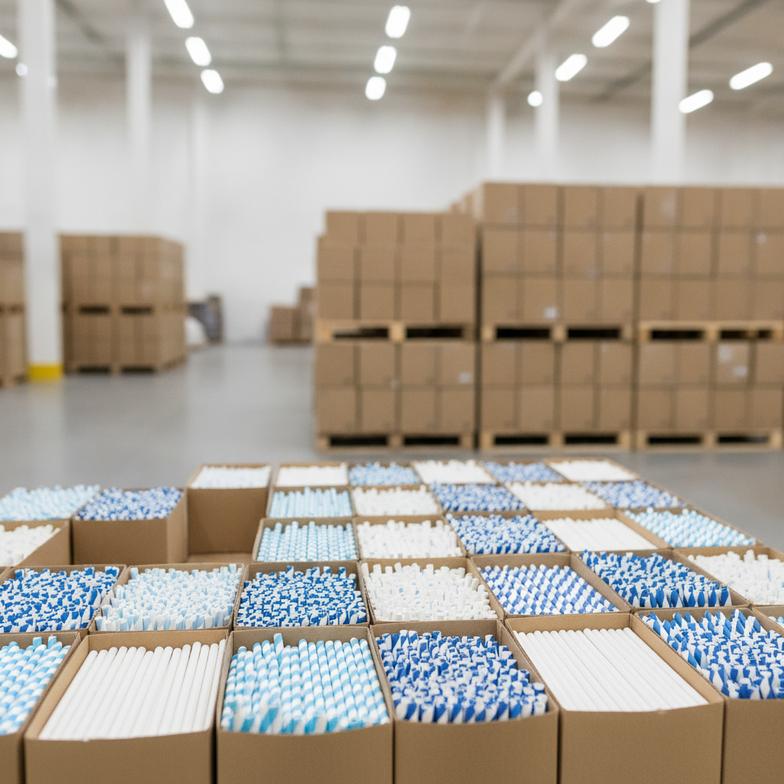
The problem is, most procurement processes aren’t set up for this. They treat paper straws like a commodity. But in my experience as a solutions consultant, the sample you test today rarely predicts performance at scale. Let’s break down the questions I guide my clients to ask to protect their brand and their passengers’ experience.
Let’s be honest, you’ve found a supplier with a tempting price-per-unit. It looks great on a spreadsheet. But have you calculated the potential cost of a single viral passenger complaint about a mushy, dissolving straw in their gin and tonic on a flight from London to New York?
Low-cost paper straws often use inferior materials and inconsistent manufacturing methods, which leads to sogginess, an unpleasant paper taste, and poor mouthfeel. For an airline or cruise line, this translates directly into a negative passenger experience, social media backlash, and damage to a brand reputation you’ve spent billions to build.

A paper straw isn’t just a tool for drinking; it’s a physical touchpoint between your brand and your customer for an extended period. Think about it. A passenger might hold and use that straw for 30 minutes or more. If it fails, it’s not the straw’s brand they’ll remember—it’s yours.
I’ve seen procurement teams focus so heavily on shaving a tenth of a cent off the unit cost that they forget to ask about the cost of failure. Let’s run a quick, informal calculation. Say you save $50,000 on an order of 50 million straws by choosing a cheaper supplier. It only takes one of those straws to fail for a passenger with a large social media following. Their video or post gets a million views, and suddenly your brand is the subject of memes about “soggy service.” The cost to your marketing and PR teams to mitigate that damage will dwarf the initial $50,000 you saved[2].
The most common failure points I see in low-cost straws include:
Each of these isn’t just a product defect; it’s a direct hit to the premium experience you promise your passengers. It suggests that your commitment to sustainability is superficial and that you prioritized cost-cutting over customer satisfaction.
The sample straws you received from a potential supplier probably look and feel fine. But can they produce 10 million more exactly like them? The real quality of paper straws for airlines is hidden in manufacturing details you simply cannot see or test in a small sample batch.
To truly assess a supplier, you must focus on three “invisible” areas: the paper itself (its grade, certifications, and ply count), the food-safe adhesive (its performance in varied beverage types), and the manufacturing precision (how it’s cut, rolled, and finished) that dictates durability and mouthfeel.
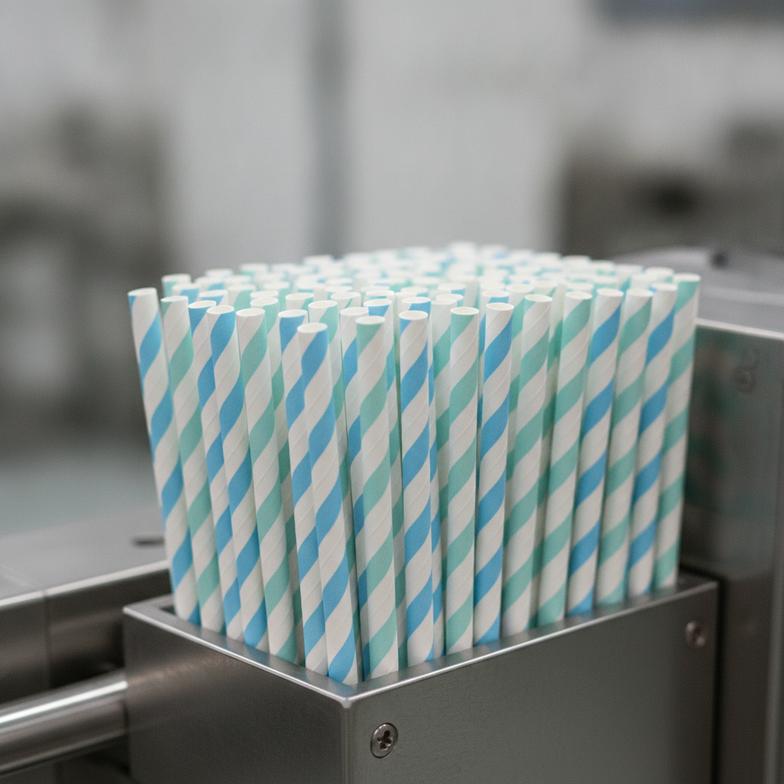
When I work with a new client in the airline or cruise industry, I tell them to ask for the technical data sheet before they even look at a price list. If a supplier can’t provide one, it’s a major red flag. They are likely a trading company with no control over production, not a manufacturer. Here’s what we look for.
Not all paper is created equal. The difference between a premium and a failing straw often comes down to two things: paper weight (measured in grams per square meter, or gsm) and the number of layers (ply).
The adhesive is the unsung hero of a good paper straw. The wrong glue can either fail prematurely or, even worse, pose a food safety risk. Ask suppliers to provide a Material Safety Data Sheet (MSDS) for their adhesive and confirm it complies with food-contact regulations like those related to the FDA. The glue must be strong enough to hold the paper layers together when exposed to liquids of varying temperatures and acidity—from an icy soda to a warm coffee or an acidic orange juice[7].
This is where manufacturing precision comes in. A high-speed, high-precision cutting machine creates a perfectly smooth, polished edge. A low-cost, poorly maintained machine creates a rough, fibrous edge that feels unpleasant and can even shed small paper fibers into the drink. Likewise, the tension of the rolling process is critical. A tightly wound straw is dense and durable. A loosely wound straw has microscopic gaps that allow liquid to penetrate faster, accelerating its demise. This is a detail you can often feel by comparing straws from different suppliers side-by-side.
You’ve approved the perfect straw. It’s durable, safe, and feels great. But how will it get from the factory to a passenger’s tray table at 35,000 feet? For global operations, poorly planned packaging can lead to massive waste, hygiene failures, and operational chaos across your supply chain.
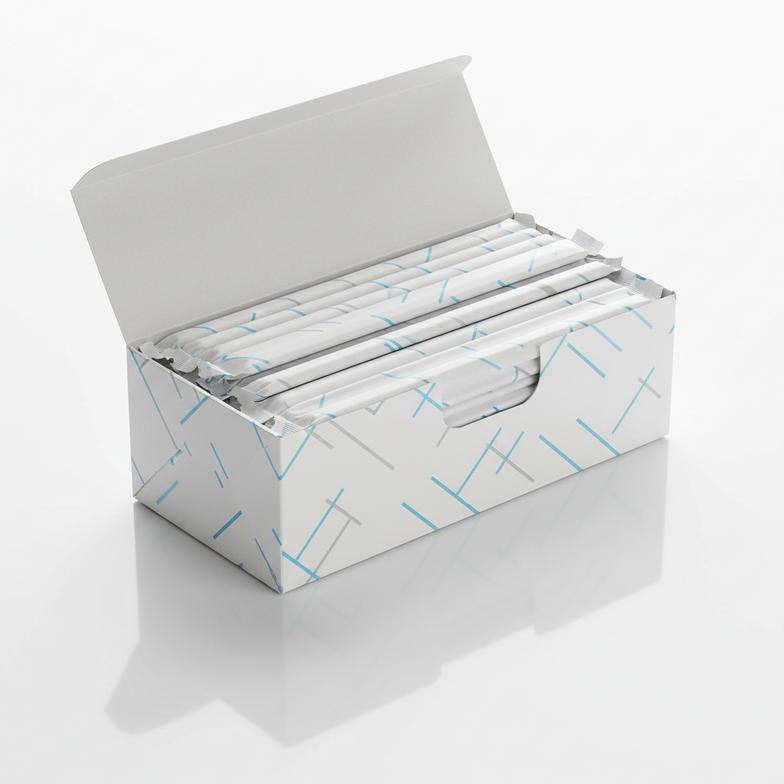
For paper straws for airlines and cruise lines, the packaging and logistics are just as critical as the straw itself. The individual wrapper must guarantee hygiene and be easy for passengers to open. The master cartons must be robust enough to withstand complex storage conditions—like humidity and temperature shifts—and the rigors of global distribution without crushing the product inside.
I once worked with a catering client who switched to a new straw supplier to save costs. The first shipment arrived, and the outer cartons had collapsed in a humid warehouse[8] in Singapore. They lost over 20% of their stock to crushing and moisture damage before it ever reached an aircraft. The “savings” were instantly erased.
This is why we must map the entire logistics journey.
The wrapper is your first line of defense for hygiene—a non-negotiable in airline and institutional catering. Paper wrappers are standard, but they must be from a reputable source and sealed properly. An easy-to-open perforation is also a key design element for passenger convenience. Furthermore, this wrapper is a branding opportunity. A custom-printed wrapper with your airline’s logo reinforces your brand identity and your commitment to a quality passenger experience.
Your supplier must understand the harsh realities of global freight. We use reinforced, often double-walled, master cartons[9] designed to resist crushing and ambient humidity. Clear labeling with batch codes, manufacturing dates, and expiration dates is also essential for quality control and traceability.
Here is a simple comparison of the two approaches:
| Feature | Low-Cost Approach | Brand-Safe Solution | Impact on Operations |
|---|---|---|---|
| Wrapper | Thin, unbranded paper | Branded, easy-tear paper | Passenger frustration vs. positive brand touchpoint |
| Carton | Standard single-wall cardboard | Reinforced, humidity-resistant double-wall | High risk of product damage vs. supply chain reliability |
| Labeling | Basic SKU only | Clear batch codes, expiry dates, specs | Traceability nightmares vs. easy inventory and quality control |
| Logistics Plan | Ex-Works (factory gate) only | Collaborative planning for global hubs | You bear all the risk vs. a shared, managed risk |
You need to justify your final supplier choice to internal stakeholders, many of whom might only see the price tag. A standard Request for Quotation (RFQ) focused on price won’t capture the critical risks. So how do you present a smarter, more defensible evaluation?
Create a “brand safety scorecard” that grades suppliers on criteria extending far beyond price. This tool should systematically assess their production quality control, batch consistency, certifications and documentation, and direct experience with clients of a similar scale and complexity, such as other airlines or cruise lines.

Here is the framework I use to help my clients build their own scorecard. It shifts the conversation from “Who is cheapest?” to “Who is the most reliable partner to protect our brand?”
This is about consistency at scale. A great sample is useless if the millionth straw is defective.
This is your due diligence on safety and sustainability claims.
This evaluates whether they are a strategic partner or just a vendor.
A supplier who can answer these questions confidently is a partner. A supplier who can’t is a risk.
A high-quality paper straw, especially one designed for institutional use, should maintain its structural integrity for at least 3 hours in a cold beverage under normal use. This ensures it will last through a meal service or for the duration of a long flight without becoming soggy or soft.
For airlines and cruise lines, 4-ply paper straws are definitively better. The additional layer provides extra rigidity and resistance to moisture, which is crucial for the longer usage times expected during a flight or a leisurely meal. While 3-ply may suffice for fast-food settings, 4-ply offers a much safer margin of performance.
The most critical certifications are FSC (Forest Stewardship Council) for the paper[11], ensuring it comes from responsibly managed forests, and food-contact safety documentation[12] for the glue and any inks used. Ask for documents that show compliance with regulations like those of the FDA or equivalent regional bodies.
Absolutely. Both the individual paper wrapper and the straw itself can be customized with logos, brand colors, and other designs. This is an excellent way to reinforce brand identity and show passengers your commitment to providing quality, sustainable products.
Choosing paper straws for airlines, cruise lines, and other major institutions is fundamentally a brand risk management decision, not a simple cost-cutting exercise. The potential damage to your brand reputation from a single passenger’s negative experience with a faulty straw far exceeds any savings from a low-cost supplier. By moving beyond price and using a brand safety scorecard, you can properly evaluate a supplier’s manufacturing depth, their quality control at scale, and their logistical expertise. This empowers you to select a true partner who will help protect your brand, ensure passenger satisfaction, and successfully meet your sustainability goals.
If you are a procurement manager tasked with this important transition, I would be happy to share the detailed scorecard framework I use with my clients. Let’s schedule a brief consultation to discuss your specific requirements and build a brand-safe solution together.