
Juggling multiple eco-tableware suppliers is a headache. But combining orders can lead to bigger problems. Here’s the right way to consolidate your sourcing and protect your business.
To safely combine paper straw and cutlery orders, you must verify if your supplier manufactures both items. Ask for proof of separate production lines, quality control processes for each, and specific certifications. This avoids the risks of dealing with a hidden trader or an inexperienced factory.
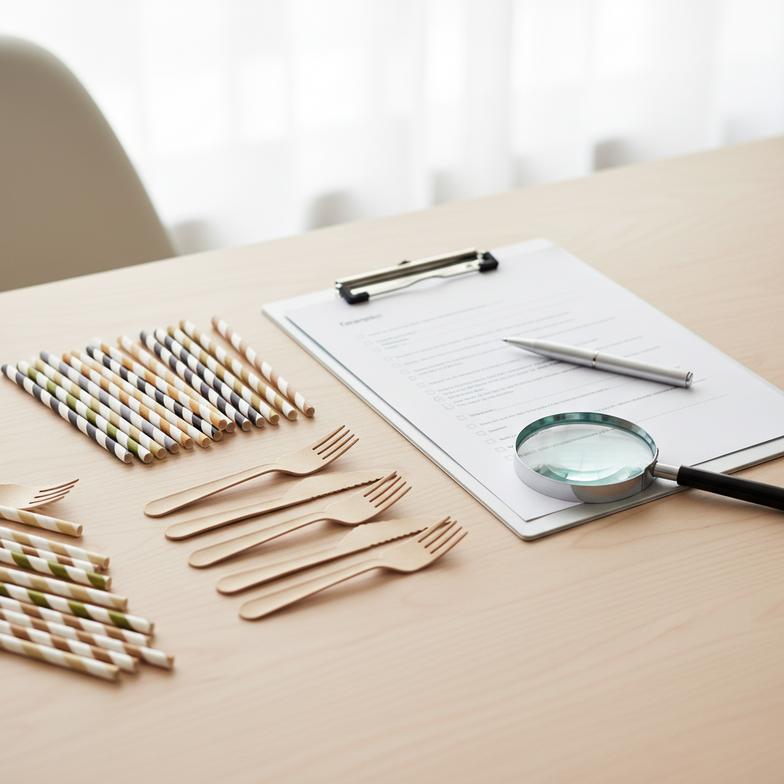
I see this question all the time from buyers. They want the convenience of a one-stop shop. But they often don’t realize the potential pitfalls. The simple question "Can you supply both straws and cutlery?" is not enough. You need to dig deeper to protect your business. Let’s explore the right questions to ask and what to look for in a supplier’s answers.
Your supplier offers both straws and cutlery. But are they a true manufacturer or just a middleman for one product? This hidden fact can create quality nightmares for you.
Many "one-stop shops" are manufacturers of one product and traders of the other[1]. This creates inconsistencies in quality, compliance, and supply. You must ask for proof of manufacturing for each product line to avoid these hidden risks.
I have spoken with many buyers who were burned by this. They placed a large order for paper straws and paper forks, assuming the supplier made both. The straws were great, but the forks were flimsy and arrived late. After some digging, they found out the supplier only made the straws. They outsourced the cutlery from another factory they had little control over. This is a common problem. A company might be an expert in paper straws but know nothing about making paper cutlery. They just add it to their catalog to capture more business. This creates a big risk for you, the buyer.
You need to ask direct questions. Instead of asking "Can you supply both?", ask "Do you manufacture both in-house?". Then, ask for evidence.
| What to Ask For | What it Tells You |
|---|---|
| Videos of both production lines | Proves they have the machinery for each product. |
| Separate quality control reports | Shows they have specific testing for straws and cutlery. |
| Certifications for each product | Confirms compliance for both product types, not just one. |
| Technical data sheets for both | Demonstrates they understand the material science for each. |
A true manufacturer will have no problem providing this. A trader will make excuses or send you generic information. By asking these tougher questions, you uncover the truth and avoid a major headache down the line.
You might assume all paper products are made the same way. This assumption can lead to receiving flimsy cutlery or soggy straws. The manufacturing processes are completely different.
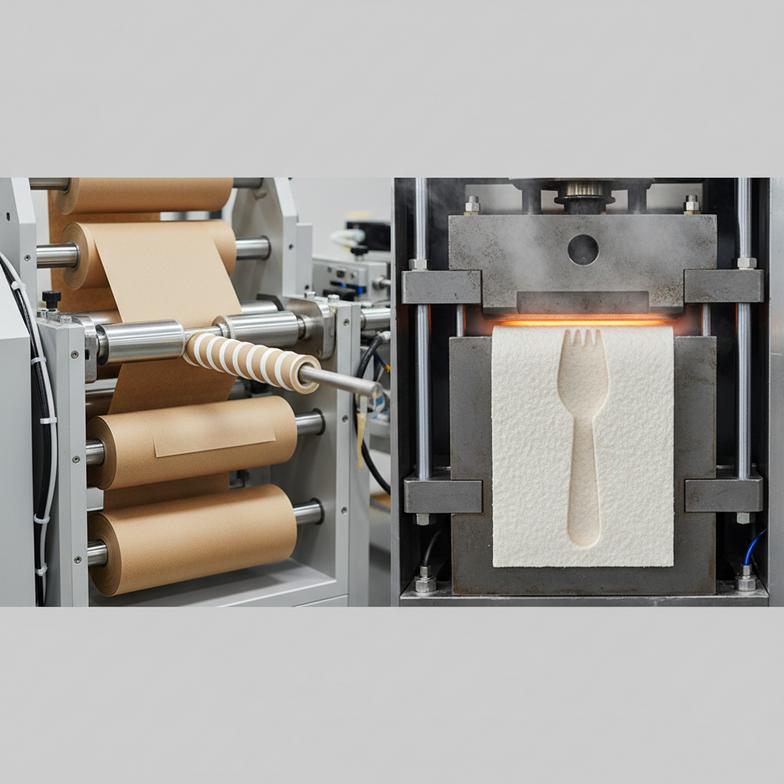
No, they have very different production needs. Paper straws require precise layering and winding for durability[2]. Paper cutlery needs high pressure and heat forming to achieve rigidity[3]. A supplier must master both distinct processes to deliver quality products.
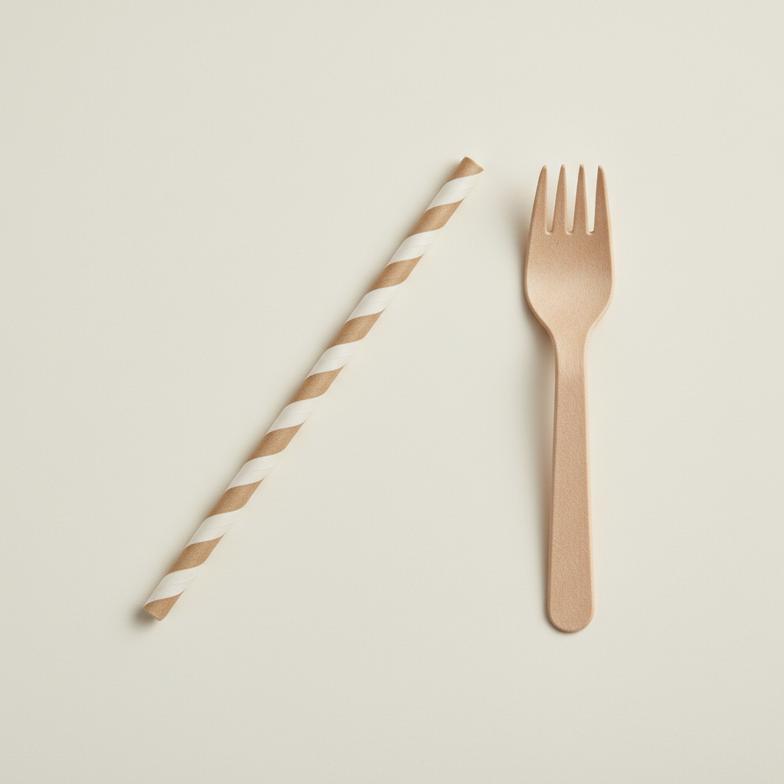
From my experience on the factory floor, I can tell you these products are worlds apart. Making a good paper straw is about precision engineering on a small scale. Making sturdy paper cutlery is more like industrial sculpting. A factory that excels at one may be a complete beginner at the other. If a supplier uses the wrong paper, glue, or process for either product, you end up with items that fail in your customer’s hands. This damages your brand reputation, not the supplier’s. That’s why you must verify their expertise in both areas.
A durable paper straw is made from 3-4 plies of food-grade kraft paper[4]. We roll these paper layers together with a tiny amount of food-safe glue, using a machine that creates a tight, dense tube. The angle of the winding and the speed of the machine are critical[5]. Get it wrong, and the straw will unravel or get soggy in minutes.
Making paper cutlery is completely different. It often involves taking thick paper stock or paper pulp and pressing it into a mold under intense heat and pressure[6]. This process must create a rigid structure that can pierce food without bending or breaking. The design of the fork tines or the knife edge is just as important as the material itself.
| Feature | Paper Straws | Paper Cutlery |
|---|---|---|
| Primary Material | 3-4 plies of thin kraft paper | Thick paperboard or molded pulp |
| Key Process | Spiral winding and gluing | High-pressure heat forming/molding |
| Main Challenge | Preventing sogginess; water resistance[7] | Achieving rigidity and strength[8] |
| Quality Test | Immersion test (e.g., 3 hours in water)[9] | Bending force test; piercing test |
Understanding these differences helps you ask better questions and evaluate if a supplier truly has the expertise they claim.
Consolidating orders with one supplier seems efficient. But what happens when that supplier has a production issue? Your entire eco-tableware supply chain could collapse overnight, leaving you empty-handed.
Yes, it can significantly increase risk. While it simplifies logistics, it creates a single point of failure[10]. A quality control issue, production delay, or raw material shortage for either straws or cutlery can halt your entire supply.
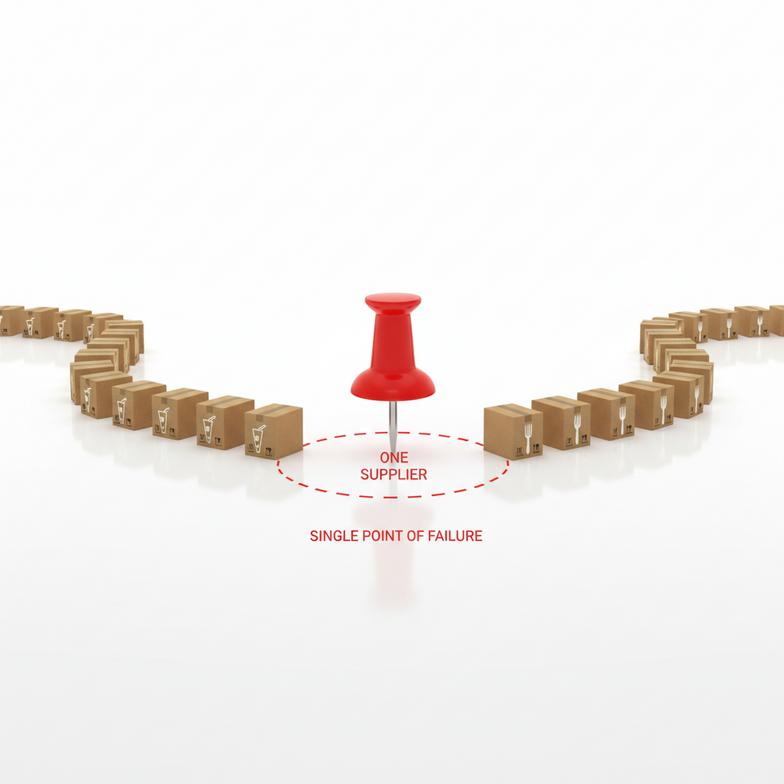
I always advise buyers to think about this trade-off. On one hand, having one contact, one shipment, and one invoice is very appealing. It saves time and administrative costs. You might even get a better price for a larger, combined order. However, you are putting all your eggs in one basket. I’ve seen it happen: a fire at a supplier’s glue provider shut down their straw production for weeks. The customers who only bought straws from them were in trouble. The customers who also relied on them for cutlery were in a crisis.
Before you commit, you need to weigh the pros and cons carefully. The convenience is clear, but the risks are hidden and can be catastrophic for your business.
| Benefits of Consolidation | Risks of Consolidation |
|---|---|
| Simplified logistics and communication | Single point of failure for your entire supply |
| Potentially lower shipping costs | A quality issue in one product can delay all products |
| Possible volume discounts | Reduced negotiating leverage with the supplier[11] |
| One point of contact for all issues | Supplier may lack true expertise in one product line |
So, what is the best approach? I recommend a cautious, step-by-step method. Don’t jump into a massive combined order. Start by placing a smaller trial order for both straws and cutlery. This allows you to test the quality of both products at once with minimal risk. Also, even if you find a great supplier who manufactures both, it’s wise to have a backup supplier qualified[12] for at least one of the product lines. This gives you an alternative if your primary supplier ever has a problem. This strategy balances convenience with security, which is the smartest way to build a resilient supply chain.
Combining orders requires careful vetting. Verify your supplier’s manufacturing scope for each product to build a reliable, high-quality, and truly streamlined eco-tableware supply chain for your business.