
Sourcing bulk firework paper tubes can feel like a high-stakes decision where every detail matters. You know that a poor choice in supplier or a minor error in specifications can lead to costly production delays, inconsistent product performance, or even serious safety incidents[1]. A strategic approach to order planning, however, transforms this uncertainty into a clear process for mitigating risk and securing a reliable, long-term supply chain.
Effective order planning for bulk firework paper tubes involves making a series of informed decisions based on risk. This means you must balance MOQ against cash flow, demand protective packaging that ensures compliance and safety, and collaborate with your supplier to de-risk the entire timeline from raw material sourcing to final delivery. It’s a partnership, not just a purchase.
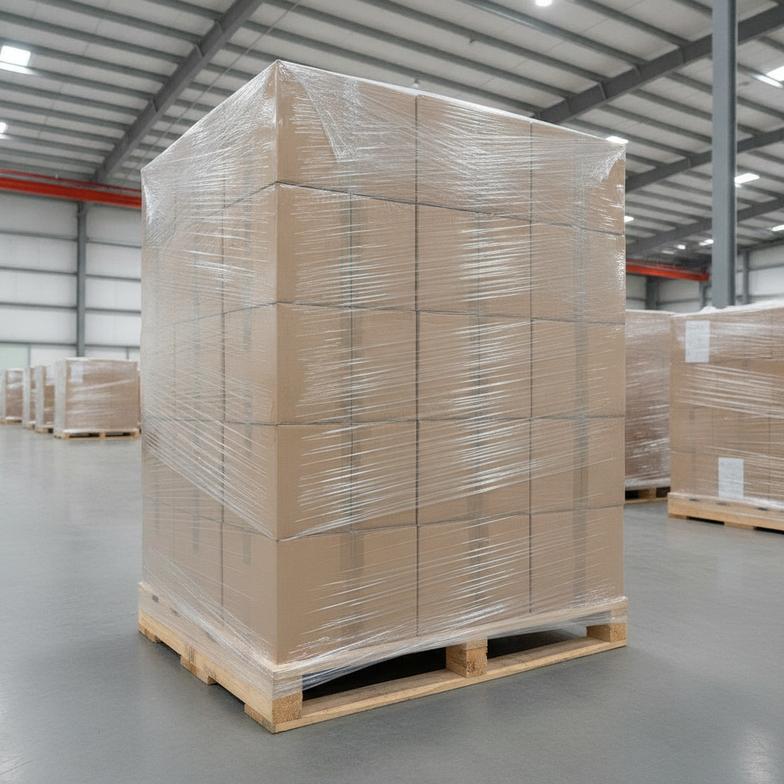
This process is far more than just finding the lowest price per tube. It’s about qualifying a partner who understands the critical nature of your components. Let’s dive into the key questions you should be asking to manage risk and build a resilient supply chain for your pyrotechnic products.
You have a production target and you need tubes, but the Minimum Order Quantity (MOQ) presents a dilemma. A high MOQ from a factory ties up significant cash in inventory, while a suspiciously low MOQ can feel risky. How do you find the right balance without compromising on quality or financial stability?
Evaluate the MOQ not as a fixed number, but as a key indicator of your supplier’s business model and a reflection of your own inventory strategy. The right MOQ is a strategic decision that balances unit cost, supplier reliability, and your capital risk.
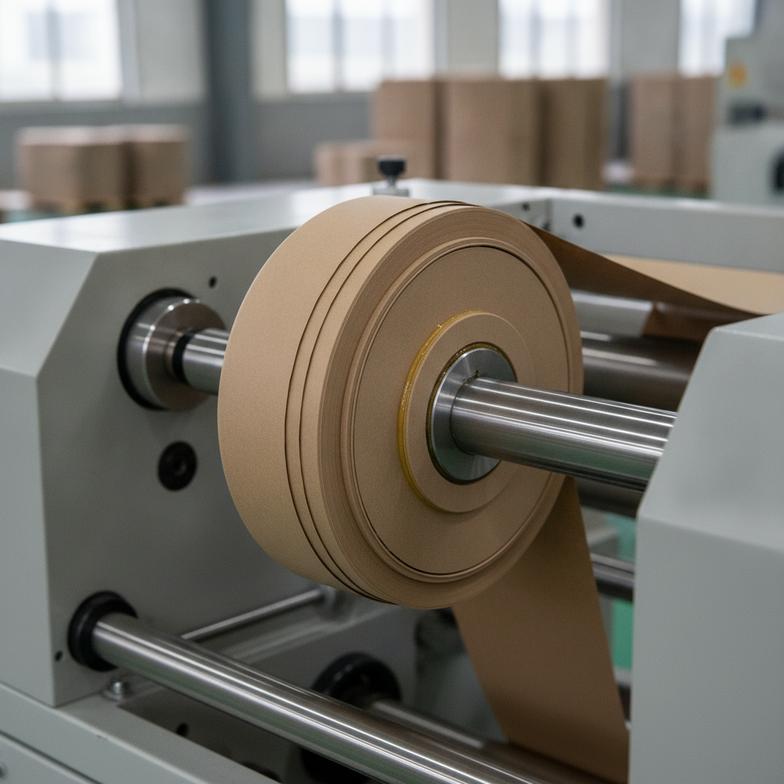
The MOQ isn’t an arbitrary number a factory invents; it’s a calculation based on the economics of production[2]. Understanding what drives it helps you assess the supplier.
A common scenario I see is a buyer comparing a high MOQ from a direct factory with a very low MOQ from another source. These represent two different business models, each with distinct risks.
When a buyer pushes for an MOQ lower than our factory minimum, I always explain the trade-off: we could potentially source a smaller batch for them, but we couldn’t offer the same level of quality assurance or price point as a dedicated production run.
The price per tube is only one part of the equation. To make a smart decision, you need to compare the Total Cost of Ownership (TCO) for different MOQ scenarios.
| Cost Factor | High MOQ (Factory Direct) | Low MOQ (Trader/Distributor) |
|---|---|---|
| Unit Price | Lower | Higher |
| Inventory Capital | Higher (cash tied up) | Lower (more flexible) |
| Warehouse Costs | Higher (more space needed) | Lower |
| Risk of Obsolescence | Higher (if specs change) | Lower |
| Quality Consistency | High (single production run) | Variable (mixed batches possible) |
| Supply Chain Risk | Lower (direct to source) | Higher (extra layer of communication) |
By analyzing this, you can see that a higher MOQ might be cheaper long-term if you have stable demand and the storage capacity, as it de-risks your quality and supply.
Imagine your shipment of bulk firework paper tubes arrives after weeks in transit, only for you to open the container and find the cartons crushed or the tubes swollen with moisture. The entire batch is compromised, your production line halts, and you’ve wasted thousands of dollars.
Good packaging for pyrotechnic components is purely a function of safety and risk management, not branding. It must be engineered to prevent moisture absorption, which compromises structural integrity, and withstand the immense crushing forces of international shipping and warehouse stacking.
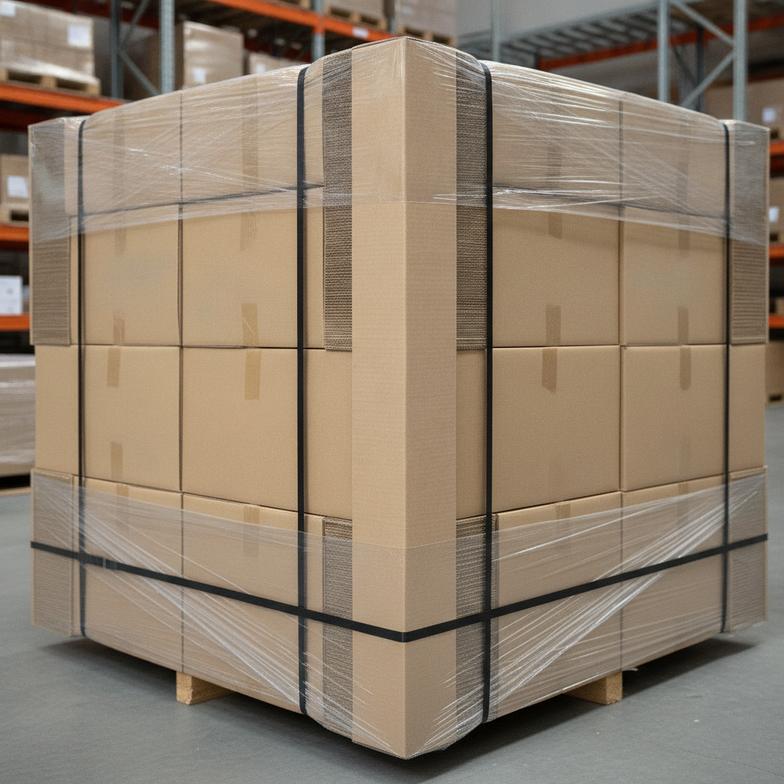
When we discuss packaging with a client, the conversation is about protecting their investment. A supplier’s approach to packaging reveals their experience with risk management.
Paper and moisture are natural enemies. For a firework paper tube, moisture absorption is catastrophic[4]. It can:
Effective moisture protection is non-negotiable. Here’s what to look for:
Your tubes will be stacked in a warehouse, loaded into a 40-foot container, and potentially cross-stacked during transit. The packaging must withstand this pressure[5].
When I plan an order, one of my first questions is, "How high will these pallets be stacked in your warehouse?" This isn’t small talk; it dictates the required strength of the cartons we use.
A supplier who skimps on packaging to save a few dollars is not a reliable partner. The cost of a lost shipment far outweighs the savings from using substandard cartons.
The supplier quoted a 45-day lead time, but 70 days later you’re still waiting. Your production schedule is in chaos, and your own customers are getting impatient. This common scenario happens when buyers accept a "lead time" figure at face value without understanding the variables behind it.
To de-risk your timeline, you must look beyond the single lead time number and collaborate with your supplier to manage the individual phases of production. This includes raw material availability, the production queue, dedicated QC time, and logistics planning.
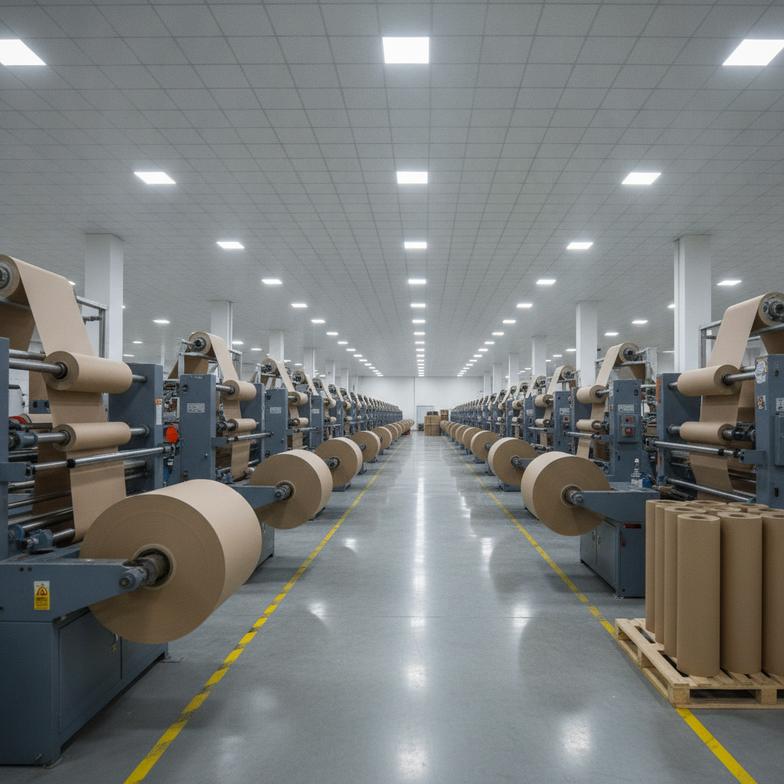
"Lead time" is a summary, not a guarantee. At our facility, the clock on lead time doesn’t start until every single specification is confirmed and the raw materials are secured. Here are the components you need to discuss with your supplier.
The paper itself is the biggest variable. Specific grades, grammages (g/m²), and colors of kraft paper are not always sitting in a warehouse.
A proactive supplier will discuss this with you. We often advise clients with recurring orders to provide a forecast so we can pre-order and reserve their specific paper grade, effectively eliminating this part of the lead time on future orders.
Once materials are on-site, the order enters the main production workflow, which is more than just running a machine.
Production Workflow Breakdown:
1. Machine Setup & Calibration (0.5 – 1 day): This involves installing the correct size mandrel, setting the knife spacing, and tuning the glue applicators. This is a fixed time cost, which is why small runs are inefficient. 2. Production Run (Variable): The actual winding and cutting of the tubes. The time depends on the order quantity and machine speed. Our lines can produce hundreds of thousands of tubes per day. 3. Drying & Curing (1 – 2 days): This is a critical and often-rushed step. The glue must fully cure to achieve maximum bond strength[7]. Tubes are typically stored in a controlled environment during this phase. 4. Quality Control & Testing (1 – 2 days): Our QC team doesn’t just eyeball the product. They perform batch testing for:
5. Packaging & Palletizing (1 – 3 days): Carefully packing the tubes as described in the previous section is a manual, time-consuming process that cannot be rushed.
By understanding this workflow, you can have a more realistic conversation about timelines and identify where potential delays might occur.
You’ve received quotes from three suppliers. One is 15% cheaper than the others. It’s tempting to go with the lowest bid, but weeks later, you discover your final products are failing quality checks. The tubes are too tight, too loose, or their burn characteristics are wrong.
For pyrotechnic components, specifications like dimensional tolerance, paper composition, and wall thickness directly dictate the safety and performance of the final device. An obsessive focus on these technical details, rather than unit price, is the hallmark of a professional buyer and a competent supplier.
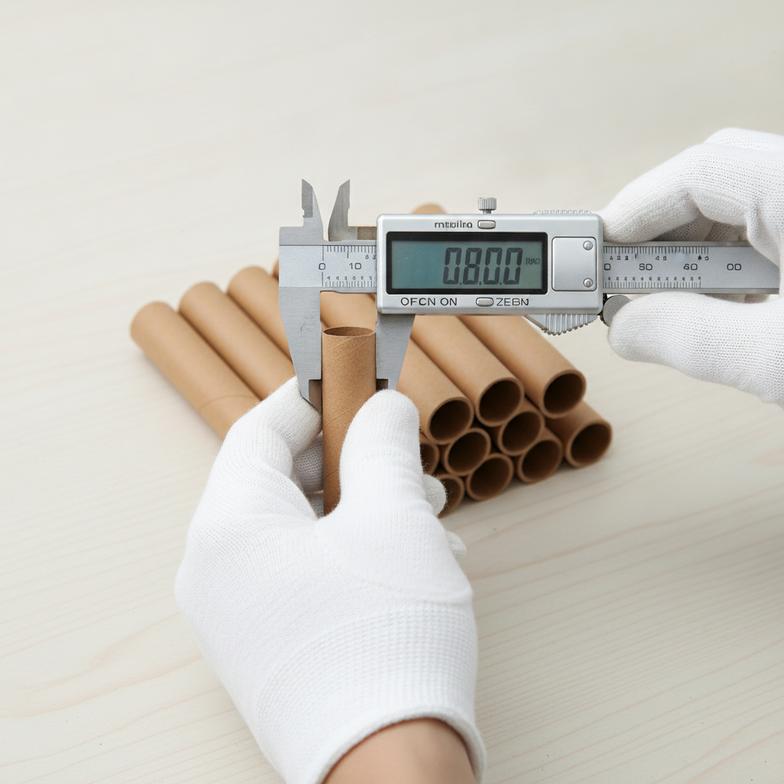
When a potential client sends an inquiry focused only on price and quantity, my first response is to ask clarifying questions about the end-use application. This isn’t to be difficult; it’s to prevent them from ordering the wrong product.
The single most important specification is tolerance for the inner diameter (ID) and outer diameter (OD). This isn’t a place to cut corners.
When a buyer asks for our lowest price, my first question is always: "What are your required tolerances for inner and outer diameter, and what is the mating component?"
A tolerance of ±0.2mm might be acceptable for a shipping tube, but for a pyrotechnic component, you may need ±0.1mm or even tighter. Achieving tighter tolerances requires more precise machinery and rigorous quality control, which rightfully adds to the cost.
The "paper" in "paper tube" is a complex variable. Simply asking for a "kraft paper tube" is not enough.
We always ask about the intended burn characteristics and structural requirements to recommend the right combination of materials. Choosing the cheapest option without considering these factors is a recipe for failure.
For pyrotechnic applications, a common tolerance is around ±0.1mm to ±0.15mm for both inner and outer diameters. However, this is highly dependent on the specific use case. Tighter tolerances are achievable but increase costs due to stricter process control and higher rejection rates during QC.
Yes, absolutely. Any reputable manufacturer will provide samples for you to test and validate. We insist on it. This ensures the tube fits your components, meets your assembly requirements, and performs as expected before you commit to a full production run.
While the tube itself is a component, the raw materials are key. Look for suppliers who can provide documentation for their kraft paper, such as FSC (Forest Stewardship Council) certification[12] for sustainability. For adhesives, an MSDS (Material Safety Data Sheet) can be important to ensure chemical compatibility and safety.
The price per tube is sensitive to length. Shorter tubes often have a higher per-unit cost because the machine’s production rate is limited by the number of cuts per minute. Longer tubes can often be produced more efficiently, but may have higher shipping costs due to their dimensions.
The winding direction can be critical if you are using automated assembly equipment that grips or twists the tubes. An inconsistent or incorrect winding direction can cause machinery to jam. It’s a small detail that shows a supplier’s attention to manufacturing specifics. We always confirm this before production.
Successfully sourcing bulk firework paper tubes is fundamentally an exercise in risk management, not a race to the lowest price. The most reliable outcomes come from building a partnership with a supplier who understands the high stakes of your industry. By shifting your focus from unit cost to a detailed analysis of specifications, protective packaging, transparent timelines, and strategic MOQs, you build a resilient and safe supply chain. This approach protects your production schedules, ensures the quality and consistency of your final product, and ultimately safeguards your business.
If you are looking for a solutions provider who prioritizes technical collaboration and risk mitigation for your pyrotechnic components, our team is ready to help. Contact us at PaperStrawTech to start a detailed conversation about your specific requirements.