
Trying to make sustainable choices for your business can feel like navigating a minefield. You want to ditch plastic, but then you’re faced with a whole new set of questions about the alternatives. For many of our clients, the big question is: are paper straws recyclable? You worry that making the wrong environmental claim could not only confuse your customers but also open your brand up to accusations of greenwashing[1]. The solution is to understand the practical reality behind the claims and shift your focus to what is verifiable and safe to market.
While paper straws are made from paper, a technically recyclable material, they are rarely recycled in practice[2]. Their small size, food contamination, and the presence of glues mean most recycling facilities filter them out and send them to a landfill[3]. Therefore, focusing on "recyclable" is a risky and often misleading marketing claim for businesses.
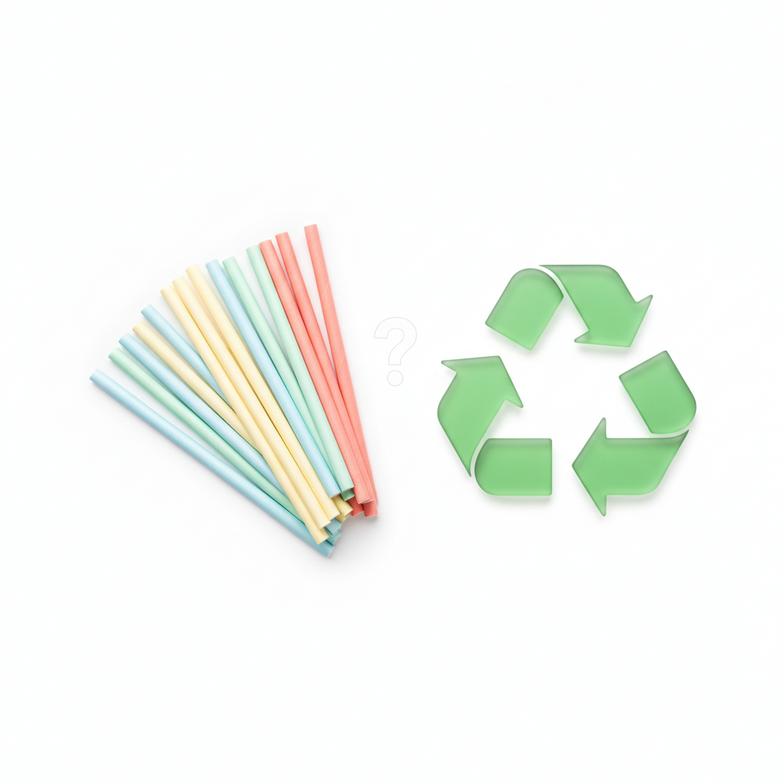
Now you know the short answer, but the story doesn’t end there. Understanding why this is the case is the key to protecting your brand. More importantly, it helps you pivot to stronger, more honest marketing claims that build trust with your customers. Let’s look at the practical details.
You might think that putting "100% Recyclable" on your packaging is a clear win for your brand’s green credentials. But what if that claim isn’t true in the real world for your customer? This is a trap we help our clients avoid every day.
The claim is a trap because its truthfulness depends on local recycling infrastructure[4], which is completely out of your control. Since the vast majority of recycling facilities cannot and do not process used paper straws, the claim becomes practically false the moment your customer tries to act on it.

When you tell a customer a product is "recyclable," you’re making a promise about its end-of-life potential. For that promise to be valid, the item needs to successfully navigate the complex journey through a Material Recovery Facility (MRF). Unfortunately, paper straws typically fail at several stages. From our experience talking with waste management experts and clients, here are the main reasons why:
Ultimately, claiming paper straws are recyclable creates a credibility gap. Environmentally-savvy consumers and watchdog groups know about these practical limitations. Making a claim you can’t back up exposes your brand to accusations of greenwashing, which can cause far more reputational damage than staying silent on the issue.
Feeling stuck without the "recyclable" claim? You might worry you’ve lost a key selling point. The good news is, there are much stronger, safer, and more honest claims you can and should be making. These claims build real trust.
The most defensible and powerful claims for paper straws are "biodegradable" and "made from responsibly sourced materials" (such as FSC-certified paper). These marketing angles focus on the product’s inherent qualities, which you can verify, not an uncertain end-of-life process you can’t control.
Instead of focusing on a flawed end-of-life story, you can build a compelling narrative around the product’s beginning and its natural decomposition. This is a strategy we consistently recommend to our wholesale and brand partners.
"Biodegradable" means that the material will break down into natural elements like water, carbon dioxide, and biomass over time, with the help of microorganisms. This is an inherent property of the straw itself. Unlike recycling, it doesn’t depend on a city’s specific infrastructure.
Since we’ve established that most paper straws end up in the general waste stream (and ultimately a landfill), biodegradability is the most responsible feature. In a landfill environment, a well-made paper straw will decompose, whereas a plastic straw will persist for hundreds of years[7]. This is the core environmental benefit you are providing. It’s an honest and powerful message.
This claim shifts the focus to the very beginning of the supply chain. Certifications like the Forest Stewardship Council (FSC)[8] verify that the paper used to make the straws comes from forests that are managed to protect biodiversity, respect the rights of indigenous peoples, and ensure long-term economic viability.
This tells your customers that your environmental commitment started long before the straw was ever produced. It’s a proactive choice you made as a business. When you can show an FSC logo on your packaging, you are presenting a third-party verified fact, not just a marketing promise.
Let’s compare these claims side-by-side:
| Claim | Verifiability for Buyer | Risk of Greenwashing | What It Tells the Customer |
|---|---|---|---|
| Recyclable | Low (depends on city infrastructure) | High | "This might be recycled if you are lucky." |
| Biodegradable | High (ask supplier for proof) | Low | "This will return to nature, unlike plastic." |
| Responsibly Sourced | High (ask for FSC certificate) | Low | "We care about forests and sustainability." |
As a buyer, your job is to select products that align with your brand values without creating risk. Focusing on biodegradability and responsible sourcing does exactly that.
You’re ready to procure straws that are biodegradable and responsibly sourced. But in a global market, how do you know a supplier is telling the truth? It feels risky to just trust their website. Here’s how you can turn that uncertainty into confidence.
Don’t just take a supplier’s word for it—ask for the paperwork. A legitimate and trustworthy supplier, especially one with manufacturing experience, will welcome your questions and readily provide documentation to back up their claims. This is a normal part of B2B due diligence.

When we onboard a new client, whether they are buying finished straws or setting up their own factory, we prepare them to ask the tough questions. Here is a practical checklist you can use to vet any paper straw supplier:
Don’t just look for a logo. Ask for a copy of their FSC Chain of Custody (CoC) certificate. Check the certificate number and expiration date on the official FSC database[9]. This ensures the claim is current and applies to the exact paper they use for your straws.
This is non-negotiable. The straws will be used with food and beverages, so they must be proven safe. Ask for reports showing compliance with relevant standards like FDA (for the US) or LFGB (for Europe)[10]. A serious supplier will have these reports for their finished products, covering the paper, glues, and inks.
A straw is only as biodegradable as its weakest link[11]. Ask your supplier about the glues and inks they use. Are they food-grade? Are they water-based? Can they provide a Material Safety Data Sheet (MSDS) for these components? A supplier who can answer these detailed questions clearly is one who truly understands their materials.
There’s a big difference between a trading company that just resells products and a true manufacturer. As a company with our own factory and 10 production lines, we know every detail matters. Ask the supplier about their production process. How do they ensure durability? How do they control quality? A manufacturer will be able to talk about this with confidence and detail.
Treating these questions as a standard part of your procurement process will quickly separate the serious, transparent partners from the ones who are just making empty claims.
You’ve done your homework, vetted your supplier, and sourced high-quality, biodegradable paper straws. Now, how do you communicate this to your end customers without causing confusion? You need to be transparent, helpful, and confident.
The best approach is to be direct and honest. Explicitly tell your customers to dispose of used paper straws in the general waste bin. You should frame this as the correct and responsible action for a biodegradable product, not as a failure of recycling.
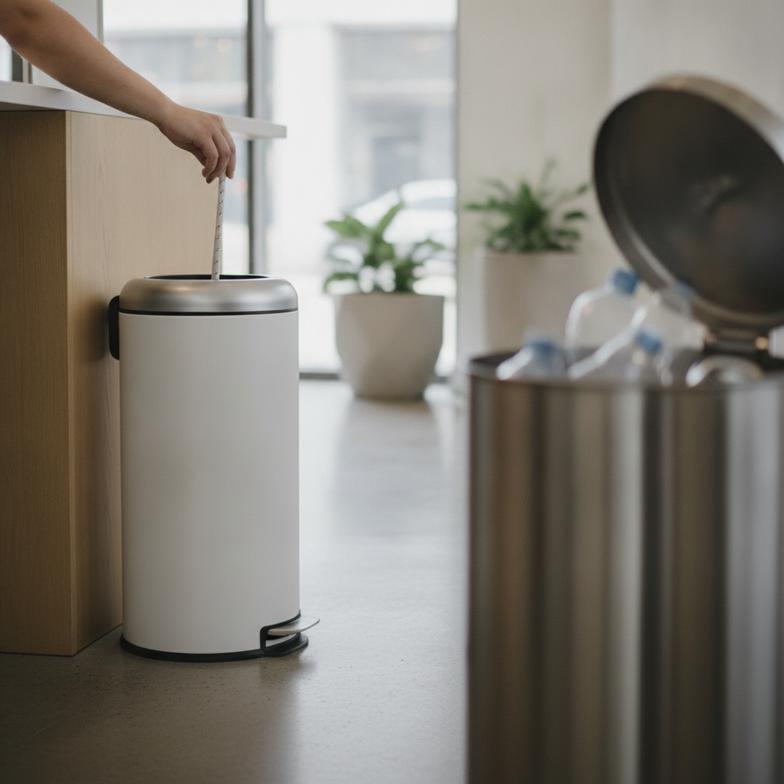
Honest communication prevents confusion and builds brand trust. Instead of a vague "Please Recycle" message that doesn’t work, provide clear instructions that do. Here are a few simple templates we’ve shared with our foodservice and retail clients:
> "Our Straws are Biodegradable!" > > "We chose paper straws made from sustainable forests as a better alternative to plastic. Please place them in the general waste bin when you’re done. Thank you for helping them return to nature!"
This message is positive, educational, and provides a clear call-to-action.
> "Made from Plants, Not Plastic." > > "This straw is designed to biodegrade. Dispose of responsibly in general waste."
This is concise, fits easily on small packaging, and highlights the key benefit (biodegradability) while providing proper disposal instructions.
> "Why did we switch to paper straws?" > > "We are committed to reducing single-use plastic. We chose these straws because they are made from FSC-certified, responsibly sourced paper and are fully biodegradable. While they are not recyclable due to their size and food contact, they are designed to break down naturally when disposed of in the general waste. This makes them a much better choice for our planet than plastic straws that persist for centuries[12]."
By proactively explaining your choice and the reasoning behind the disposal instructions, you position your brand as a thoughtful and transparent leader. You are not just following a trend; you are making an informed decision and helping your customers be part of the solution. This is far more powerful than a simple, and often inaccurate, recycling symbol.
No, it’s best to put them in the general waste bin. Even though they are made of paper, their small size and food contamination mean they will almost certainly be filtered out at the recycling facility and sent to a landfill anyway.
"Biodegradable" means a product can break down into natural elements over time. "Recyclable" means a product can be processed at an industrial facility and made into something new. A paper straw’s best environmental feature is its biodegradability, as it is rarely recycled in practice.
Yes, absolutely. FSC (Forest Stewardship Council) certification is your proof that the paper comes from responsibly managed forests. It’s a key document to request from a supplier to verify their "responsibly sourced" claims and avoid greenwashing.
Most are designed to be, but it depends on the specific paper, glues, and inks used. A reliable supplier should be able to confirm their products are fully biodegradable and provide documentation showing that all components are food-safe and eco-friendly. Always ask for proof.
So, are paper straws recyclable? As we’ve seen, that’s the wrong question for a business leader to ask. The practical answer is no, and claiming they are is a risk to your brand’s credibility. The right question is, "How can I market our use of paper straws honestly and effectively?" The answer is to shift your focus from a weak "recyclable" claim to strong, verifiable claims like "biodegradable" and "made from responsibly sourced, FSC-certified paper." This approach protects your brand, builds trust with your customers, and turns your procurement process into a powerful tool for genuine sustainability.
Whether you need to source high-quality, fully vetted biodegradable paper straws or are looking to build your own production business, our team is here to help. We provide the products, materials, and real-world factory experience to help you navigate these challenges with confidence. Contact PaperStrawTech today for a practical consultation.