Struggling to find eco-friendly straws for your business? The term “compostable” is thrown around so much that it’s started to lose its meaning. You worry that choosing the wrong supplier could lead to accusations of greenwashing or, worse, leave your customers with a soggy, unusable product. The key isn’t just finding compostable paper straws; it’s finding a partner who can prove their claims and protect your reputation.
The compostability of paper straws depends on the specific combination of paper, glue, and ink used, as well as the conditions of the composting environment (industrial vs. home).[1] A product is only truly compostable if it has been tested and verified by a third-party certification body, such as BPI, CMA, or TÜV AUSTRIA, ensuring it breaks down safely into nutrient-rich soil without leaving harmful residues.
Now that you have the direct answer, you can see it’s more complex than a simple “yes” or “no.” This complexity is where your opportunity lies as a buyer. By understanding the nuances, you can ask smarter questions, vet suppliers more effectively, and choose a product that meets both your sustainability goals and your customers’ expectations.
You ask a potential supplier if their straws are compostable, and you get a quick, confident “yes.” But you have a nagging feeling it’s not that simple, and you’re right. How do you move past the sales pitch and get to the truth?
The question itself is flawed because compostability is not a universal property. It is a conditional outcome. A paper straw’s ability to compost depends entirely on its specific ingredients and the environment where it ends its life.
Experienced buyers and procurement managers in our industry rarely ask if a straw is compostable. They’ve learned that this question invites a simple, often misleading, answer. Instead, they ask questions that probe for proof and process. This shift in questioning is the first step toward mitigating your business risk.
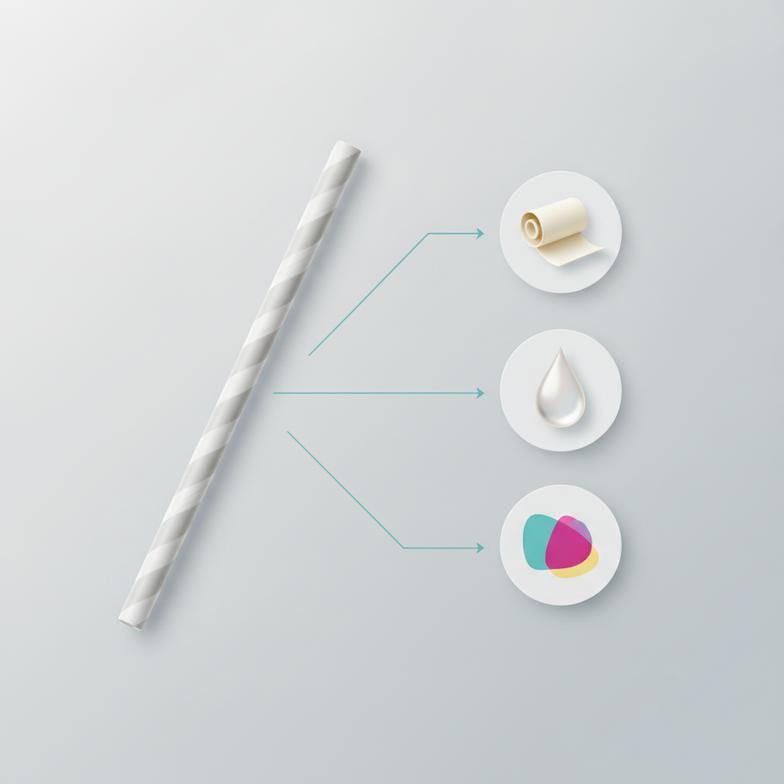
A paper straw is not just paper. It is a composite product made of three core components: 1. Paper: The body of the straw. Its thickness, density, and coatings affect both durability and decomposition. 2. Glue: The adhesive that holds the spirally wound paper layers together. The formulation of this glue is critical for both food safety and compostability. 3. Ink: The colorants used for branding, patterns, or stripes. These inks must also be non-toxic and designed to break down without contaminating the compost.
If any one of these components is not compostable, the entire straw fails the test.[2] A supplier who talks about their “compostable paper” but cannot provide data on their glue or ink is giving you an incomplete picture.
The environment where the straw is discarded is just as important as its construction. There are two main types of composting:
A straw certified for industrial composting will likely not decompose properly in a backyard bin, and claiming it will is a form of greenwashing.[5]
You see logos and acronyms like BPI, CMA, and TÜV on supplier websites, but what do they really mean for your business? It’s frustrating to decipher this alphabet soup when you just need to make a safe, reliable purchasing decision.
Key certifications for compostable paper straws include BPI for North America, CMA for specific US facilities, and TÜV AUSTRIA’s OK compost HOME/INDUSTRIAL for global standards. These logos are not decorations; they are evidence that a product has been scientifically tested to break down safely in a designated environment.

Think of a certification as a passport. It grants a product entry into the “compostable” category, but you, the buyer, are the customs agent responsible for checking that the passport is valid, current, and belongs to the product in question.
A trustworthy supplier should not only claim certification but also be able to provide the certificate number and direct you to the public database where you can verify it. Here’s a breakdown of what to look for:
| Certification | Region / Focus | Environment | What It Verifies | What to Ask Your Supplier |
|---|---|---|---|---|
| BPI Certified | North America | Industrial Composting | The product meets ASTM D6400 or D6868 standards.[6] It disintegrates, biodegrades, and leaves no toxic residue in a commercial facility. | “Can I see the BPI certificate for this specific straw model? I’d like to verify it in the BPI product catalog.” |
| CMA Certified | North America | Specific Composting Facilities | The product has passed real-world field tests in the facilities of Composting Manufacturing Alliance (CMA) members, confirming it’s accepted by them.[7] | “Which specific CMA composting facilities have field-tested and approved this product? Can you provide the CMA acceptance letter?” |
| TÜV OK compost INDUSTRIAL | Global (EU base) | Industrial Composting | The product meets the European EN 13432 standard for industrial composting.[8] This is a globally recognized benchmark. | “Please provide your certificate number. I want to check its validity on the TÜV AUSTRIA certificate database.” |
| TÜV OK compost HOME | Global (EU base) | Home Composting | The product meets stricter standards for breaking down at lower temperatures in a backyard compost pile. This is a very high bar to clear. | “Home compostable certification is significant. Can you share the full test reports and the specific certificate for this claim?” |
A certificate is a snapshot in time for a specific product formulation. If a supplier changes their glue, paper source, or ink, the certificate may no longer be valid. This is why ongoing verification is part of any good procurement strategy.
A certificate looks great on a sales sheet, but you might have been burned before by suppliers who had the right paperwork but delivered an inconsistent or low-quality product. How do you ensure the straws you receive in every shipment match the claims on the certificate?
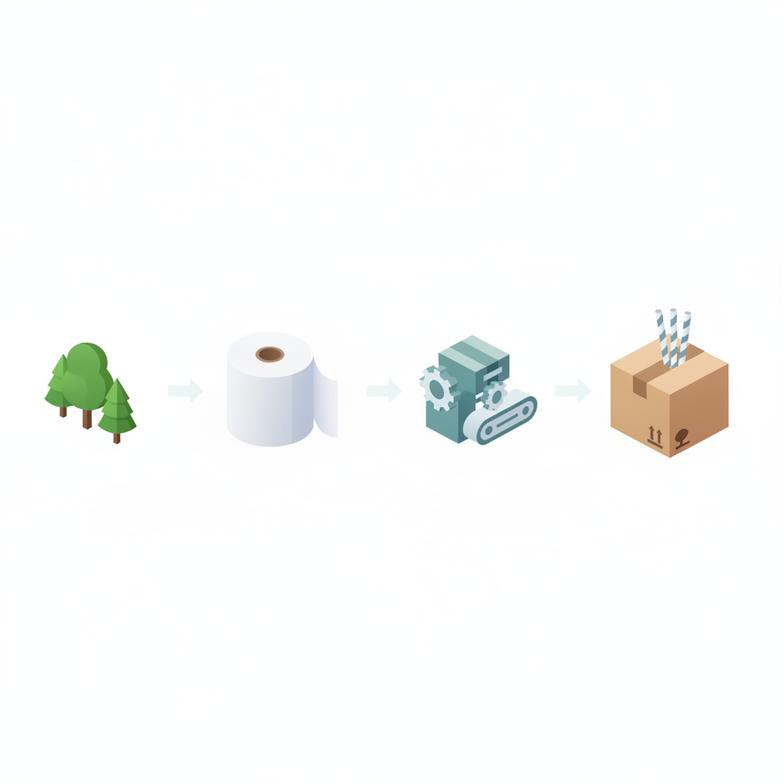
To truly vet a supplier, you must look beyond the final product certificate and verify the entire process. The most reliable partners offer full transparency by providing documentation for each component: material traceability for the paper (like FSC), safety data for the glue and ink (MSDS), and evidence of their own quality control systems.
From our experience working with hundreds of buyers, those who achieve the most success build partnerships based on this deeper level of transparency. They don’t just buy a product; they buy into a quality system.
While not a compostability certification, the Forest Stewardship Council (FSC) certification is a critical piece of the sustainability puzzle. It verifies that the paper comes from responsibly managed forests, preventing deforestation and protecting biodiversity.[9]
The glue and ink are where many suppliers cut corners. These components can contain chemicals that prevent compostability or, even worse, are not safe for food contact. This is a massive area of risk for your brand.
A certificate proves a sample was compliant. A robust Quality Management System proves the supplier can produce that same compliant product, day in and day out. As a manufacturer with our own factory and 10 production lines, this is central to our operation. We can link every batch of straws back to the exact rolls of paper and drums of glue used, ensuring total traceability.
You’ve done your homework and found a certified compostable paper straw. But your work isn’t done. Your customers don’t just want a straw that’s good for the planet; they need one that works. How do you balance the goal of sustainability with the non-negotiable need for performance?
The most rapidly compostable straw is not always the best product for your business. An obsession with rapid breakdown can lead to straws that get soggy in minutes.[11] Your goal should be to find a supplier who engineers for a functional balance: excellent durability (e.g., 3+ hours in a cold drink) that still meets compostability standards at its end of life.

This is an engineering challenge that we tackle every day in our own factory. It’s a delicate balance between paper thickness (GSM), the number of paper layers (ply), the glue formulation, and the winding tension of the machine. A straw designed for a thick milkshake requires a different specification than one for iced tea.
The mistake many buyers make is focusing only on the “end-of-life” story (compostability) and forgetting the “use-life” story (customer experience). A soggy straw creates a negative brand experience that far outweighs the benefit of its eco-credentials. A good supplier doesn’t just sell you a product; they consult with you. They ask about your use case:
Answering these questions helps define the right product that won’t force you to choose between your planet-friendly values and your customers’ happiness.
Biodegradable simply means a material will break down into smaller pieces over time, but this process can take hundreds of years and may leave behind toxic residues.[12] Compostable is a specific, regulated term. It means a product will break down into non-toxic, nutrient-rich soil (humus) in a specific timeframe under specific conditions.
You should only put paper straws in a home compost bin if they are explicitly certified for home composting, for example with the TÜV AUSTRIA “OK compost HOME” certification. Standard industrial-compostable straws will not break down properly in the lower temperatures of a backyard compost pile and will act as a contaminant.
Absolutely not. This is a critical point of verification for any buyer. Low-cost suppliers may use industrial-grade adhesives or inks that are not safe for human contact. Always demand documentation, such as an MSDS or a letter confirming compliance with FDA or other relevant food-contact regulations for both the glue and the ink.
No, they are completely different. FSC certification ensures the paper’s raw material (wood pulp) comes from responsibly managed forests. It relates to the beginning of the product’s life. Compostability certification relates to the end of the product’s life, proving the finished straw (paper, glue, and ink combined) breaks down safely. Both are important for a truly sustainable product.
The question “Are paper straws compostable?” is the start of a conversation, not the end. As we’ve seen, a simple “yes” is not enough. To truly manage risk and source a reliable product, savvy buyers learn to ask better questions. They dig deeper into the supply chain, demanding proof for every claim. They prioritize transparency, requesting certifications like BPI or TÜV, material traceability like FSC for paper, and safety data sheets for glues and inks.
Ultimately, finding the right compostable paper straws for your business is about finding a balance between verified sustainability and real-world performance. You need a straw that holds up in a drink and breaks down in the compost pile. This requires a manufacturing partner who understands the science and is transparent about their process.
If you’re looking for a partner who provides not just certified products but the documentation, expertise, and transparency to back them up, our team is ready to help. Contact us to discuss your specific needs for wholesale paper straws or to explore setting up your own manufacturing solution.