You’ve just hit "send" on an email with your brand’s new paper straw design. In your mind, the clock starts ticking toward production. You might expect a price and a delivery date to come back within a day.
But a professional supplier doesn’t start their machines yet. They start a conversation. Their first questions will likely be about your file format, color codes, and the straw’s intended use. This isn’t a delay; it’s the first sign that you’re working with a partner who wants to get your custom order right.
What you approve, and when, determines the success of your entire project. The process is designed to prevent a 100,000-straw mistake, not just to get a price.
After you send a custom paper straw design, a professional supplier begins a multi-stage approval process, not immediate production. Your design file first undergoes a technical review for print readiness. Next, you must approve a digital artwork proof to confirm layout and positioning. The most critical step is your final approval of a physical pre-production sample, which validates the real-world color, print quality, and straw performance before the bulk order is manufactured.
This structured workflow is a vital part of protecting your investment. It’s the most reliable way we know to prevent common issues-blurry logos, wrong colors, or poor performance-and ensure the final bulk order matches the sample you approved.
The first thing we do is a technical review of your design file. A buyer might send a high-resolution JPG or PDF thinking it’s perfect, but our production team needs to check if it’s truly "print-ready" for a small, curved surface like a straw or its wrapper.
We are looking for two key things:
1. File Format: Is it a vector file (.AI, .EPS, .SVG) or a raster file (.JPG, .PNG)? Vector files are built with mathematical lines and can be scaled to any size without losing quality, ensuring your logo stays sharp. Raster files are made of pixels, and when enlarged or printed on a small surface, they can become blurry or pixelated. If you send a raster file, our first step is to see if it can be cleanly converted. 2. Design Complexity: We check the number of colors, the fineness of the details, and where the design will be placed. A complex, 4-color logo printed directly on the straw is a different technical challenge than a 1-color logo on a flat wrapper.
This review isn’t about criticizing your design; it’s about anticipating and solving production problems before they happen. It ensures the final print is as crisp and professional as your brand itself.
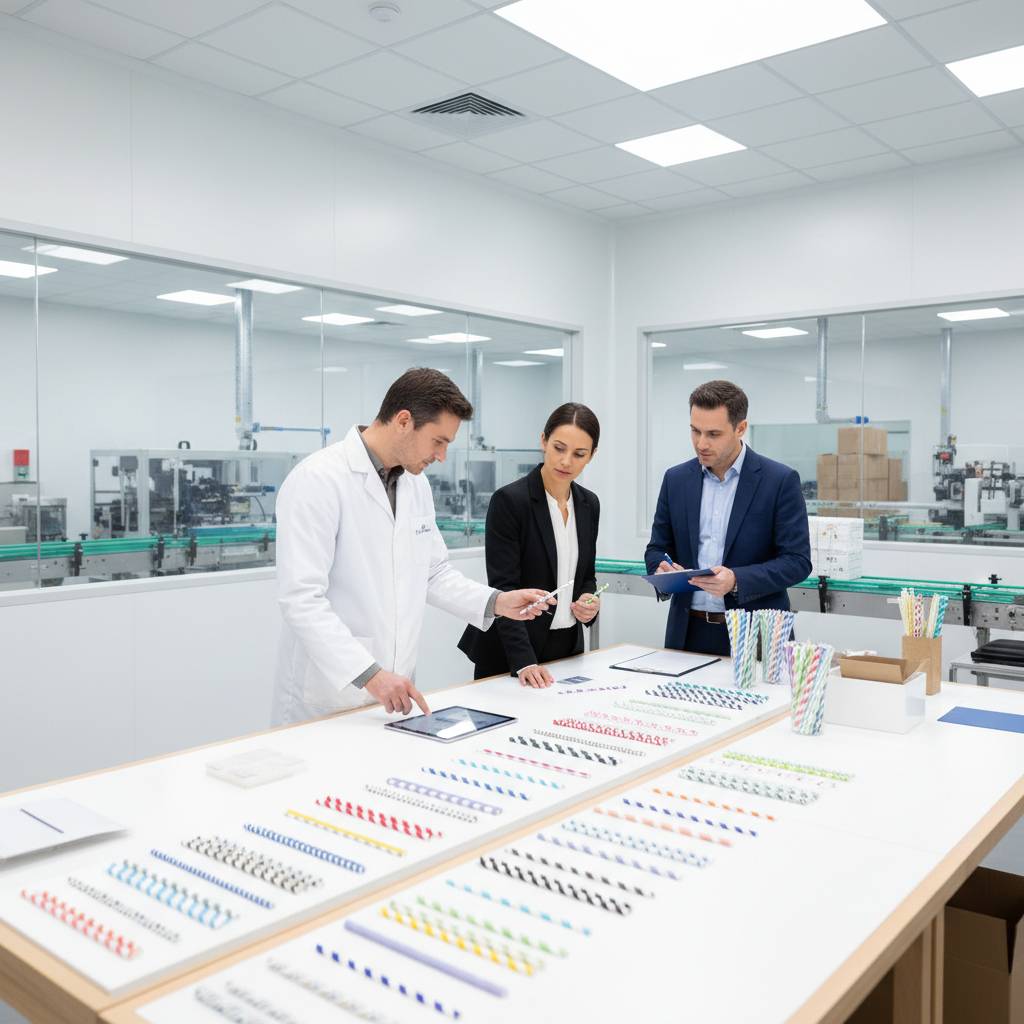
This is one of the most common points of failure in custom orders. The colors you see on your computer screen (which uses an RGB color model) are not the same as the colors that come out of a printer (which often uses CMYK). Simply saying "our brand’s blue" is not enough.
To achieve color consistency, we need to work with a universal color standard: the Pantone Matching System (PMS).
A Pantone code is a specific, numbered reference for a shade of color. When you provide a PMS code for your brand’s blue, our ink technicians can mix the ink to match that exact standard. This ensures that the blue on your first order is the same as the blue on your tenth order, regardless of who is operating the machine or where it’s being viewed.
If a supplier immediately agrees to "match the color from your PDF" without asking for a Pantone code, I would slow down. It’s a sign they may not have a rigorous color control process, which puts your brand consistency at risk.
After the technical review and color confirmation, the next step is the digital artwork proof. Think of this as the architectural blueprint for your custom straw. We create a 2D digital file that shows your design laid out flat, exactly as it will be applied to the straw or wrapper.
This proof is your opportunity to check critical details before any physical item is made:
The digital proof is a formal checkpoint. Your written approval signals that you have checked every detail and are giving the green light to create a physical sample based on this exact blueprint. It’s the last chance to make changes for free.
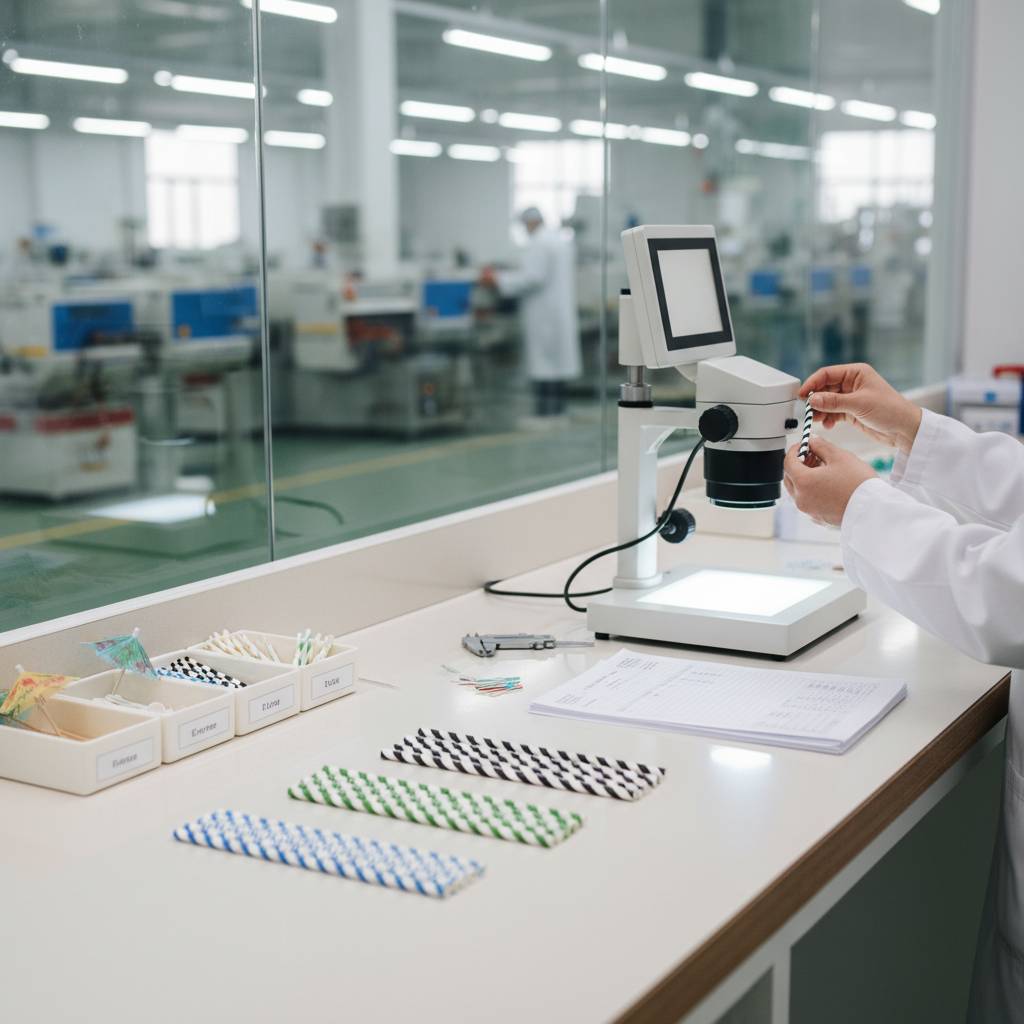
Many buyers, anxious to save time, ask if they can skip the physical sample. I always advise against this for a new custom design. The physical pre-production sample-often called the "golden sample"-is the single most important risk-reduction step in the entire process.
A digital proof cannot tell you:
This sample becomes the quality standard for your entire bulk order. You hold it, you test it, and you approve it. When the final shipment arrives, you can compare it directly to this golden sample. Without it, you have no objective reference to judge the quality of the mass-produced goods, making it much harder to address any potential issues.
The most common cause of delay in a custom order is slow or incomplete feedback from the buyer during the approval stages. By understanding the process and preparing information upfront, you can ensure the project moves smoothly.
The following checklist outlines the typical workflow and what is needed from you at each stage.
| Process Stage | Supplier Action | Buyer Approval Point (What to Check) |
|---|---|---|
| 1. Technical Review | Assess design file format and check for color codes. | Provide the best quality file (vector preferred) and confirm Pantone (PMS) color codes. |
| 2. Digital Proofing | Create a digital mock-up showing the design on a flattened template. | Formal Sign-off Required. Check logo/text position, spelling, and scale. Confirm it’s within the safe area. |
| 3. Physical Sampling | Produce a "golden sample" based on the approved proof and specified straw. | Formal Sign-off Required. Check color accuracy in real light. Test straw performance in the intended drink. Confirm print quality. |
| 4. Production Lock-in | Finalize the quotation and timeline based on the approved sample. | Confirm the approved physical sample is the standard for the bulk order. Approve the final quote and schedule. |
When you’re ready to start the process, sending a complete inquiry helps us provide a faster and more accurate response. Before requesting a quotation for your custom paper straw design, try to prepare the following:
Sending this information allows us to move directly to a productive technical review and provide a more reliable timeline and quotation from the very first step.