
At first glance, ordering printed paper straws seems simple: pick a size, send a logo, and get a price. The real work—and the real risk—starts after that. We’ve seen it happen: the straws arrive, and a business discovers they get soggy in their iced coffee, are too short for their tallest cups, or their final shipping bill is double what they expected because of inefficient packaging.
The truth is, a successful order isn’t about finding the lowest unit price. Before ordering printed paper straws, buyers must check and confirm the straw’s specifications (size and material) against their specific drinks, the artwork and printing proof, the complete packaging and carton data for shipping calculations, and the supplier’s sample testing and approval process.
Ignoring these checks is the fastest way to turn a simple purchase into a costly operational problem. Here’s what we look at to make sure an order is right before it ever goes into production.
The most common request we get is for a "standard size" straw. This is usually the first sign of a potential problem. A 6mm diameter straw that’s perfect for water or soda will frustrate a customer trying to drink a thick milkshake or smoothie. The straw simply won’t have the flow.
Your first check is to match the straw’s physical dimensions—diameter and length—to your actual menu and cups.
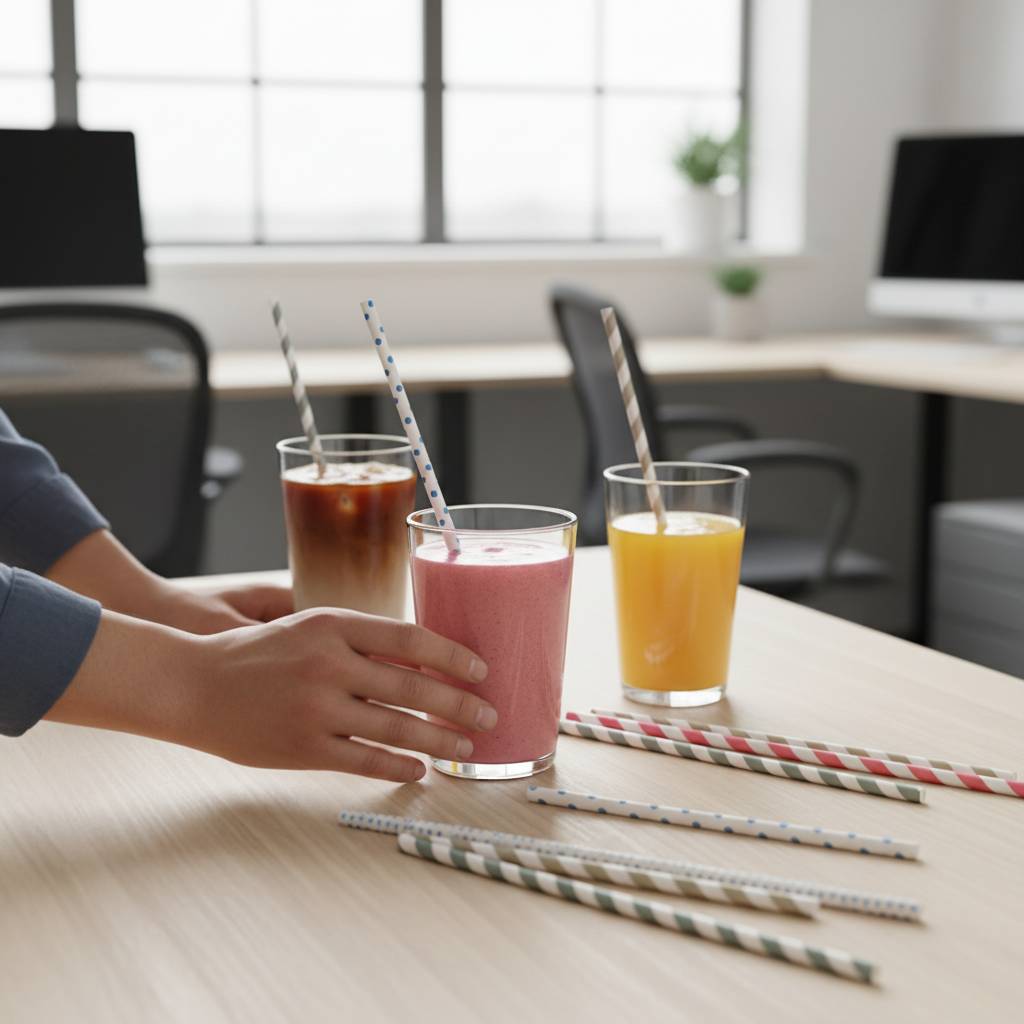
A responsible supplier won’t just give you a price for a "standard straw." We always ask about your drink menu and cup sizes first. If a buyer tells me they run a cafe, my immediate question is whether they serve smoothies or iced drinks. A mismatch between the straw and the drink makes all other specifications irrelevant. It’s a fundamental check that prevents a bad user experience, and we refuse to skip it just to make a quick sale.
A printed paper straw can look perfect in a photo or feel firm when you hold it dry. This tells you almost nothing about its real-world performance. The real test happens when it sits in a cold, wet, and sometimes acidic beverage for more than ten minutes.
Many buyers approve an order based on a dry sample. This is a mistake. You must check for:
When we send samples, we expect the buyer to do more than just look at them. We encourage them to use them exactly as a customer would. Let a straw sit in an iced tea for 30 minutes. Use it to stir a drink. A straw that looks great but goes limp or tastes like wet cardboard is a failed product. I’ve learned that it’s far better to have a frank discussion about material performance before an order than to deal with a quality complaint on a bulk shipment.
Your logo is your brand, and getting it right on a cylindrical straw is more complex than it looks. Simply sending a JPEG of your logo isn’t enough. The image can become distorted, stretched, or poorly placed when wrapped around the straw’s small surface.
A common oversight is approving the print based on a digital mock-up alone. This doesn’t show you the real-world color, ink bleed, or how the seam of the paper might interrupt your design.
For any custom print job, a professional process is non-negotiable.
1. Artwork Proof: The supplier should provide an "unrolled" digital proof. This shows your design laid out flat, so you can see exactly how it will be printed before it’s wrapped. 2. Pre-Production Sample: Before a bulk run, you must approve a physical, printed sample. This is your only chance to check the final color accuracy, print clarity, and overall appearance.
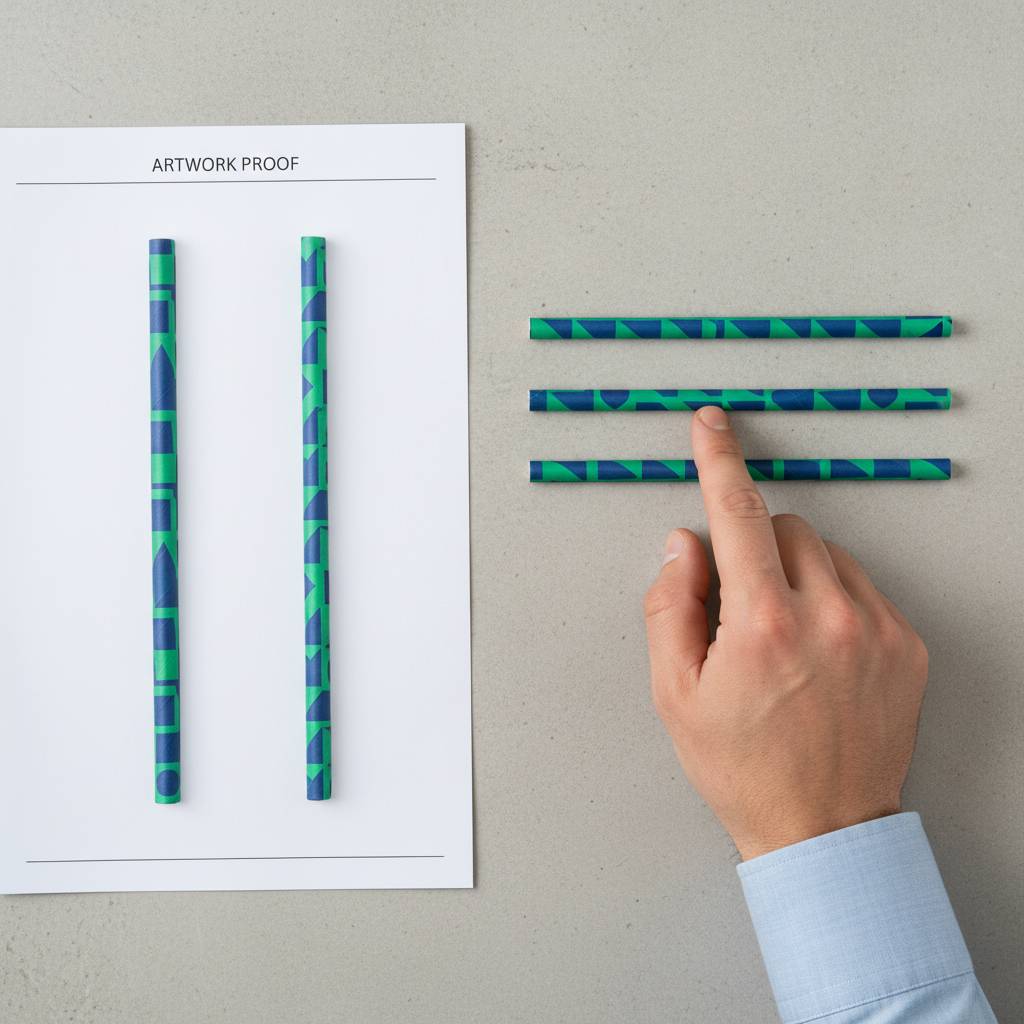
We will not proceed to mass production without a signed approval on both the artwork proof and the physical sample. Some buyers want to rush this step to save time, but we hold firm here. The small delay of confirming a sample is nothing compared to the cost and frustration of receiving hundreds of thousands of straws printed with the wrong brand color or a distorted logo. This is a critical control point that protects both the buyer and the supplier.
Many buyers compare quotations based on one number: the unit price per straw. This is one of the most dangerous simplifications you can make. A low unit price can easily hide inefficient packaging that inflates your shipping costs and erases any initial savings.
The true cost of your straws is the total landed cost—the price per straw after all shipping, customs, and logistics fees are paid. This is heavily influenced by carton data.
Before you confirm an order, you must demand this information:
Imagine two suppliers. Supplier A quotes $0.010 per straw, and Supplier B quotes $0.011. Supplier A seems cheaper. But if Supplier A uses bulky cartons that take up 20% more shipping volume (CBM), their "cheaper" straws could cost you significantly more by the time they reach your warehouse. We always provide full carton data with our quotations because we know that shipping is a major part of the final cost. It’s a matter of transparency.
Getting printed paper straws right is a process of verification, not just a simple purchase. A good supplier should guide you through these checks, not rush you into a decision based on price alone. If a potential supplier isn’t asking you about your drinks, providing detailed carton data, or insisting on a sample approval process, you should see that as a red flag.
To ensure your order is a success, use this checklist before you commit:
Running through these points turns you from a price-taker into an informed buyer. It ensures the product you receive actually works for your business, strengthens your brand, and protects your budget.