
You’ve received several quotes for bulk paper straws, and one supplier’s unit price is significantly lower. It’s tempting to declare a winner. But experienced importers know that the initial quote is often just the beginning of the story.
This is a common headache for importers and distributors. The order looks cheap at the quotation stage, but after accounting for freight, carton volume, weak packaging, customs fees, and destination charges, the final landed cost per straw becomes much higher than planned.
The best way to reduce hidden costs in bulk paper straw shipping is to calculate the landed cost per usable straw or sellable carton before ordering, using confirmed carton data, CBM, packaging method, trade terms, and pre-shipment checks.
As a supplier, I often see buyers focus on the unit price alone. A better approach is to ask for the details that determine the real cost. Let's break down what to check.
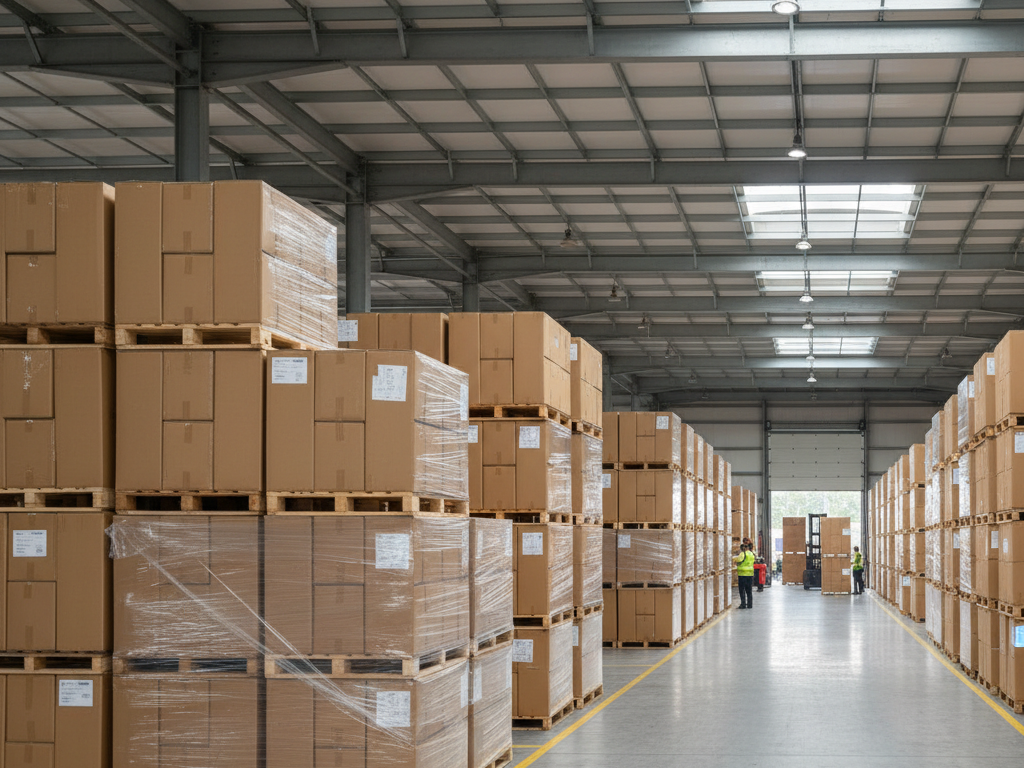
A low unit price often hides inefficiencies in shipment volume, packaging quality, or trade term responsibilities. For a lightweight, high-volume product like paper straws, shipping and handling make up a major part of your total cost. A supplier’s low price might be offset by inefficient packing that increases freight costs, or it might exclude charges that other suppliers build into their quotes.
I’ve seen cases where a supplier’s 5% lower unit price was completely negated because their bulky cartons increased the total shipment volume (CBM) by 20%, leading to a much higher final freight bill.
The key detail here is that freight for lightweight cargo is almost always charged based on volume (CBM), not just weight. A paper straw shipment is a classic example. Therefore, the efficiency of the carton packing directly impacts your final cost per straw.
This is why you need to shift your focus from comparing unit prices to comparing the estimated landed cost per usable straw or, for distributors, per sellable carton. This requires getting more data from your potential suppliers than just a price.
You must confirm the carton dimensions, pieces per carton, total carton count, and total CBM before you can accurately estimate your shipping costs. Paper straws feel light, but a bulk order for one million straws occupies significant container space. Ignoring this data means you are approving a price without knowing the true cost of shipping.
A common mistake is getting a freight estimate based only on weight, only to discover the cost is much higher because the actual shipment volume was larger than assumed. When we prepare an export order, these details are standard. If a potential supplier can't provide this data quickly, it’s a sign they may not have much experience with export packing, which is a risk in itself.
Before you confirm an order, ask your supplier for a complete packing data sheet. It should include:
With this information, your freight forwarder can give you a reliable quote, and you can build a more accurate cost comparison.
Use this table to organize the data from your top two or three suppliers. This process alone will reveal which supplier provides the clear data needed to avoid hidden costs.
| Comparison Item | Supplier A | Supplier B | Buyer Notes |
|---|---|---|---|
| Unit Price per Straw | Supplier data | Supplier data | Starting point, not the final decider. |
| Trade Term | EXW / FOB | EXW / FOB | Must compare on the same basis (e.g., both FOB). |
| Pieces per Carton | Supplier data | Supplier data | Affects carton count and handling labor. |
| Carton Dimensions | Supplier data | Supplier data | Directly impacts total CBM. |
| Total CBM | Supplier data | Supplier data | Primary driver of freight cost for paper straws. |
| Packaging Method | Supplier data | Supplier data | Affects damage risk and resale value. |
| Palletized or Non-palletized | Supplier data | Supplier data | Impacts CBM and warehouse handling costs. |
| Estimated Landed Cost | Your Calculation | Your Calculation | The real number for your decision. |

Weak or inappropriate packaging turns a potential cost saving into a real loss through product damage, customer complaints, and repacking fees. Saving a few cents on a weaker carton can cost you dollars in the destination warehouse. Export cartons face significant stress during loading, sea transit, and unloading.
I often remind our distribution partners that their customers don’t just buy the straw; they see the box first. A crushed, damp, or torn carton can lead to rejection or a demand for a discount, even if the straws inside are technically usable. Furthermore, since paper-based products are susceptible to moisture, you should confirm the inner packing method and whether cartons are stored in a dry area before shipment.
The decision to palletize is another trade-off. Palletizing reduces handling damage but usually increases total CBM, which can raise freight costs. Loose-loading cartons saves space but increases manual labor and the risk of damage. Before we finalize packing, it's wise to check your destination warehouse's receiving requirements—some charge extra for handling loose-loaded cartons.
Your shipping quote only covers the responsibilities defined by the trade term; anything outside that term is a potential hidden cost. Many pricing disputes begin because a buyer compared an EXW (Ex Works) price with an FOB (Free On Board) price without understanding the difference.
From our side, our responsibility for costs ends at the point defined by the Incoterm. An FOB quote includes getting the goods loaded onto the ship at the origin port. An EXW quote doesn't—all the costs from our factory door to the port are on you. That low EXW price can look great until you add inland trucking and port handling fees back in.
Your first step is to standardize the quotes for comparison. If one supplier quotes EXW and another quotes FOB, ask the EXW supplier to estimate the origin charges to get the goods to FOB status. Only then can you compare them fairly. Remember, your supplier's quote rarely includes destination charges like port fees, customs, duties, and local trucking. You must get estimates for those from your own freight forwarder.
| Hidden Cost Area | What Buyers Often Miss | Possible Consequence | What to Ask or Check |
|---|---|---|---|
| Carton Dimensions & CBM | Packing data is missing from the quote. | Higher-than-expected freight cost per straw. | Ask for carton size, total CBM, and carton count. |
| Weak Packaging | Carton quality is treated as a minor detail. | Crushed cartons, repacking costs, customer complaints. | Ask for packing specs and pre-shipment photos. |
| Moisture Protection | Moisture risk for paper products is ignored. | Damp packaging, concerns about resale condition. | Check inner packing and storage conditions. |
| Trade Terms | EXW, FOB, and CIF prices are compared directly. | You pay for missing origin, freight, or insurance costs. | Confirm exactly what is included and excluded. |
| Destination Charges | Local import costs are not calculated upfront. | Significant loss of margin after goods arrive. | Get a destination quote from your freight forwarder. |
| Custom Packaging | Setup costs and approval time are ignored. | Higher final costs and unexpected shipment delays. | Confirm MOQ, artwork process, and CBM impact. |
| Documentation Accuracy | Invoice/packing list are not reviewed pre-shipment. | Customs delays and port storage fees. | Review draft documents before the vessel sails. |
Your order quantity and customization choices directly affect freight efficiency and may add setup costs that must be factored into your landed cost. While ordering a smaller quantity might seem to reduce inventory risk, it can significantly increase your shipping cost per straw, making the product less competitive.
For low-value items like paper straws, freight efficiency is critical. Shipping a half-empty container or a small LCL (Less than Container Load) shipment can be very expensive on a per-unit basis. It's always worth discussing with your supplier if there is a more "freight-efficient" order quantity that better utilizes container space.
Customization, such as printing a logo or using a branded box, introduces other variables:
The real risk here is assuming custom packaging just adds a small printing fee. I've seen orders delayed by weeks because artwork approval took longer than expected, or because a new custom box changed the carton dimensions, forcing a recalculation of the entire shipment volume. It's crucial to discuss any customization plans at the very beginning of the quotation process.

Confirming product specifications, packing details, carton marks, and documentation before the goods leave the supplier is the cheapest way to solve problems. Once a container is sealed and on a vessel, any mistake becomes ten times more difficult and expensive to fix. Many hidden costs are not just financial but operational—hours spent dealing with problems that could have been prevented.
A common mistake I see is buyers focusing only on the factory's production lead time. Your real delivery timeline starts the moment you approve artwork and includes material prep, production, packing, inspection, freight booking, port transit, customs clearance, and final local delivery. A delay in any one of these steps can push back your entire schedule.
A pre-shipment check is not about a lack of trust; it's about good process. I always prefer a buyer who asks for details upfront, as it helps us prevent issues together.
Use this checklist to ensure you have key data before you commit and before goods are shipped.
| Check Item | Confirmed? | Notes |
|---|---|---|
| Unit price confirmed | Yes/No | |
| Trade term (e.g., FOB, EXW) confirmed | Yes/No | |
| Included & excluded charges listed | Yes/No | |
| MOQ and order quantity align | Yes/No | Standard or custom |
| Carton dimensions confirmed | Yes/No | L x W x H |
| Total CBM confirmed | Yes/No | |
| Estimated destination charges checked | Yes/No | With your freight forwarder |
| Check Item | Confirmed? | Notes |
|---|---|---|
| Product specs match order | Yes/No | |
| Carton marks confirmed | Yes/No | |
| Packing photos received | Yes/No | |
| Draft invoice reviewed | Yes/No | |
| Draft packing list reviewed | Yes/No | |
| Weight & CBM on docs match data | Yes/No | |
| Shipping schedule confirmed | Yes/No | ETD / ETA |
Hidden costs in bulk paper straw shipping rarely come from a single, large error. They accumulate from small, overlooked details: a carton that’s an inch too big, a trade term that was misunderstood, or packaging that wasn't quite strong enough.
The cheapest quote is not always the safest quote. The real question is not just "How much is one straw?" but rather, "How much does one sellable straw cost by the time it reaches my warehouse?"
A good supplier should be able to provide clear carton data, explain their trade terms, and discuss packing options with you. Before you confirm your next order, be sure to ask for the data that affects your final landed cost, not just the number that looks lowest on the first quote. This shifts your focus from simply buying a product to managing a supply chain—and that is the key to protecting your margins.