Worried your paper straws will turn to mush? Cheap straws can ruin drinks and disappoint customers. Understanding their core materials is key to finding a durable and safe option.
A quality paper straw is made of three key components: multiple layers of food-grade paper, a food-safe adhesive to bind them, and food-grade ink for any colors or logos. The quality of each material directly impacts the straw's durability, safety, and performance in your drink.
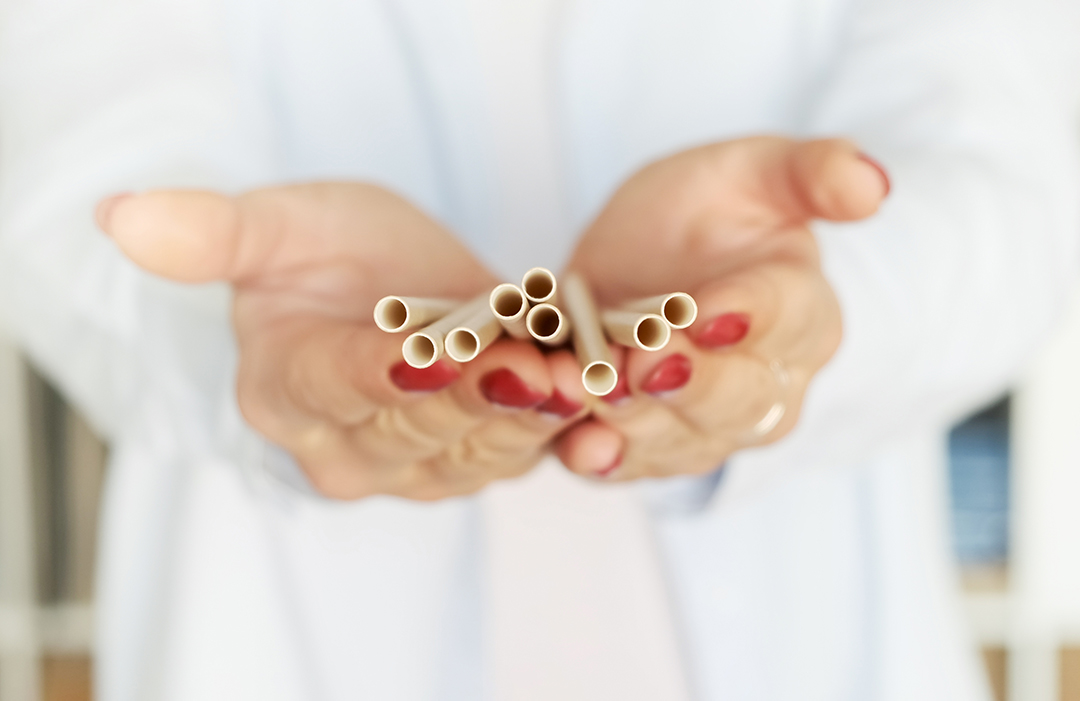
It sounds simple, just paper and glue. But in our factory, we see every day how small differences in these materials can make or break a straw's performance. You're not just buying a disposable item; you're buying an experience for your customer. Let's break down each component, because the details are what separate a great straw from a disappointing one and protect your brand's reputation.
Thinking any paper will do for straws? That's a recipe for a soggy mess. Using low-quality paper means your straws will disappoint customers and create unnecessary waste, damaging your reputation.
No, it's not just any paper. Quality paper straws use multiple layers—usually three or four—of thick, food-grade kraft paper1. This layered structure, combined with the paper's density, is what provides the strength and resistance to liquids, preventing it from getting soft too quickly.
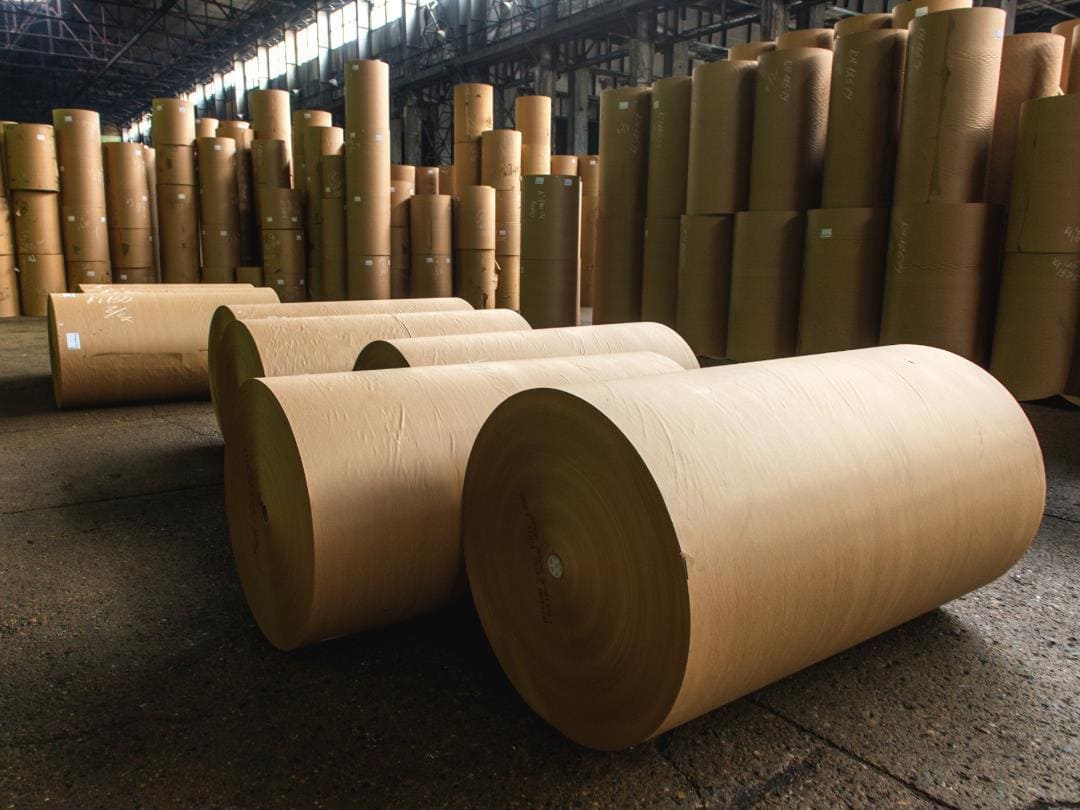
In our manufacturing plant, the paper is the first thing we look at for quality control. The final straw is essentially a tightly wound paper tube, so the foundation has to be strong. We don't use just one type of paper; we use a combination of paper weights, measured in Grams per Square Meter (GSM)2. A higher GSM means thicker, denser paper. For a standard 8-inch drinking straw, we often use a 3-ply structure: two inner layers of 60 GSM paper and a stronger outer layer of 120 GSM paper. This combination provides excellent durability for over 3 hours in a cold drink3 without making the straw feel too thick or like cardboard. For thicker drinks like milkshakes or smoothies, we recommend a 4-ply structure to guarantee it won't collapse. We also ensure our paper is from suppliers with FSC (Forest Stewardship Council) certification4, which means the wood is sourced from responsibly managed forests. This is a detail your environmentally conscious customers will appreciate.
| Feature | Low-Quality Paper | High-Quality Paper (Our Standard) |
|---|---|---|
| Layers | 2-ply or thin 3-ply | Sturdy 3-ply or 4-ply |
| Weight (GSM) | Often below 60 GSM | A mix of 60 GSM and 120 GSM |
| Durability | Softens in under 15 minutes | Lasts for 3+ hours in cold liquid |
| Certification | Usually uncertified | FSC Certified for sustainability |
Ever had a paper straw start to unravel in your drink? It's messy, unprofessional, and a clear sign of poor quality. This failure is almost always caused by a weak or non-water-resistant adhesive.
Paper straws are held together by a special food-grade, water-based adhesive5. It's designed to be completely safe for consumption and strong enough to keep the paper layers bonded, even when soaked in liquid for hours. Reputable manufacturers use glues that are FDA or LFGB certified for food contact6.

The adhesive is the unsung hero of a good paper straw. If the paper provides the strength, the glue provides the integrity. In our factory, the straw-making machine winds the paper strips at high speed, and a very thin, precise line of adhesive is applied between each layer. The amount has to be perfect. Too much glue makes the straw brittle, while too little means it will come apart. After being cut to length, the straws travel through a heated drying tunnel7. This critical step cures the adhesive, creating a strong, water-resistant bond. Some producers shorten or skip this drying process to cut costs, but that's what leads to straws that feel slimy or unravel after a few minutes in a drink. We only use water-based adhesives that meet strict international standards like FDA (for the U.S. market) and LFGB (for the European market). This ensures the glue is non-toxic and completely safe, giving you and your customers peace of mind. When a straw fails, it's rarely the paper that gives out first; it's almost always the glue seam.
You want to offer beautiful, custom-branded straws, but you have a nagging worry that the ink might be toxic or bleed into the drink. It's a valid concern. Using the wrong ink is a health risk and can damage your brand's trustworthy image.
Yes, colored and printed paper straws are completely safe, but only if they are made with food-grade inks. These are typically soy-based or water-based inks8 that are non-toxic and specifically formulated for products that come into contact with food. Always ask your supplier to confirm they use certified food-safe inks.
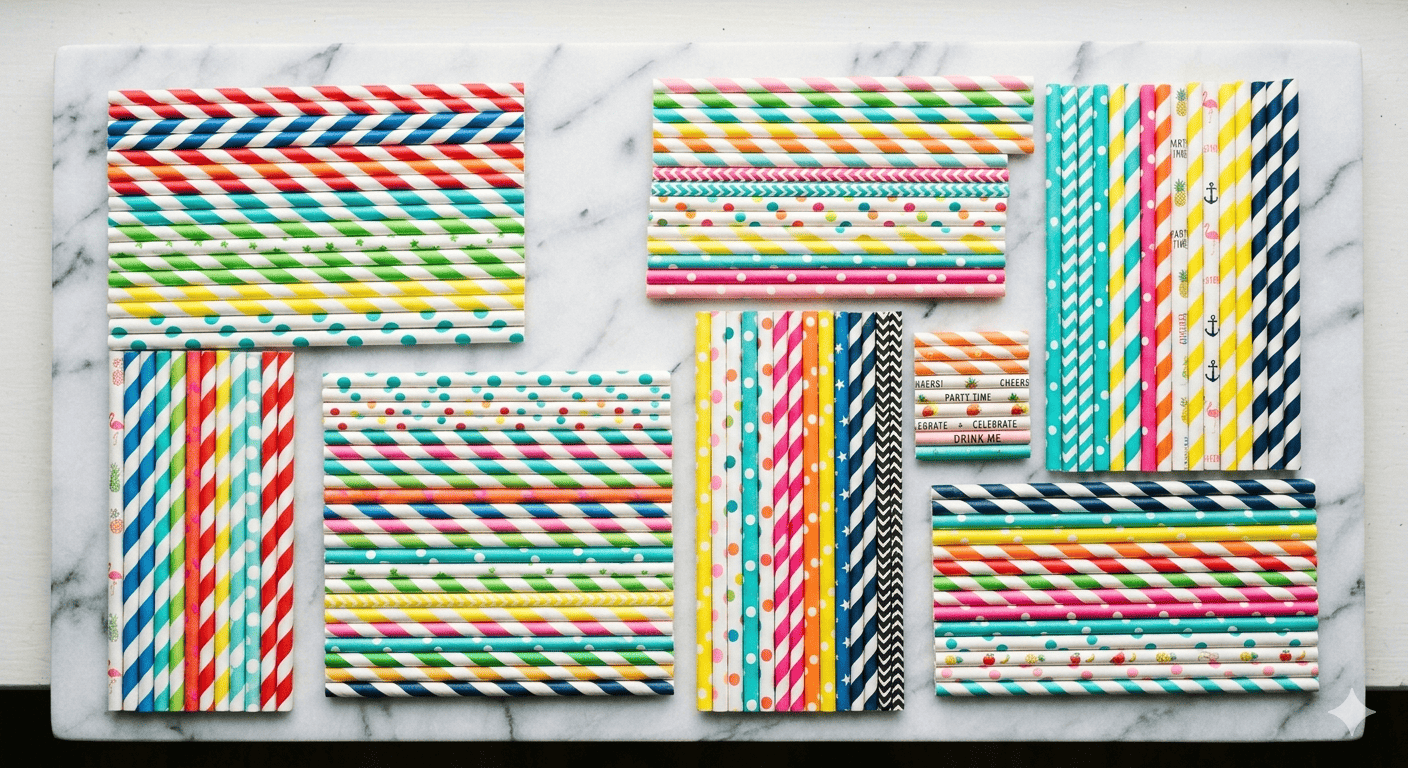
When a client asks us for a custom-printed straw with their logo, the first thing we discuss is the ink. We only use food-grade, soy-based inks. Unlike traditional petroleum-based inks, soy ink is environmentally friendly, produces more vibrant colors9, and is completely safe if it comes into contact with a beverage. Before we ship any new custom design, we perform a "bleed test." We soak the printed straws in different liquids—hot coffee, acidic orange juice, and ice-cold soda—for at least an hour. We are checking to make sure the color stays on the straw and does not transfer into the drink. This is a very simple but important test that you should perform on any samples you receive from a potential supplier. It’s the easiest way to verify the quality for yourself. The same rule applies to the individual paper wrappers that many businesses use for hygiene. The wrapper protects the straw, and any printing on it should also use the same food-safe ink.
Here is a simple checklist you can use to test samples:
| DIY Sample Test | What to Look For | Pass or Fail? |
|---|---|---|
| Hot Drink Test (Coffee/Tea) | Does the straw get too soft to use?10 Does the ink bleed or fade? | If it collapses or color runs, it's a fail. |
| Cold & Bubbly Test (Soda) | Does it hold its shape against carbonation?11 Does the seam unravel? | If it gets mushy or unwinds, it's a fail. |
| Acidic Test (Juice/Lemonade)12 | Any change in texture? Does the ink react and change color or run? | If it disintegrates or the ink bleeds, it's a fail. |
| Simple Soak Test (Water, 1 hour) | Is it still firm and usable? Is the glue seam perfectly intact? | If it feels weak or slimy, it's a fail. |
A paper straw is more than just paper; it is a system of certified paper, food-safe adhesive, and non-toxic ink. Your best protection is asking for certifications and testing samples in your own drinks.
"[PDF] Evaluation of Paper Straws versus Plastic Straws - BioResources", https://bioresources.cnr.ncsu.edu/wp-content/uploads/2019/09/BioRes_14_4_8345_Gutierrez_RJVP_Eval_Paper_Plastic_Straws_Props_Testing_Challenges_15725-1.pdf. Industry analyses of paper straw construction indicate that commercial manufacturers commonly employ multi-layer designs, typically ranging from 2 to 4 plies depending on intended use and durability requirements. Evidence role: general_support; source type: research. Supports: typical layer construction in commercial paper straw manufacturing. Scope note: Sources may describe ranges rather than confirming the specific 3-4 layer standard as universal practice ↩
"Grammage", https://en.wikipedia.org/wiki/Grammage. Grams per square meter (GSM) is the internationally recognized metric for paper weight, representing the mass of one square meter of paper and serving as the standard measurement in paper manufacturing and specification. Evidence role: definition; source type: encyclopedia. Supports: GSM as the standard unit for measuring paper weight. ↩
"Some Plastic Straws Degrade Quicker Than Others, New Study Shows", https://www.whoi.edu/press-room/news-release/some-plastic-straws-degrade-quicker-than-others-new-study-shows/. Studies examining paper straw performance in cold beverages have documented significant variation in structural integrity over time, with higher-quality multi-ply designs maintaining functionality for extended periods, though specific duration depends on paper composition, adhesive quality, and beverage characteristics. Evidence role: general_support; source type: research. Supports: durability timeframes for paper straws in cold beverages. Scope note: Research may not confirm the specific 3-hour threshold or the exact GSM configuration described ↩
"Forest Stewardship Council - Wikipedia", https://en.wikipedia.org/wiki/Forest_Stewardship_Council. The Forest Stewardship Council is an international non-profit organization that sets standards for responsible forest management, with FSC certification indicating that wood products originate from forests managed according to environmental, social, and economic sustainability criteria. Evidence role: definition; source type: institution. Supports: FSC certification as an indicator of responsible forest management. ↩
""New Water-Based Adhesives For Flexible Food Packaging ...", https://repository.rit.edu/japr/vol8/iss1/7/. Regulatory frameworks for food contact materials recognize water-based adhesives as generally presenting lower migration risks compared to solvent-based alternatives, with specific formulations requiring evaluation for compliance with food safety standards. Evidence role: general_support; source type: government. Supports: safety characteristics of water-based adhesives for food contact applications. Scope note: General regulatory guidance does not confirm safety of all water-based adhesives without specific formulation review ↩
"Food Packaging & Other Substances that Come in Contact with Food", https://www.fda.gov/food/food-ingredients-packaging/food-packaging-other-substances-come-contact-food-information-consumers. The U.S. Food and Drug Administration (FDA) regulates food contact substances under the Federal Food, Drug, and Cosmetic Act, while Germany's LFGB (Lebensmittel- und Futtermittelgesetzbuch) establishes requirements for food contact materials in European markets, both requiring safety evaluation of adhesives and other components. Evidence role: definition; source type: government. Supports: FDA and LFGB as regulatory frameworks for food contact materials. ↩
"[PDF] AN OVERVIEW, THE STATE OF PAPER DRYING KNOWLEDGE", https://bioresources.cnr.ncsu.edu/wp-content/uploads/2020/03/2001.1.709.pdf. Paper tube manufacturing processes commonly employ thermal curing to accelerate adhesive polymerization and achieve optimal bond strength, with controlled heating facilitating solvent evaporation in water-based adhesive systems. Evidence role: mechanism; source type: research. Supports: heat curing as a method for adhesive bonding in paper tube manufacturing. Scope note: General paper tube manufacturing literature may not specifically detail paper straw production parameters ↩
"Soy Ink vs. UV Ink: Pros & Cons for Packaging and Printing", https://meyers.com/meyers-blog/soy-ink-vs-uv-ink-pros-cons-for-packaging-and-printing/. Research on printing inks for food packaging indicates that soy-based and water-based formulations generally contain fewer volatile organic compounds and potentially harmful substances compared to conventional petroleum-based inks, though food contact safety depends on specific formulation and migration testing. Evidence role: general_support; source type: research. Supports: soy-based and water-based inks as safer alternatives for food contact printing. Scope note: Safety depends on complete formulation rather than base material alone ↩
"[PDF] Environmental Comparison of Soy to Petroleum Ink with Respect to ...", https://scholarworks.wmich.edu/cgi/viewcontent.cgi?article=1367&context=engineer-senior-theses. Studies comparing soy-based and petroleum-based inks have documented that soy inks typically contain renewable resources and lower levels of volatile organic compounds, with some research indicating enhanced color properties, though performance varies by specific formulation and application. Evidence role: general_support; source type: research. Supports: environmental and performance characteristics of soy-based inks. Scope note: Comparative advantages may depend on specific formulations and printing conditions rather than being universal ↩
"The last straw: Characterization of per- and polyfluoroalkyl ... - PubMed", https://pubmed.ncbi.nlm.nih.gov/33770693/. Research on paper-based food contact materials indicates that elevated temperatures accelerate moisture absorption and can compromise structural integrity through weakening of paper fibers and adhesive bonds, with the rate of degradation depending on paper quality, coating treatments, and adhesive formulation. Evidence role: mechanism; source type: research. Supports: temperature effects on paper straw structural integrity. Scope note: General research on paper degradation may not provide specific timeframes for straw failure in hot beverages ↩
"Biodegradable, Water‐Resistant, Anti‐Fizzing, Polyester ...", https://pmc.ncbi.nlm.nih.gov/articles/PMC9811439/. While research specifically on carbonation effects on paper straws is limited, studies of paper-liquid interactions indicate that dissolved gases and pH variations in carbonated beverages may influence moisture absorption rates and chemical interactions with paper components. Evidence role: mechanism; source type: research. Supports: potential mechanisms by which carbonation affects paper materials. Scope note: Direct research on carbonation-specific effects on paper straw integrity appears limited in published literature ↩
"Degradation of paper products due to volatile organic compounds", https://pmc.ncbi.nlm.nih.gov/articles/PMC10119123/. Research on paper degradation mechanisms demonstrates that acidic conditions can accelerate cellulose hydrolysis and affect the stability of certain dyes and pigments, with the extent of degradation depending on pH level, exposure time, and the chemical composition of paper treatments and inks. Evidence role: mechanism; source type: research. Supports: effects of acidic conditions on paper and printing materials. Scope note: General paper chemistry research may not specifically address the timeframes and conditions relevant to beverage straw use ↩