
Sourcing accessories for sensitive equipment like breathalyzers feels like walking a tightrope. You need to order custom paper mouthpieces for alcohol breath testers, but a single miscalculation in specifications can lead to inaccurate readings, device damage, or serious compliance failures. The fear of a bulk order arriving completely unusable is a real and costly concern for any procurement manager. The solution is to approach customization not as a simple checklist of cosmetic choices, but as a rigorous risk management process focused on precision, safety, and verifiable compatibility.
To customize paper mouthpieces for alcohol breath testers, you must specify the critical dimensions (inner diameter, outer diameter, length), material choices (FSC-certified paper, food-grade glue), and packaging requirements (like individual wrapping). The entire process must begin with the exact model of the breath tester to ensure a proper seal, accurate airflow, and hygienic use, followed by rigorous testing of physical samples before committing to a bulk order.
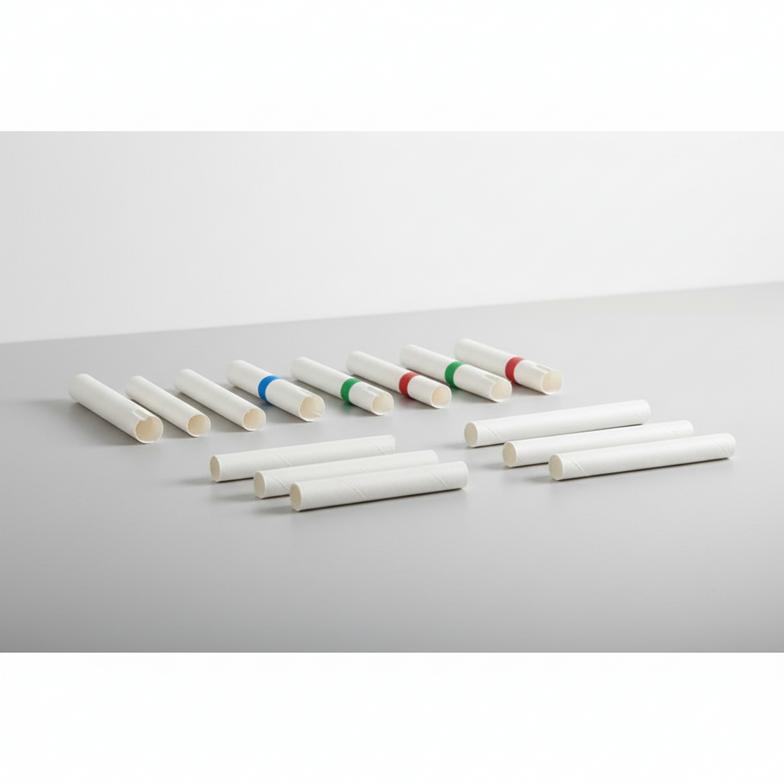
Getting the basics right is just the start. The real challenge isn’t just knowing what you can customize, but truly understanding why each of these specifications is critical. Let’s break down the variables that can make or break your procurement decision and ensure you get a product that is safe, reliable, and perfectly suited to your needs.
Many buyers first ask about printing a logo, but what happens if the beautifully branded mouthpiece doesn’t even fit the device? A dimensional error of just a fraction of a millimeter can render your entire order useless and invalidate test results[1]. From our experience, focusing on cosmetics before confirming function is the single most common and costly mistake we help clients avoid.
The answer lies in prioritizing the non-negotiable specifications first. Critical dimensions like inner diameter (ID), outer diameter (OD), and length are the foundation of a functional mouthpiece. They work together to ensure a perfect, airtight seal with the breath tester’s port, guarantee correct airflow for an accurate sample, and prevent damage to the delicate sensor hardware.
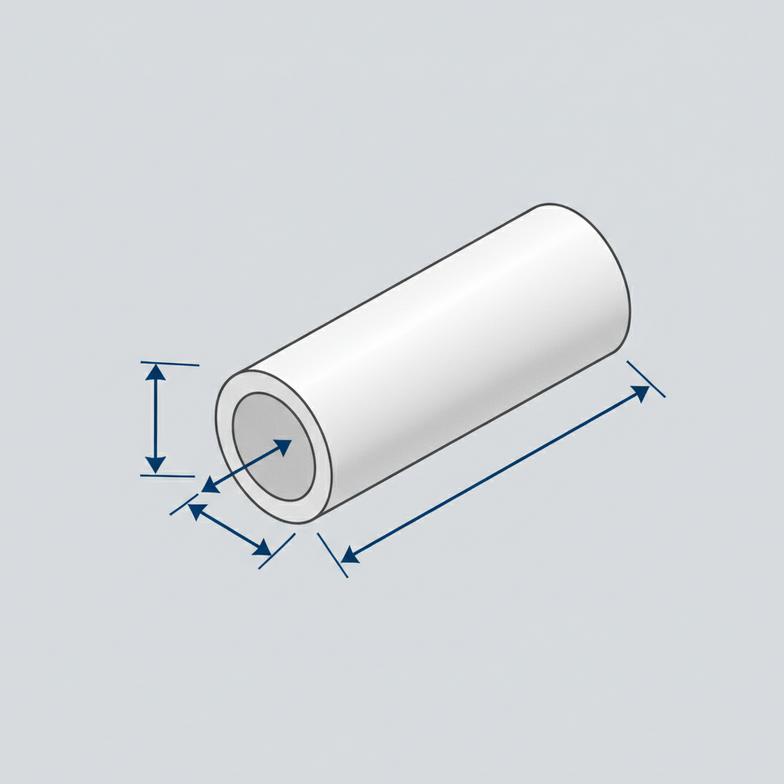
The inner diameter of the mouthpiece is arguably the most critical dimension. It defines the channel through which the subject’s breath travels to the device’s sensor. The device itself is calibrated to expect a certain volume and velocity of air.
Precision is key. A typical tolerance for ID is often within ±0.2mm[4]. We always start a custom project by confirming the exact specifications required by the breath tester manufacturer to ensure this dimension is perfect.
While the ID manages the airflow inside the tube, the outer diameter is responsible for creating a secure, leak-proof seal with the device. The OD must fit snugly into the breathalyzer’s sample port.
The wall thickness of the mouthpiece, determined by the paper weight and number of layers, directly influences the relationship between the ID and OD. A thicker wall provides more rigidity and a more substantial feel, preventing the mouthpiece from flexing or crushing during use.
The length of the mouthpiece affects both hygiene and user experience.
You’ve found a supplier offering an incredibly low price, but can you be sure the paper, glue, and ink are safe for human contact? Using non-compliant materials is a massive liability. It could expose your company and the end-users to health risks, violate regulatory standards, and permanently damage your brand’s reputation. The momentary cost savings are never worth that risk.
Material choices directly determine the safety, compliance, and even the structural integrity of the final product. Insisting on food-grade, certified materials is non-negotiable. As a manufacturer, we believe it’s our duty to provide full transparency, but it’s also the buyer’s responsibility to ask for and verify the supporting documentation.

The paper is the body of the mouthpiece. It must be strong, clean, and safe. The primary choice is between virgin pulp and recycled paper. For hygienic products that come into contact with a person’s mouth, virgin pulp kraft paper is the industry standard.
The most important certification to look for here is FSC (Forest Stewardship Council)[7]. This certification ensures that the paper comes from responsibly managed forests, providing an environmental benefit and a strong talking point for your brand’s sustainability goals.
Beyond certification, the paper’s weight, measured in grams per square meter (GSM), determines its thickness and rigidity. A higher GSM paper results in a stronger, more durable mouthpiece that won’t become flimsy or deform during use. This is a technical detail that your manufacturing partner should discuss with you based on your device’s requirements.
A paper mouthpiece is constructed by winding and bonding multiple layers of paper. The adhesive used in this process is in direct contact with the paper, and by extension, the user. Therefore, it is absolutely essential that the glue is certified food-grade.
Similarly, if you plan to print logos or other markings on the mouthpiece, the ink must also be safe for incidental contact. We typically use soy-based or other food-safe inks to eliminate any potential risk.
When you speak with a potential supplier, don’t just ask if the glue is "safe." Ask specifically for documentation proving its food-grade compliance, such as an MSDS (Material Safety Data Sheet) or a compliance report from a testing body.
A trustworthy supplier will not hesitate to provide proof of their claims. From our experience guiding procurement managers, here is a checklist of documents you should request to verify material safety and compliance:
A reliable partner will have this documentation ready and will welcome the questions. It’s a sign of a professional buyer, and it helps us ensure we are aligned on quality and safety from day one.
You’ve meticulously detailed the specs and are ready to place an order for 100,000 units to secure a volume discount. But what if there was a tiny misunderstanding in the technical drawings, or a variable you hadn’t considered? Committing to a bulk order without ever holding a physical sample in your hand is a high-stakes gamble we never recommend.
Prototyping and sample testing are the final, crucial verification steps in the procurement process. This stage moves the project from theory to reality, allowing you to physically test the custom paper mouthpieces for alcohol breath testers with your specific device. It is your only chance to confirm fit, seal, airflow, and user handling before committing to mass production.
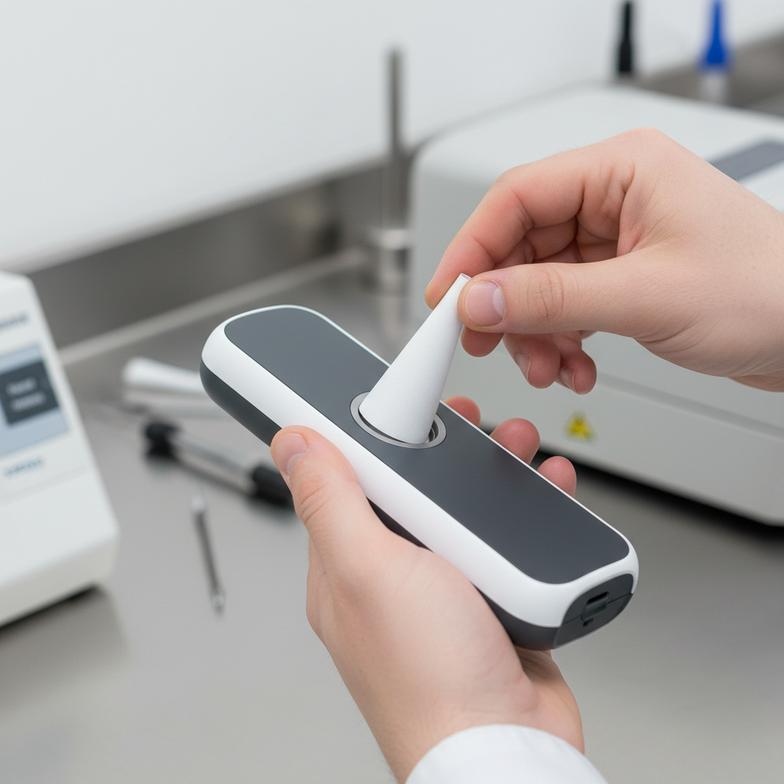
Technical drawings and digital calipers are essential, but nothing replaces the simple act of trying to attach the mouthpiece to the device. When you receive your prototypes, your product team or engineers should perform these checks:
1. Attachment: Does the mouthpiece slide onto the device port smoothly but securely? 2. Security: Once attached, is there any wiggle or play? A loose fit indicates a potential leak. 3. Detachment: Can the mouthpiece be removed with reasonable force? It needs to be easy enough for an operator to swap out quickly between tests.
Test every single sample you receive. Sometimes there are minor variations even in a small batch of prototypes, and this helps you and the manufacturer understand the acceptable production tolerances.
Once you’ve confirmed the physical fit, you need to check the airflow dynamics. Even without a formal calibration lab, you can perform a basic but effective test. Simply attach the mouthpiece and blow through it. You are checking for two things:
If your company has the right equipment, this is the stage to run a full functional test to confirm the device registers the sample correctly without any errors.
The prototyping stage is a conversation. It is your opportunity to provide concrete feedback to the manufacturer. This is far more effective than trying to resolve an issue after receiving 100,000 incorrect parts.
Good feedback sounds like this:
As a solution provider, this iterative process is a core part of our service. We work closely with our clients during this phase to dial in the exact specifications, ensuring the final product that arrives at their warehouse is exactly what they need.
You have perfected the mouthpiece itself—the dimensions are precise, and the materials are certified safe. But how will it be stored, distributed, and delivered to the end-user? Tossing thousands of paper mouthpieces for alcohol breath testers into a bulk bag is cheap, but it’s also unhygienic and looks unprofessional, undermining the credibility and safety of the entire testing procedure.
Packaging is a critical component that impacts hygiene, tamper-evidence, and ease of use. The undisputed industry standard is to have each mouthpiece individually wrapped. This keeps each unit completely sanitary and free from contamination until the moment of use, which is essential in any professional or official setting.
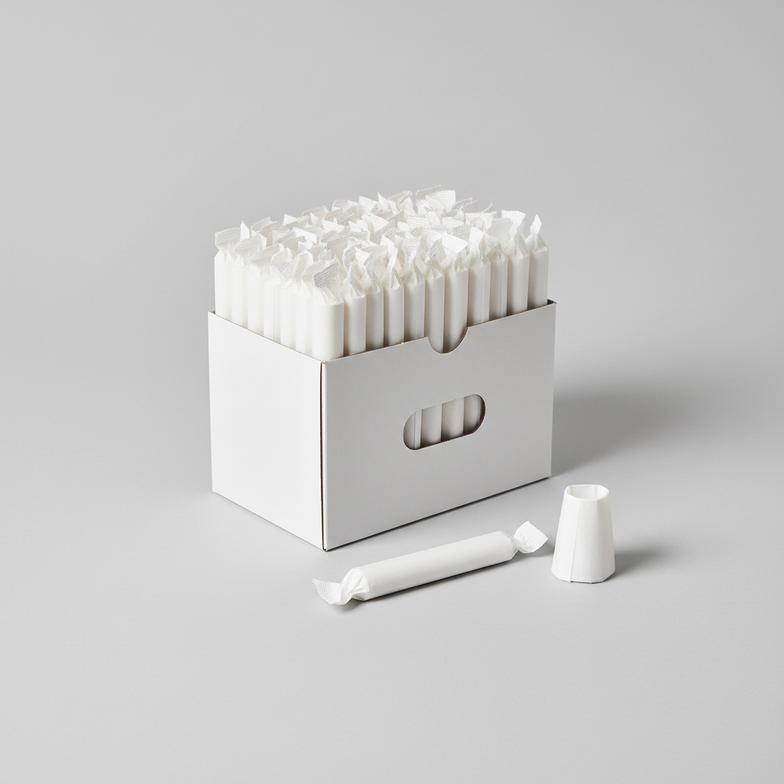
In any context where health and safety are paramount—such as law enforcement, workplace safety programs, or clinical settings—individual wrapping is not just an option; it’s a requirement[9]. It provides assurance to both the operator and the person being tested that the mouthpiece is clean and has not been touched by anyone else.
You typically have two choices for the wrapping material:
Once the mouthpieces are individually wrapped, they need to be packed for shipping and storage. This secondary packaging is an important logistical consideration. You should discuss with your supplier:
Designing the inner box as a "dispenser" with a perforated opening is a popular and practical feature. It allows operators to easily grab one mouthpiece at a time while keeping the rest protected inside the box.
Don’t forget that the packaging itself is valuable real estate for branding and information. The inner dispenser box and the master carton are excellent places to print your company logo, product name, part number, a QR code linking to instructions, and any required compliance markings. The packaging design should be part of the overall product specification, ensuring your brand is professionally represented from the factory to the final user.
Lead time depends on quantity, customization complexity, and the prototyping phase. Generally, after a final sample is approved, mass production can take 3–5 weeks. The initial sampling and feedback process can add 2–4 weeks, so plan accordingly.
Yes. Setting up machinery for a specific custom dimension and material requires a significant amount of work. Because of these setup costs, most manufacturers have an MOQ, often starting in the tens of thousands of units, to make the production run economically viable.
Potentially, yes. A capable manufacturing partner can produce a mouthpiece to almost any cylindrical specification. The process always starts with the buyer providing either a technical drawing, precise measurements, or a physical sample of the target breathalyzer device so we can engineer a perfect fit.
Absolutely not. Paper mouthpieces are designed for single use only.[10] This is critical for ensuring hygiene, preventing cross-contamination between individuals, and guaranteeing the integrity of every test. Reusing a mouthpiece is unsanitary and invalidates the test result.
Successfully customizing paper mouthpieces for alcohol breath testers goes far beyond simply adding a logo. It’s a detailed process of risk management where every decision—from the inner diameter to the type of glue used—has consequences. By shifting your focus from cosmetics to critical function, you transform the procurement process from a gamble into a strategic investment. The key takeaways are to prioritize precise dimensions, demand certified-safe materials, insist on a thorough prototyping and testing phase, and consider packaging as an integral part of the product. When you follow this structured approach, you ensure that you receive a product that is not only cost-effective but also safe, reliable, and perfectly suited to its critical purpose.
Whether you are looking to source high-quality finished mouthpieces or explore setting up your own production, our team has the real-world factory experience to guide you. Contact us today to discuss your specifications and let us help you get the right product, the first time.