
Starting a sustainable products business is exciting, but let’s be honest, that first big inventory order can be nerve-wracking. You’re worried about tying up your limited capital in the wrong products. With paper straws for distributors, the fear of getting stuck with slow-moving stock or being hit by unexpected shipping costs that crush your margins is very real. The key is to shift your focus from just the per-straw price to a smarter, more holistic strategy covering your SKUs, packing, and reordering.
For new distributors, the path to profitability involves starting with a minimal set of 2-3 high-turnover SKUs, meticulously optimizing carton packing to maximize shipping container space, and using a simple, data-driven rule for reordering. This approach protects your initial capital, lowers your total landed cost[1] per straw, and builds a foundation for scalable growth.

That might sound simple, but the devil is in the details. Getting these three pillars right is what separates the distributors who struggle from the ones who succeed and scale quickly. So, let’s break down exactly how you can implement this strategy for your own business.
When you’re just starting, it feels natural to want to offer every possible size, color, and type of paper straw. You think, “If I have everything, I can sell to everyone!” But from our experience helping new partners, this is one of the quickest ways to run into cash flow problems. It often leads to a warehouse full of products that don’t move, tying up money you desperately need to restock your actual bestsellers. The smarter approach is to apply the 80/20 rule[2] right from your very first order.
Start by focusing on the 2-3 “greatest common denominator” SKUs that will satisfy roughly 80% of your initial target market, which for most distributors are local cafes, restaurants, and bars. This typically means standard sizes like 6x197mm and 8x197mm in the most popular, neutral colors: white and kraft.
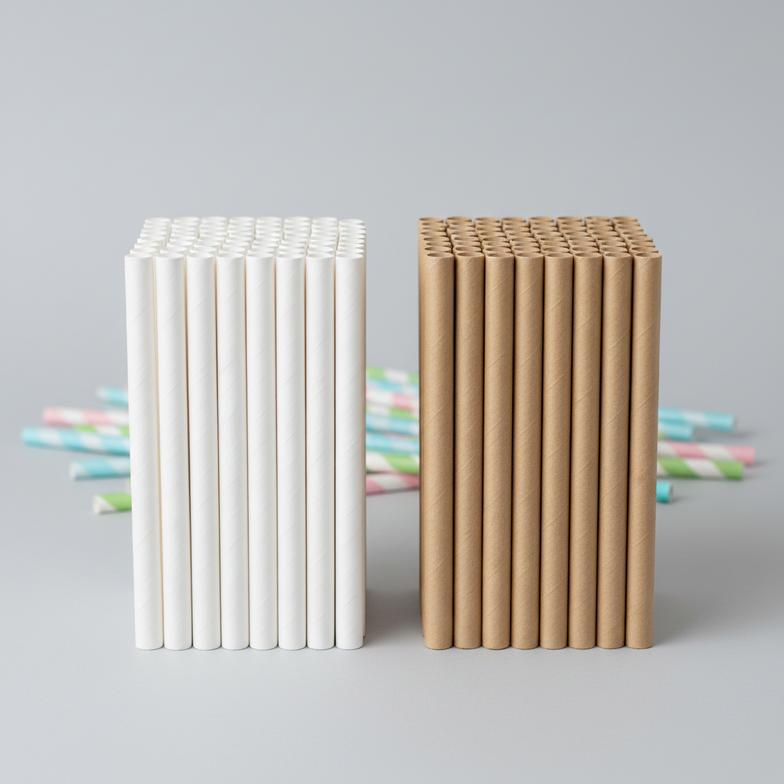
The core idea here is capital efficiency[3]. Every dollar you spend on a case of niche, slow-moving pink cocktail straws is a dollar you can’t use to buy more of the standard white straws that are flying off the shelves. Think of it like a new grocery store: you’d make sure you’re fully stocked with milk, bread, and eggs before you even think about ordering 20 varieties of imported olives. The staples pay the bills and build your customer base.
A common question we get from new distributors is, “But what if a customer asks for a size I don’t have?” In the beginning, that’s okay. It’s better to be able to say, “We don’t stock that yet, but we have these popular options,” than to have to say, “Sorry, we’re completely out of stock of everything.”
Your “Greatest Common Denominator” Starter Pack
To make it concrete, here is the starter set we recommend to over 90% of our new distributor partners. It’s the foundation for a strong initial market entry.
| SKU Description | Diameter | Length | Primary Use Case | Why It’s a Core SKU |
|---|---|---|---|---|
| Standard Drink Straw | 6mm | 197mm | Soft drinks, juices, iced coffee, water | This is the workhorse of the industry. It’s the most common size used in cafes, fast-food restaurants, and for general beverage service. It’s a non-negotiable SKU. |
| Smoothie/Thick Drink Straw | 8mm | 197mm | Milkshakes, smoothies, frappes | This SKU captures the growing market for thicker, blended beverages[4]. It’s the perfect complement to the standard straw and immediately expands your addressable market. |
| Color/Material Choice | White or Kraft | N/A | General purpose | These neutral colors fit any restaurant’s or cafe’s branding. They are consistently the highest-volume sellers, making them the safest and most effective choice for initial inventory. |
Once you have a few months of sales data, you’ll know exactly what to add next. If you get ten requests for boba-sized straws (12mm), that’s your signal. Let the market pull new products from you instead of you pushing them onto the market. We once helped a partner avoid a costly mistake this way. They were convinced they needed a full range of colors for their launch. We guided them to start with just white and kraft. Two months later, their sales data showed that 95% of their reorders were for white straws. They were thrilled they hadn’t sunk capital into colors that would have just collected dust.
You’ve done the hard work of negotiating a great per-straw price with a supplier. You feel great about your cost of goods. But then the final invoice for shipping and customs arrives, and suddenly your total cost per straw is 30-40% higher than you expected[5], wrecking your profit margin. What happened? More often than not, the culprit is something most new distributors overlook: inefficient carton packing.
The real cost of paper straws for distributors isn’t the factory price; it’s the final landed cost. Since international shipping is priced by volume (Cubic Meters, or CBM)[6], optimizing your carton dimensions to perfectly fit into a 20ft or 40ft shipping container is one of the most powerful levers you have for reducing costs.

Your landed cost is the true measure of your cost of goods. The basic formula is: > Landed Cost per Unit = (Total Product Cost + Total Shipping Cost + Customs/Duties) / Total Number of Units
The shipping cost is the biggest variable and the easiest place to lose money. Think of a shipping container as a big, expensive box. Your goal is to fill every square inch of it. Any empty space is volume you paid to ship but didn’t use.
Here’s a real-world example. A standard 20ft container has about 28 CBM of usable space[7].
Let’s see how that impacts your bottom line.
| Scenario | Cartons per 20ft Container | Wasted Space | Assumed Shipping Cost | Effective Cost per Carton |
|---|---|---|---|---|
| Inefficient Packing | ~250 Cartons | ~5 CBM (18%) | $3,000 | $12.00 |
| Optimized Packing | ~290 Cartons | ~1 CBM (3%) | $3,000 | $10.34 |
In this simple example, just by optimizing the box, you save $1.66 on shipping for every single carton. That savings goes directly to your profit margin. This is why, as a manufacturer with our own factory, we don’t just think about making straws; we obsess over logistics. Our standard carton sizes have been refined over thousands of shipments to maximize space. It’s a detail that might seem small, but it saves our partners real money on every order.
This same logic applies to your inner packaging. A common mistake we see is the desire for custom-branded dispenser boxes right away. While branding is important long-term, the high Minimum Order Quantities (MOQs) for custom printing (often 10,000+ boxes)[8] can be a massive drain on your starting capital. It’s far smarter to begin with generic kraft boxes or simple paper wrapping to get your business off the ground. Prove the concept, get the cash flowing, and then invest in custom packaging from a position of strength.
Congratulations, your first batch of paper straws is selling well! But with that success comes a new source of anxiety: inventory management. If you reorder too soon, you lock up cash in the warehouse. If you reorder too late, you face a stockout, lose potential sales, and risk damaging your reputation with customers who depend on you. This stressful guesswork can be replaced with a simple, data-informed rule.
Instead of reordering based on a “gut feeling,” use a simple “4-week rule” as your reorder trigger. When your on-hand inventory for a core SKU drops to a quantity that is equal to your last four weeks of sales, it is time to contact your supplier and place a new order.
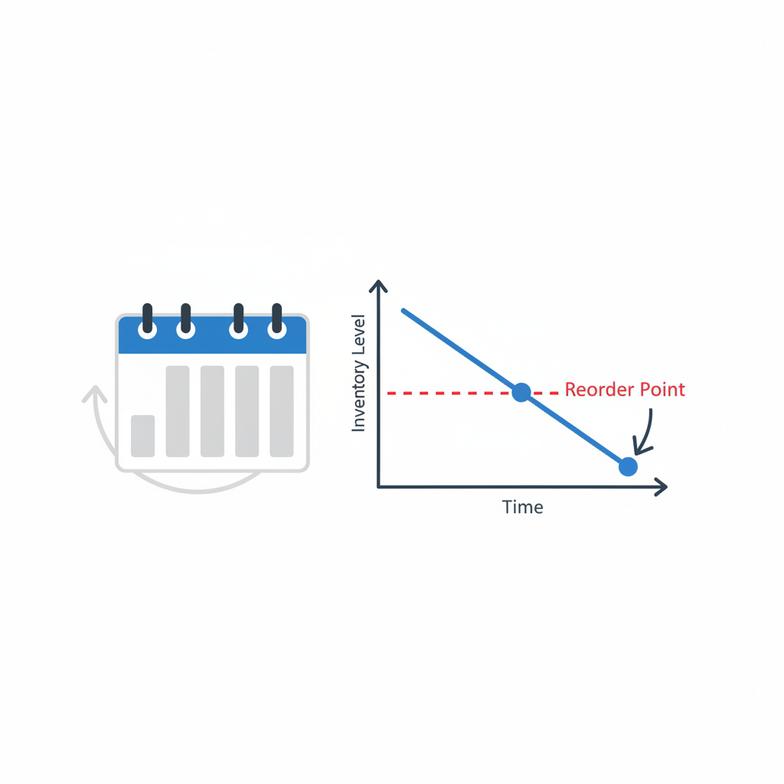
Why does this work? It’s all about accounting for lead time and creating a safety buffer. Your total lead time is the full duration from when you send the purchase order to when the goods are on your warehouse shelves. This includes:
Your total lead time can easily be 7-10 weeks. If you wait until you’re “running low,” it’s already too late.
The “4-week rule” gives you a safety stock[9] to cover you during this long lead time and protect against unexpected delays or a sudden spike in sales.
Let’s walk through it: 1. Track Your Sales: For your first two months, track your sales per week for each SKU. Let’s say you’re selling an average of 20 cartons of 6mm white straws per week. 2. Calculate Your Safety Stock: Your 4-week safety stock is 4 weeks 20 cartons/week = 80 cartons. 3. Find Your Reorder Point: Assume your total lead time is 9 weeks. The inventory you need to cover that lead time is 9 weeks 20 cartons/week = 180 cartons. 4. Set the Trigger: Your reorder point[10] is (Lead Time Stock) + (Safety Stock) = 180 + 80 = 260 cartons.
The moment your inventory for that SKU hits 260 cartons, you place your next order.
For your very first reorder, you can keep it even simpler: when your stock level hits the amount you sold in your entire first month, place the reorder. This gets you into a predictable rhythm. This system prevents stockouts, helps you avoid paying for expensive emergency air freight, and allows you to plan your cash flow much more effectively. It also makes you a better partner for your supplier, as they can anticipate your needs.
This rule isn’t set in stone, of course. Is a major holiday season approaching? Maybe increase your safety stock to 6 weeks. Did you just land a huge restaurant chain as a client? You’ll need to adjust your “average weekly sales” figure upward. The goal is to start with a simple, effective rule and let it evolve as your business grows more sophisticated.
The 80/20 rule is your best friend here. We strongly recommend starting with just the two most common sizes: 6x197mm for standard beverages like sodas and iced coffee, and 8x197mm for thicker drinks like smoothies and milkshakes. For colors, white and natural kraft are the most versatile and highest-volume sellers.
This can vary greatly, but your single biggest expense will be your first inventory order. A smart approach is to focus on your 2-3 core SKUs and order enough to fill either part of a shared container (LCL shipping) or a full 20ft container (FCL). This initial investment can range from a few thousand to over $15,000, depending on volume.
Our advice is almost always to wait. Custom printing requires high Minimum Order Quantities (MOQs) that can tie up a significant portion of your starting capital in packaging alone. It’s much more efficient to use generic or manufacturer-provided packaging to test the market and establish sales first. Reinvest in branding once you have positive cash flow.
For your final profit margin, carton size and packing efficiency are often more critical than a slight difference in the per-straw price. A cheaply priced straw that is packed inefficiently can lead to surprisingly high landed costs due to wasted shipping volume. Always discuss carton dimensions with your supplier to ensure they are optimized for container shipping.
Building a successful business with paper straws for distributors is less about having the widest variety and more about operational excellence. By focusing your capital on a few high-turnover SKUs, you ensure your money is always working for you. By obsessing over carton dimensions and container packing, you protect your profit margins from the biggest variable cost: shipping. And by implementing a simple reorder rule, you create a predictable, stress-free system for inventory management. This disciplined approach is the surest way to build a resilient and profitable distribution business from the ground up.
At PaperStrawTech, we’ve guided countless partners through these early decisions. If you’re ready to build a sustainable distribution business on a strong foundation, reach out to our team. We can help you plan your first order and ensure your supply chain is built for success from day one.