Are you trying to expand your compostable foodservice packaging lineup but find yourself hesitating when it comes to paper straws? You’re not alone. The market is full of horror stories about soggy straws[1], unhappy customers, and unreliable suppliers, making the decision feel like a major risk. The solution isn’t to avoid paper straws, but to adopt a strategic framework for evaluating how they can successfully complement your product range.
For a professional buyer, paper straws fit into a compostable foodservice packaging range not as a generic commodity, but as a carefully selected component matched to specific operational needs. The key is to shift focus from the simple "compostable" label to critical performance attributes like durability, food-contact safety, and supply chain reliability.

Now, understanding that paper straws have a place is just the first step. The real question is how to make the right choice for your business and your customers. Let’s move beyond generic advice and build a practical decision-making process based on what we’ve learned from helping hundreds of foodservice buyers.
As a buyer, you’re constantly looking for the "best" products, but with paper straws, that term can feel frustratingly vague. You hear conflicting advice from every direction, and it’s easy to get stuck in analysis paralysis. The key is to realize that the "best" straw is the one that’s best for your specific context.
The right fit for your compostable foodservice packaging program is defined by your unique application. It depends entirely on the beverage being served, the minimum time the straw must last, and the overall experience you want to provide your customers.

From our experience helping distributors and cafes build their sustainable offerings, we’ve found that the most successful programs start with a clear list of requirements, not a catalog of products. Instead of asking "What straws do you have?", they ask "Which of your straws meets these specific performance criteria?".
The single most important factor is the beverage itself. A straw that works perfectly for iced tea will fail miserably in a thick, frozen milkshake. Before you even look at a supplier’s catalog, document the drinks you need to support.
How long does your customer actually need the straw to last? This is a core business question. A straw for a quick-service restaurant where drinks are consumed in 20 minutes has different requirements than one for a sit-down cafe where a customer might nurse an iced coffee for over an hour.
We recommend aiming for a performance standard that exceeds your average customer’s use time by a significant margin. Based on feedback from our clients, a straw that remains firm and functional for at least 3 hours[3] in a cold beverage is the benchmark for a premium customer experience. This buffer zone accounts for slower drinkers and protects your brand from the dreaded "soggy straw" complaint.
Finally, think about how the straws will be used by your staff and stored in your facility.
Here is a simple framework for matching straw specifications to beverage types:
| Beverage Type | Recommended Diameter | Recommended Wall Thickness | Key Considerations |
|---|---|---|---|
| Iced Coffee, Tea, Soda | 6mm | 3-ply | Standard durability, long immersion time |
| Smoothies, Milkshakes | 8mm – 10mm | 4-ply | High rigidity, wide opening for viscosity |
| Bubble Tea (Boba) | 12mm | 4-ply | Extra-wide for pearls, strong enough to pierce film |
| Cocktails | 6mm (often shorter) | 3-ply | Aesthetics, mouthfeel, resistance to alcohol |
You’ve done the work to source certified compostable foodservice packaging, but your inbox is filling up with complaints about straws turning to mush. This is a common and damaging scenario. The eco-friendly label means nothing if the product fails at its primary function, creating a negative experience that reflects poorly on your entire brand[4].
"Sog-proof" performance is the most critical factor because it directly impacts customer satisfaction and brand trust. A flimsy straw that collapses mid-sip is an immediate point of failure. This one bad touchpoint can overshadow all your other efforts to provide excellent service and quality products.

In the world of compostable foodservice packaging, functionality is king. A compostable cup that leaks or a paper straw that disintegrates doesn’t just annoy a customer; it tells them that your commitment to sustainability comes at the cost of quality. This is a dangerous message for any brand.
The cost of a failed straw isn’t just the price of the straw itself. It’s a cascade of negative business impacts:
The difference between a premium, 3-hour straw and one that fails in 15 minutes comes down to manufacturing expertise and material quality. It’s not magic; it’s engineering.
1. Paper Quality & Weight (GSM): The foundation is the paper itself. High-quality kraft paper with a higher grams per square meter (GSM)[6] provides better inherent water resistance and structural integrity. We insist on using FSC-certified paper[7], which ensures responsible sourcing and provides a strong base for a durable straw. 2. Food-Grade Adhesive: This is perhaps the most crucial and overlooked component[8]. The glue holds the paper layers together and seals them against liquid penetration. An inferior adhesive will dissolve quickly, causing the straw to unravel. A high-quality, food-safe glue is essential for both durability and consumer safety. 3. Construction & Winding Tension: How the paper is wound into a tube matters. Tightly and evenly wound layers create a dense, less permeable structure. Most cheap straws are made with 2 or 3 thin layers. Our standard for durable straws is a minimum of 3-ply construction, often moving to 4-ply for wider diameters and maximum rigidity.
Don’t just take a supplier’s word for it. When you receive samples, conduct a simple, real-world test. 1. Place a straw in a glass of cold water (or, even better, carbonated soda). 2. Set a timer. Check it at 30 minutes, 1 hour, 2 hours, and 3 hours. 3. At each interval, assess its condition. Is it still rigid? Does it bend or collapse when you try to stir? Can you still drink through it easily? A quality straw will remain firm and functional for several hours, proving it can stand up to real-world use.
You’ve found a potential supplier with a tempting price point, but a nagging voice in your head is questioning their reliability. Can they handle your volume? Is their quality consistent batch to batch? Choosing the wrong supplier can lead to stockouts, quality control nightmares, and a damaged reputation.
Vetting a supplier for your compostable foodservice packaging needs means looking beyond the price tag. You must evaluate their manufacturing capability, their control over raw materials, their quality assurance (QA) systems, and their ability to provide the necessary compliance documentation. This is about building a low-risk partnership, not just making a one-time purchase.

A common mistake we see buyers make is treating all suppliers as equal. The reality is that the market is filled with everyone from experienced manufacturers to simple trading companies with no control over production. Your job as a professional buyer is to tell the difference.
This is the number one question you should ask: "Do you manufacture the straws yourself, or are you a trading company?" A trading company can be a viable option for some products, but for an engineered item like a durable paper straw, partnering directly with a manufacturer offers significant advantages[9]:
At RainbowBear, for example, we evolved from a trading company to a full-fledged manufacturer with our own factory because we knew that was the only way to guarantee the quality and consistency our clients demanded.
A straw is only as good as the paper and glue used to make it. A reliable supplier should be able to provide full transparency into their raw materials. Ask for:
A supplier who hesitates or cannot produce this documentation is a major red flag.
During your vetting process, pay close attention to how the supplier communicates.
While most paper straws are made from biodegradable paper, their compostability can vary. True compostability depends on the materials (paper, glue, ink) breaking down within a specific timeframe under industrial composting conditions[11]. Always ask your supplier for certifications or data to support their compostability claims and understand if they meet industrial or home composting standards.
"Food-grade" refers to the material itself being suitable for contact with food (e.g., the paper). "Food-safe" refers to the finished product being safe for consumption, which includes the food-grade paper plus the food-safe inks and glues used in production. As a buyer, you need to ensure the entire, final product is certified food-safe.
Go beyond just soaking it in water. Perform a "use test" by drinking a beverage, preferably one that is acidic or carbonated, for at least an hour. Also, try a "bite test" (does it shred easily?) and a "bend test" (does it feel flimsy or rigid?). A good sample should withstand all of these without significant degradation.
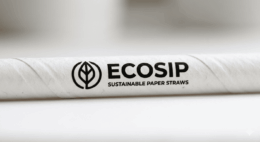
Absolutely. A good manufacturing partner should offer customization as a core service. This includes printing your logo on the wrapper, the straw itself, or creating custom colors to match your brand identity. This transforms a disposable item into a valuable marketing asset for your compostable foodservice packaging line.
Integrating paper straws into your compostable foodservice packaging portfolio is a strategic move that requires more than just picking the cheapest option. Success hinges on a three-part framework: first, defining your specific use-case based on beverage type and customer experience goals. Second, prioritizing functional performance—especially sog-resistance—over a simple eco-label. And third, rigorously vetting your suppliers to ensure they are true manufacturing partners, not just traders. By shifting your focus from "if" paper straws fit to "how" they can best serve your needs, you can build a reliable, high-quality, and profitable program that enhances your brand and delights your customers.
If you’re ready to build a paper straw program based on real-world manufacturing expertise and a commitment to quality, contact our team at RainbowBear. We help buyers navigate these challenges every day, providing both high-quality finished straws and the a-to-z solutions for those looking to build their own production.