When choosing between recyclable and compostable paper straws, the first question buyers often ask is "What’s the difference?" They both sound like good, sustainable options. But from a supplier’s perspective, there is a more important question: "Which claim can you actually prove to your customers in your specific market?"
Choosing based on the label alone can lead to problems. You might pay a premium for a "compostable" feature that is irrelevant where your products are sold, or make a "recyclable" claim that is technically true but practically misleading. The decision isn’t just about the material; it’s about business risk and the proof you need to back up your choice.
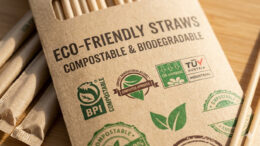
The main difference for a B2B buyer is not just the material, but the verification required. A "compostable" claim depends on specific certifications (like BPI or TÜV) that must match your sales market’s regulations and waste infrastructure. A "recyclable" claim refers to the paper material, but its practical acceptance at recycling centers is often limited by food contamination.
These are practical sourcing principles, not a substitute for legal advice. We recommend confirming all marketing claims, labeling, and compliance requirements with your own teams based on your specific sales market.
Many buyers treat these two terms as interchangeable "eco-friendly" labels. In reality, they represent two very different levels of verification and risk for your business.
A "compostable" claim is a specific, technical standard. It means the entire product-paper, glues, and inks-has been tested and proven to break down into soil under specific conditions within a set timeframe. This claim is verifiable through third-party certification.
A "recyclable" claim refers to the material’s potential. It means the paper fiber itself can be reprocessed. However, this claim doesn’t account for the practical realities of waste management, where used, food-soiled straws are often rejected.
The mistake is thinking this is a simple material choice. The better way to think about it is as a choice between a verifiable, certified product and a product with a claim that is difficult to deliver in practice.
A "compostable" claim is only as strong as the certificate that backs it. Simply accepting a supplier’s word is a risk. Here is how to verify the claim yourself.
When a supplier says their straw is compostable, ask for a copy of the third-party certificate. Do not accept a simple "letter of compliance" from the factory. A valid certificate from a recognized body is the only real proof.
Here’s what to check on the document:
1. Certifying Body: Is it the right one for your market? For example, key certifying bodies include the Biodegradable Products Institute (BPI) for North America and TÜV Austria for the European Union, which offers marks like "OK compost INDUSTRIAL" and "OK compost HOME". A certificate from a lab that isn’t recognized in your sales region may not be accepted by regulators or major customers. 2. Validity Date: Is the certificate current? Certifications have expiry dates. An expired certificate is not valid proof of compliance. 3. Product Scope: Does the certificate cover the exact product you are buying? The document should list the manufacturer and the specific product models, materials, or sizes covered. A certificate for a different straw is irrelevant to your order.

If a supplier is hesitant to provide the full certificate for review before you place an order, consider it a major red flag. This simple check is your primary defense against paying for a claim that isn’t real.
Use this table to compare the claims and understand what you need to verify before making a purchase decision.
| Claim Type | What it Practically Means | Key Document to Request | What to Check on the Document | Key Question for Your Business |
|---|---|---|---|---|
| Industrially Compostable | Breaks down in a commercial facility. | Valid BPI or TÜV INDUSTRIAL certificate. | Expiry date, product model matches your order, correct certifying body for your region. | "Are industrial composting facilities common where my customers are?" |
| Home Compostable | Breaks down in a backyard compost bin. | Valid TÜV HOME certificate or equivalent. | Expiry date, product model matches your order. | "Is home composting a significant practice among my target audience?" |
| Recyclable | The paper fiber can be reprocessed if clean. | FSC certificate (for paper source only, not recyclability). | Paper source is from a managed forest. | "Do recycling programs in my key sales areas actually accept food-soiled paper straws?" |
| Biodegradable | Vague claim; breaks down over an undefined time. | Avoid. Ask for a specific "compostable" certificate instead. | N/A. This vague claim can be problematic, as some jurisdictions have rules against unsubstantiated environmental claims. | "Does my target market have laws restricting vague ‘biodegradable’ claims?" |
Many buyers assume that if a product is made of paper, it will be recycled. For used paper straws, this is rarely the case, and making this claim can be a marketing liability.
There are two main reasons for this:
1. Food Contamination: Once a straw is used with a drink, it becomes contaminated with sugars, liquids, and food residue. Many paper recycling facilities are designed to process clean paper and cardboard. Contaminated items risk ruining an entire batch of recycled material, so they are sorted out and sent to a landfill. 2. Size and Shape: Modern recycling facilities use automated sorting systems. Small, lightweight items like straws can fall through the sorting screens and are treated as contamination, even if they are clean.
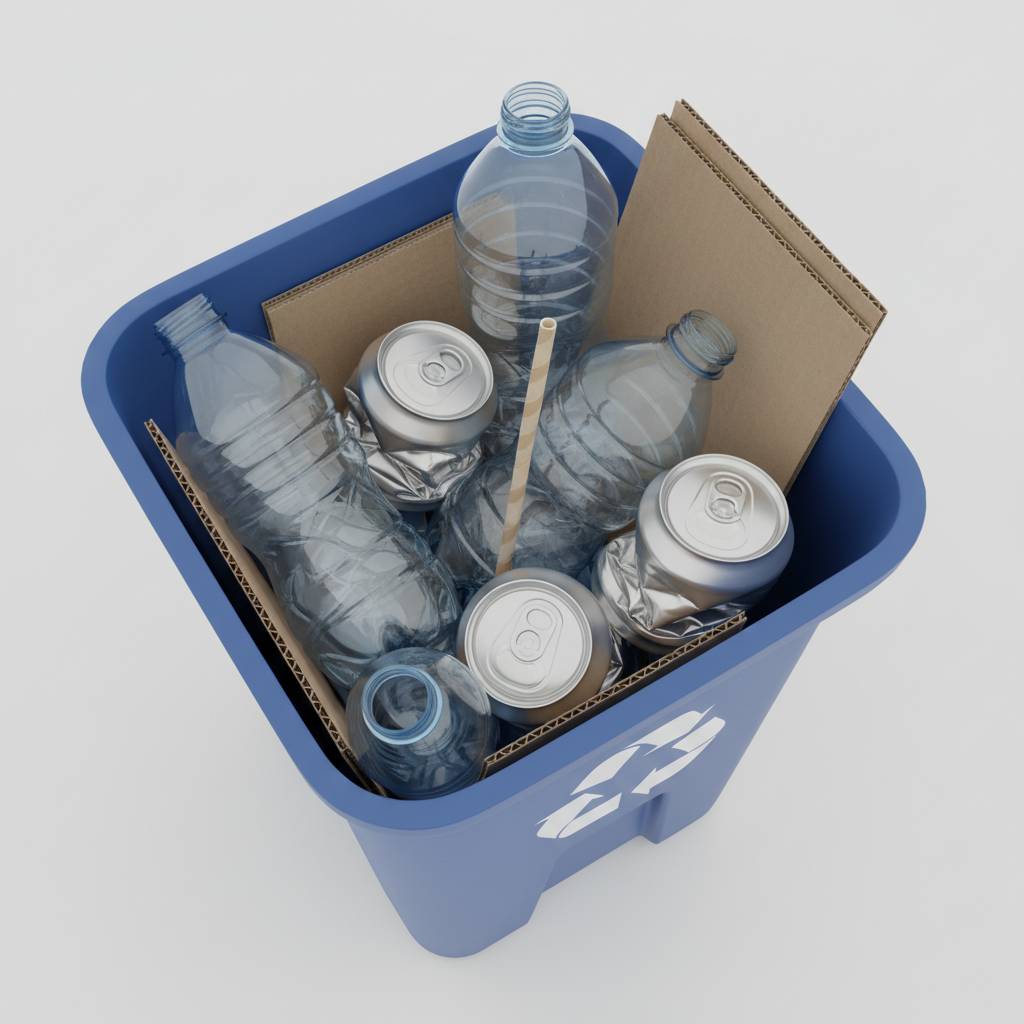
Because of these practical issues, marketing a used paper straw as "recyclable" can be seen as misleading. The more productive path is focusing on the "compostable" claim, as long as you do the verification work to make it legitimate for your business.
To get a useful and relevant quote for paper straws, a good supplier will need more than just a size and quantity. Preparing two key pieces of information beforehand will save time and help you source a product that is not just functional, but compliant.
Before you contact a supplier, be ready to provide:
1. Your Target Market(s): Which countries or regions will you be selling these straws in? (e.g., USA, Canada, UK, Germany). This is a key detail, as it helps determine which certification (BPI, TÜV, etc.) is needed. 2. Your Claim Strategy: What specific environmental claim do you intend to make to your customers? Are you aiming for "industrially compostable" to align with commercial food waste programs, or another claim?
Sending this information with your inquiry allows us to recommend a product and provide documentation that matches your business needs. It moves the conversation from a simple price question to finding the right, compliant solution for your market.