For foodservice businesses affected by a plastic straw ban, the first instinct is often to find a paper straw of the same size for the lowest price. This seems like a logical, straightforward replacement. But this common first step is where the most expensive mistakes are made, often leading to a pallet of unusable straws and a wave of customer complaints.
Unlike plastic, which is a uniform material, paper straw performance varies dramatically. A straw that works perfectly for iced tea might turn into a soggy, unusable mess in a milkshake in under ten minutes. The decision isn’t about replacing one product with another; it’s about integrating a new product line that matches your specific menu and customer expectations.
Successfully switching from plastic to paper straws depends on matching the straw’s specification to each drink type, testing samples in actual beverages, and evaluating the total landed cost. Key decision factors include the straw’s material construction (paper layers and grade), its performance in your specific drinks (like iced coffee or smoothies), and the supplier’s carton data, which affects your final shipping cost.
This article breaks down the practical steps to get this transition right, helping you avoid common pitfalls and select straws that work for your business, your budget, and your customers.
The biggest mistake is treating a paper straw like a commodity and focusing only on matching the old plastic straw’s size and getting the lowest unit price.
This approach fails because it ignores the fundamental difference between the materials. Plastic is durable and forgiving. Paper is not. Its performance is determined by variables that aren’t visible in a product photo or a price list: the number of paper layers (ply), the quality of the paper, and the adhesive used to bond it.
Choosing a cheap, low-spec paper straw for a demanding application like a thick smoothie or an acidic juice creates a high risk of a poor customer experience. You save a fraction of a cent per straw but risk negative online reviews, wasted drinks, and losing a customer’s trust-costs that are far higher than the initial savings.
The most reliable method is a "menu-first" approach. Instead of looking for one straw to do everything, you map specific straw specifications to your drink categories. This helps you serve every drink with a straw that offers good flow and durability.
Here are some common starting points:

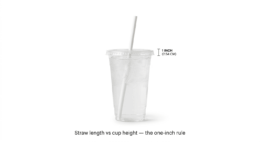
The length should be chosen based on your cup height and lid style. A straw should extend comfortably above the lid but not be so long that it’s unstable. A good supplier will ask about your menu and cups before recommending a size.
Approving a sample based on how it looks and feels when dry can be a costly mistake. A straw’s true performance is only revealed in liquid. Before committing to a bulk order, perform a simple "soaking test."
1. Get the Right Samples: Ask potential suppliers for samples of the specific constructions they recommend for your different drink types (e.g., a 3-ply for soda, a 4-ply for smoothies). 2. Choose Your Toughest Drinks: Don’t test in water. Use your most challenging beverages-a high-acid fruit juice, a thick and cold milkshake, or an iced coffee. 3. Wait and Watch: Place the straws in the drinks and leave them for at least 30-60 minutes, mimicking a customer’s average drinking time. 4. Evaluate Performance: After the wait, check the straw.
A straw that passes this real-world test is far more likely to succeed with your customers than one that simply looked good in the box.
Many buyers compare two suppliers based only on the price per 1,000 straws. This overlooks a massive hidden cost: shipping volume. The total cost to get the straws to your warehouse (the landed cost) is what truly matters.
Inefficient packaging-like packing straws loosely in oversized cartons-can dramatically increase the total cubic meters (CBM) of your shipment. Since ocean and truck freight is billed by volume, a 10% lower unit price can be completely erased by a 30% higher shipping cost.
The following table shows how to move beyond surface-level assumptions to make a more sound procurement decision.
| Common Buyer Mistake | Why It’s Risky | Practical Supplier-Side Check |
|---|---|---|
| Choosing one size for all drinks | Straws are too narrow for thick drinks, causing customer frustration. | Map each menu category (soda, smoothie, boba) to a suitable straw diameter and length. |
| Comparing only the unit price | A low unit price can hide inefficient packing, leading to higher shipping costs (CBM) and a higher total landed cost. | Request the carton dimensions, pieces per carton, and gross weight to calculate and compare the landed cost per 1,000 straws. |
| Approving a dry sample only | A straw that feels sturdy when dry can become soggy in minutes in an acidic or high-ice beverage. | Test samples in your most challenging drinks (e.g., juice, iced coffee) for a realistic time period (e.g., 30-60 minutes). |
| Assuming "standard" is good enough | Vague specifications can result in a 2-ply straw when a more durable 3-ply or 4-ply straw is needed for your application. | Confirm the number of paper layers and whether it’s wrapped or unwrapped before comparing quotes. |
A good supplier should be able to provide full carton data (dimensions, pieces per carton, gross weight, and total CBM) with their quotation. If a supplier cannot provide this, it’s a red flag that you may face unexpected shipping costs.
To get a useful quote that you can easily compare, providing a few key details upfront will save you time and prevent misunderstandings. A good supplier will likely ask for this information anyway, and having it ready helps them give you a faster, more accurate response.
Before you request a quotation, prepare this information:
1. Your Drink Menu: A list of your main drink categories (e.g., sodas, iced coffee, smoothies, boba tea). 2. Your Cups & Lids: The typical heights of your cups and the type of lids you use (flat, dome, etc.). 3. Your Requirements: Note any needs like individual wrapping (paper or plastic), custom logo printing, or special tips for piercing film. 4. Estimated Quantity: Your expected order volume for each straw type you need.
Having this ready makes it easier for a supplier to act as a consultant, recommend the right products, and provide a comprehensive quotation that helps you make the best decision for your business.