I’ve seen many buyers treat sourcing PFAS-free paper straws like a simple compliance checkbox. They find a supplier with a "PFAS-free" claim and think the job is done. From our side, we see this as the starting line, not the finish. The real work is ensuring that compliant straw doesn’t get soggy in an iced coffee after ten minutes, clog with a boba pearl, or secretly double your shipping costs because of inefficient packing.
To successfully source PFAS-free paper straws, buyers must look beyond the compliance label and focus on matching specifications to the drink, verifying performance through real-world testing, and analyzing total landed cost—not just unit price. This guide will walk you through the key checks we use to help our clients avoid common pitfalls and get a product that works for their business, their customers, and their budget.
When a buyer asks for "PFAS-free straws," they’re often looking for a simple yes or no. The reality is more detailed. The "PFAS-free" status can apply to the paper, the glues used for bonding, and any inks used for printing. A responsible supplier should be able to clarify what their claim covers.
A common mistake is assuming the term "PFAS-free" is a universal standard with a single certificate that works everywhere. Buyers should confirm the specific documentation needed for their market, as requirements can differ. Simply seeing "PFAS-free" on a website isn’t enough for a serious B2B procurement. Before we confirm an order, we need to know what documentation you, the buyer, need to satisfy your internal quality standards or your market’s requirements.
My judgment is that a supplier’s claim is only the beginning of the conversation. You can’t build a reliable supply chain on a marketing banner. The real test is whether the supplier can provide clear documentation and consistent materials order after order. We refuse to move forward on a simple "yes" to a compliance question without understanding what proof the buyer needs to see.
How to Check: Don’t just ask, "Are your straws PFAS-free?" Instead, ask, "What testing reports or material documentation can you provide to support your PFAS-free claim?" Prepare these documents and review them against your own company’s requirements or the specific regulations of your sales channel. If this documentation is critical for you, confirm it before you approve samples or place a bulk order. In our experience, this avoids potential issues like import delays or problems meeting local market requirements.
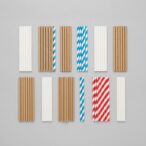
One of the most frequent errors we see is a buyer trying to use a single straw size for their entire drink menu. It seems efficient, but it leads to a poor customer experience. A 6mm diameter straw that’s perfect for water or juice will clog instantly with a smoothie or boba tea.
When a buyer sends an inquiry for "paper straws," our first response isn’t to send a price list. It’s to ask questions: What kinds of drinks will you be serving? What are your cup heights and lid styles?
The length is just as important. A 197mm straw might be fine for a short glass, but it will get lost in a tall 20-ounce takeaway cup, for which you’d want something closer to 230mm.
How to Check: Get samples in a few different sizes. Don’t just look at them—test them with your actual cups and lids. Insert the straw. Is it tall enough to be used comfortably but not so tall that it’s unstable? Does the diameter fit the lid’s opening without being too tight or loose? A few minutes spent on this physical fit test can prevent thousands of complaints later.
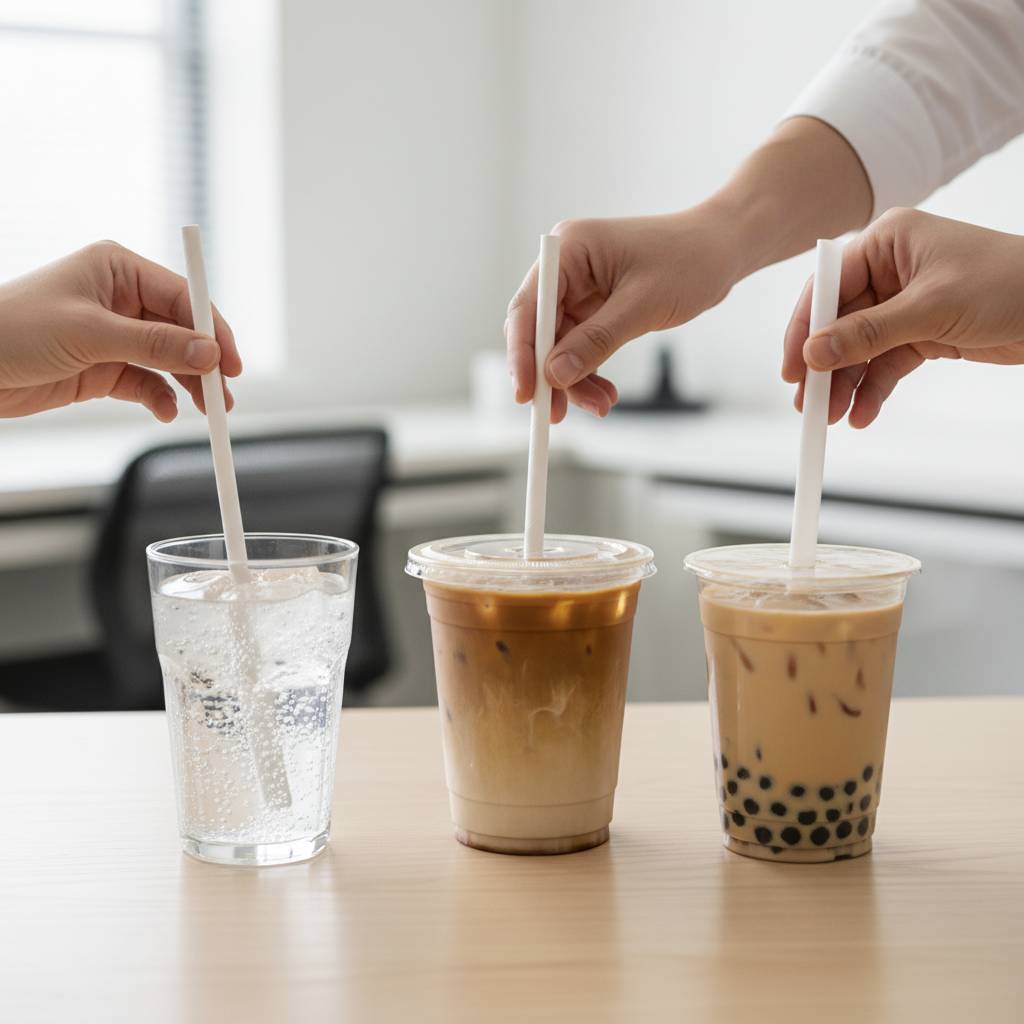
Two straws can have the exact same dimensions and both be "PFAS-free," yet one turns to mush in five minutes while the other holds up for an hour. The difference is in the construction—details you can’t see from a photo. Performance comes down to the paper grade, the number of paper layers (typically 3-ply or 4-ply), and the quality of the bonding glue that holds it all together.
Buyers often want to compare two products based on price, assuming the visible features are all that matter. We frequently have to explain that a slightly more expensive 4-ply straw may be necessary for their acidic juices or iced beverages. A cheaper 3-ply option might look identical when dry, but it won’t survive the application.
I’ve learned not to let a buyer make a decision based on a dry sample alone. It’s our responsibility to explain the hidden factors that create durability. A straw that unravels at the seam or develops a "paper taste" when wet is a failure, regardless of its compliance certificate. The structural integrity comes from the quality of the raw materials and the stability of the production process.
How to Check: When you receive samples, ask the supplier about their construction. "Is this a 3-ply or 4-ply straw?" Then, use that information to understand the results of your own testing. You’ll quickly see that a well-bonded, multi-layered straw provides a much better user experience, which is the only thing your end customer will judge.
If there is one step I would never allow a client to skip, it is this one. Approving a paper straw based on a visual inspection of a dry sample is a recipe for disaster. Testing it in a glass of room-temperature water is almost as useless.
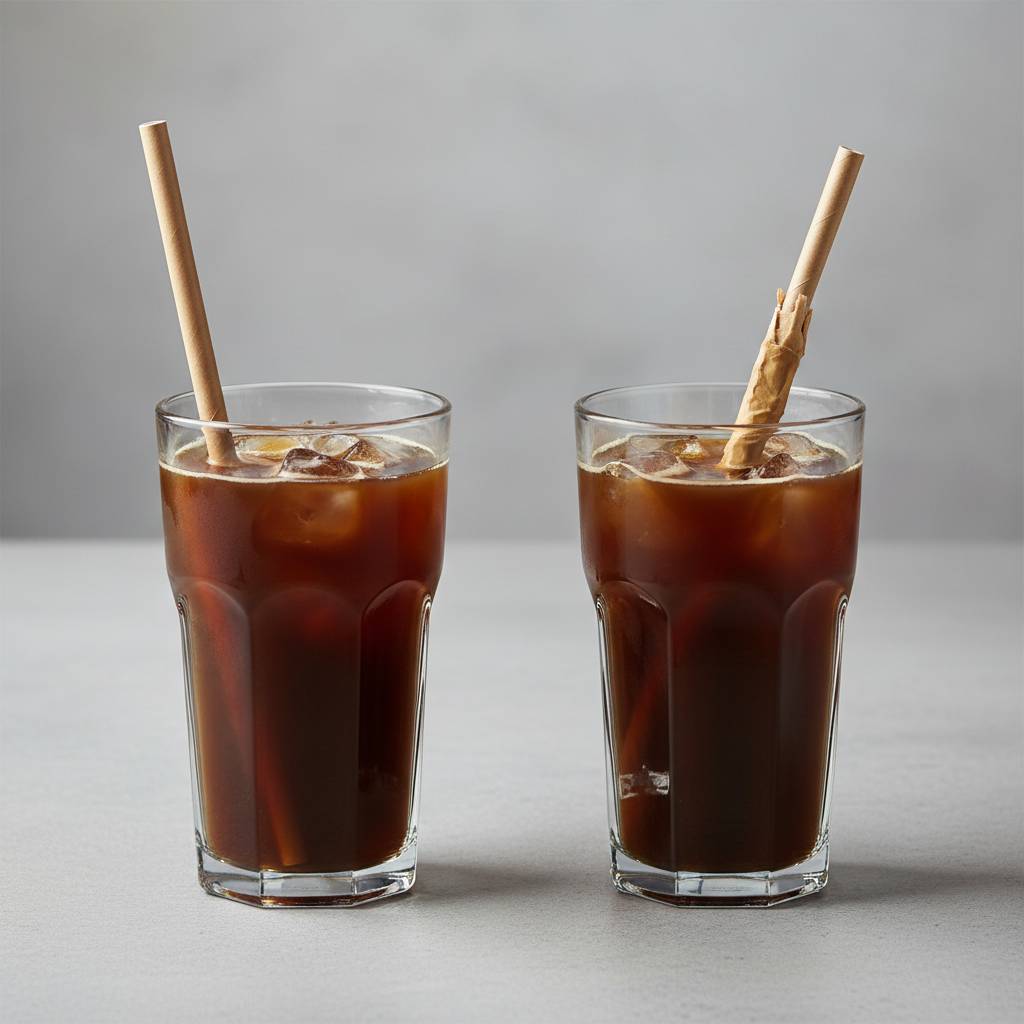
The real test of a paper straw is its performance under your specific use conditions. For example, acidic drinks can affect paper integrity differently than water. The condensation from iced coffee creates another challenging, constantly wet environment. A thick milkshake requires a straw with enough structural rigidity to not collapse under suction.
A common buyer mistake is to rush the sample approval process. They get the box, see the printing is correct, and sign off. Weeks later, after the bulk order has arrived, they get an email from a store manager: "The straws are falling apart in the smoothies." This is an expensive and entirely preventable problem. I always insist that a buyer integrate sample testing into their real-world operations for a day or two.
How to Check (The Real-Drink Soak Test): 1. Prepare your most challenging drink: This could be an iced coffee, a citrus-based juice, or a thick milkshake. 2. Submerge the sample straw: Place it in the drink just as a customer would. 3. Wait: Let it sit for at least 30-45 minutes, which is a reasonable time for a customer to finish their beverage. 4. Inspect: Check the straw’s condition. Is it soggy? Is the seam unraveling? Does it feel weak or collapsed? Take a sip. Is there a noticeable paper taste? This simple test tells you more than any spec sheet ever will.
Many buyers are trained to focus on the unit price. When comparing two quotes for PFAS-free straws, they’ll often gravitate toward the one that’s a fraction of a cent cheaper per piece. This is one of the most common ways to make a bad procurement decision.
The unit price tells you almost nothing about the total landed cost. The real cost is heavily influenced by packaging efficiency, which impacts your shipping and warehousing expenses. A supplier who quotes a low unit price might be shipping you a lot of empty air by using oversized, inefficient cartons.
A serious quotation for a bulk order of straws must include the carton data: the number of pieces per carton, the carton dimensions (L×W×H), the gross weight (GW), and the total cubic meters (CBM) for the full order. Without this information, you cannot calculate your true cost. We refuse to send a quote that doesn’t include this data, because we know it’s essential for the buyer to make a smart financial decision. A lower unit price is meaningless if the shipping cost per unit is 30% higher.
How to Check (The Carton Data Cost Analysis): 1. Get two quotes: Ensure both include full carton data (pieces per carton, carton CBM). 2. Ignore the unit price for a moment. 3. Calculate the shipping efficiency: Divide the number of straws in a carton by the carton’s CBM. This gives you "pieces per cubic meter." 4. Compare: The supplier who fits more straws into each cubic meter is offering a more shipping-efficient product. This efficiency often outweighs small differences in the per-straw price, especially for international shipments.
In our experience, the quality of a buyer’s inquiry often determines the quality of the supplier’s response. A vague request like "how much for paper straws?" will get you a vague, and likely useless, price. A serious supplier is not an order-taker; they are a partner in finding the right solution. To do that, we need the right information.
A reliable partner will ask you questions before they give you a price. But you can speed up the process and get a much more accurate quote by preparing your requirements in advance. This shows you’ve thought through your needs and allows the supplier to check feasibility and provide a quotation that reflects the reality of a production order.
Before you contact a supplier for a quote on PFAS-free paper straws, try to have the following information ready:
When you provide these details upfront, a professional supplier can immediately get to work on a solution that is both functional and cost-effective. It moves the conversation from a generic price inquiry to a serious discussion about partnership and getting the job done right.